
check

check

check

check

check

check

check

check

check

check
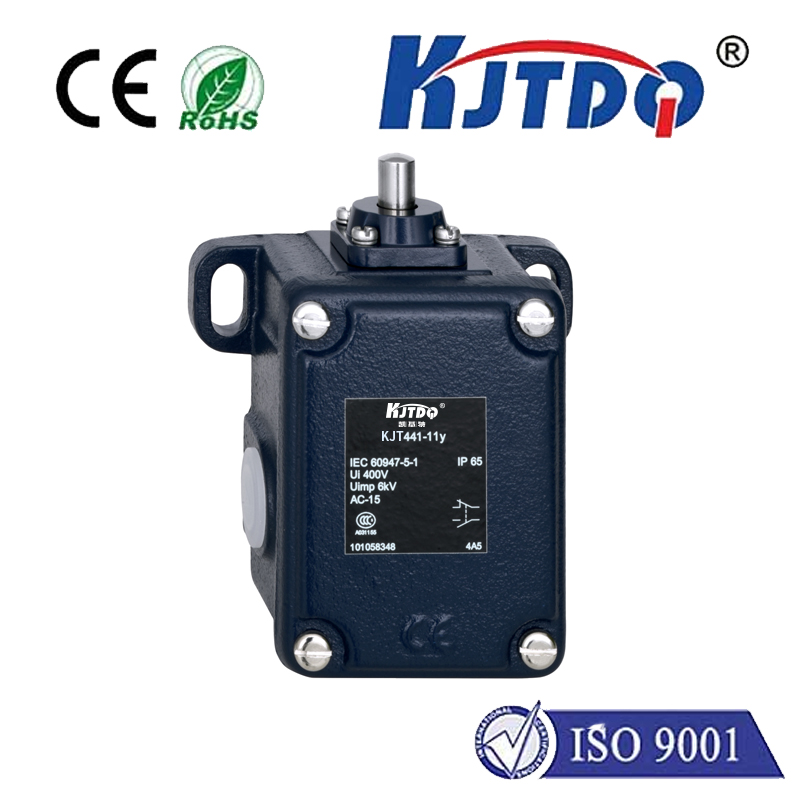
A high temperature limit switch is a mechanical position switch built to keep working beside furnaces, ovens and foundry lines, where an ordinary plastic-bodied switch would soften or drift. It uses heat-resistant contacts and a metal enclosure, and it still works the traditional way: a moving machine part presses its actuator at the end of travel, and the switch stops the motion or hands control to the next step. KJT Sensors supplies these switches for hot equipment alongside its standard limit switch range.


Figure 1. KJT Sensors high-temperature industrial limit switch for hot machinery.
Two things separate it from a general-purpose switch: contacts that tolerate heat and a housing made of metal rather than plastic. Everything else about the device stays familiar. A roller lever, plunger or rod is physically pushed by a door, slide or carriage, and that push operates the contacts inside. Because the switch depends on this mechanical movement, heat matters in two places. The contacts must keep switching cleanly as they warm up, and the body and actuator must not warp or loosen. A heat-rated design addresses both, which is why it is the usual choice for travel limiting next to furnaces, curing ovens and casting lines.
A limit switch gives a positive, physical confirmation that something has reached its end position, and that is exactly what hot equipment usually needs. Its core job is to control and protect the travel of a machine. When a moving part reaches the preset end point, the switch triggers a stop or a changeover, so the part does not overrun its track, climb past its limit or collide with the frame. On an oven door, a furnace charging car or a ladle transfer, this kind of end-of-travel protection is simple to understand and easy to check by hand during maintenance.
The trade-off is wear. A contact switch has moving parts, so its actuator and contacts age with every operation, and heat can speed that up. That is a reason to choose a properly rated switch rather than a reason to avoid one.
They are used wherever a mechanical stop or position check sits close to a heat source. Typical examples include:
curing and drying oven doors, where the switch confirms the door is fully open or closed;
furnace charging and discharge mechanisms that need a hard end-of-travel signal;
foundry and metallurgy equipment, including cranes and heavy carriages that run in hot, dusty and vibrating areas;
conveyor ends and transfer stations that pass hot parts from one process to the next.
In each case the switch does the same basic work it does elsewhere: it limits travel, confirms position and feeds a clear signal back to the control system. What changes is how much heat the contacts and housing have to survive.
| Question | Standard limit switch | Heat-rated limit switch |
|---|---|---|
| Housing | Often plastic or light alloy | Metal enclosure |
| Contacts | General industrial contacts | Heat-resistant contacts |
| Typical location | Cabinets, ordinary machine areas | Beside furnaces, ovens and casting lines |
| Main selection driver | Actuator type and space | Ambient heat plus actuator type |
The table is a starting point, not a specification. The exact temperature limit, electrical rating and actuator options belong to each product's datasheet.
Start with the heat the switch will actually see, not the temperature inside the oven. A switch mounted on the outside of a door frame may run much cooler than one fitted next to an open furnace mouth, and radiant heat from a nearby surface can matter as much as air temperature. Then confirm the motion: how the moving part approaches, whether a roller lever or plunger suits it, and how much overtravel the mechanism allows. Finally, think about the rest of the environment. Hot areas are often dusty or vibrate heavily, so the enclosure and mounting have to cope with that as well.
If the equipment moves a long way or rotates, a wireless limit switch can also be worth considering. It still uses mechanical actuation, but it sends the contact state to the host system by radio, which removes a cable that would otherwise have to follow the moving part through a hot zone.
Is a high temperature limit switch a contact device?
Yes. A moving machine part physically operates its actuator, and that movement opens or closes the internal contacts. Only the materials are adapted to heat.
What fails first when an ordinary switch is used near an oven?
Usually the housing and the contacts, because plastic parts soften and contacts are not designed for sustained heat. That is why heat-rated versions use metal enclosures and heat-resistant contacts.
Can a wireless limit switch be used on hot moving equipment?
It can, where removing a trailing cable is useful. The actuator still works mechanically, while the contact state is transmitted wirelessly to the controller.
Where do I find the exact temperature rating?
On the datasheet of the specific switch. The rating, actuator choices and electrical details differ between models and should be checked for the actual mounting position.