check

check

check

check

check

check

check

check

check

check
A general purpose photoelectric sensor detects objects with a beam of light and switches its output when that light is interrupted or reflected back, so the machine knows a part, box or carrier is present without anything touching it. It covers the everyday detection jobs on automated lines: presence, position, counting and, in some versions, distance, colour or transparency. KJT Sensors offers a general-purpose photoelectric sensor family alongside specialised types, so the standard model and its more focused relatives can share one installation style.


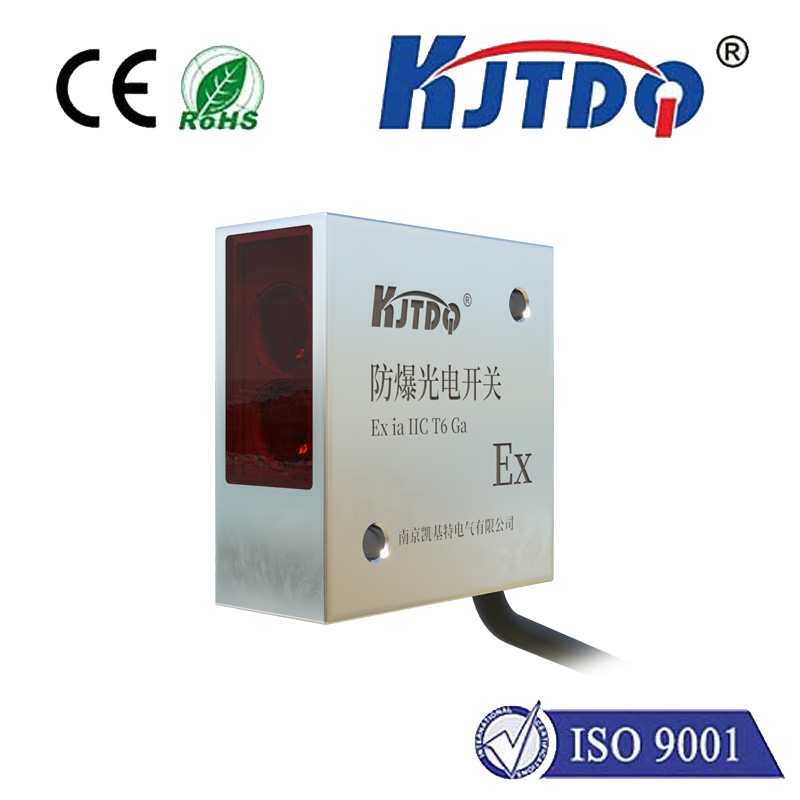
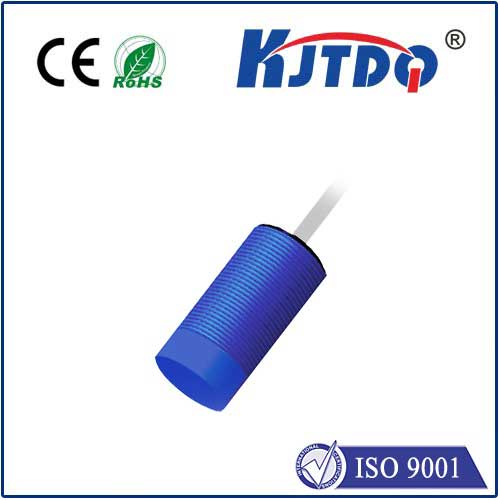
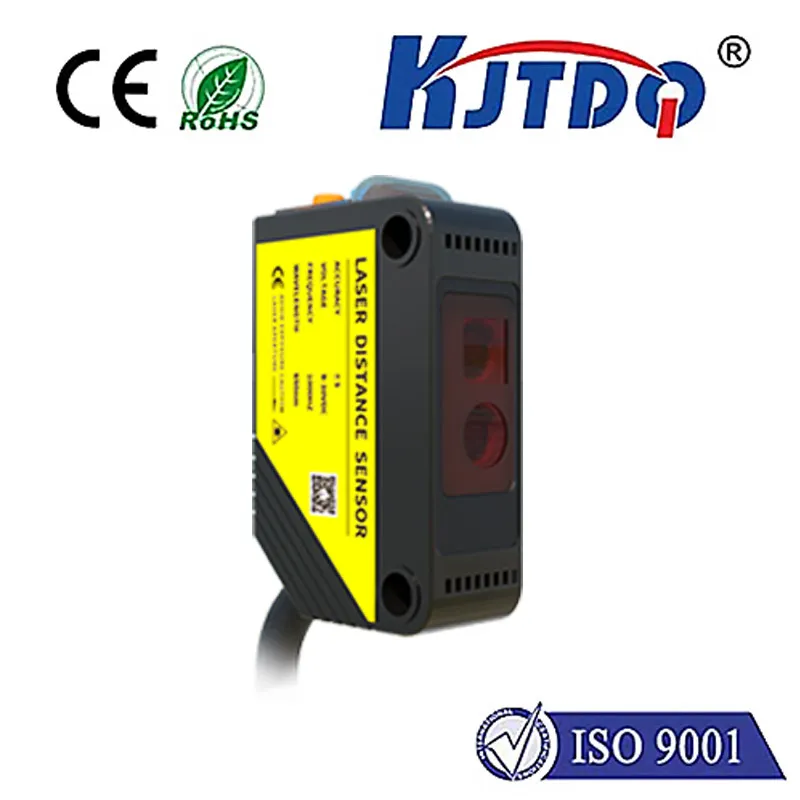
Figure 1. KJT Sensors standard photoelectric sensor for general industrial automation.
It sends light from an emitter and watches a receiver. When the target changes the light reaching the receiver, either by blocking a beam or by bouncing it back, the electronics turn that change into a switching signal. Nothing presses on the product, so soft packs, freshly painted parts and fast-moving items pass without contact or marking.
Three sensing arrangements cover most general-purpose work:
| Arrangement | How the light path is built | Typical strength |
|---|---|---|
| Through-beam | separate emitter and receiver facing each other | longest range, tolerant of target colour |
| Retro-reflective | emitter and receiver in one housing, aimed at a reflector | single-sided wiring with a clear beam path |
| Diffuse | target itself reflects the light back | simplest to fit, no reflector needed |
A diffuse unit with background suppression adds a distance limit, so it reacts to objects inside a set zone and ignores what lies behind.
It handles the detection questions that appear on almost every automated machine: is a product there, has it reached its position, how many have passed, and has a gap opened up on the conveyor. The wider photoelectric range from KJT Sensors addresses presence, location, distance, colour and transparency in automated production, and the general-purpose type is the usual starting point for the first three.
A carton conveyor at a packaging transfer station is a familiar example. Brown corrugated boxes travel past rollers and side guides that also reflect light. A through-beam pair across the conveyor sees each box as a beam break regardless of its colour, while a diffuse sensor with background suppression can work from one side and still ignore the frame behind the box.
When the target or the space stops matching what a standard housing can do. The product range includes ToF laser, label, colour-mark, square-housing, background-suppression, fiber-optic, slot-type and laser photoelectric versions as well as standard types, and each answers a particular limitation:
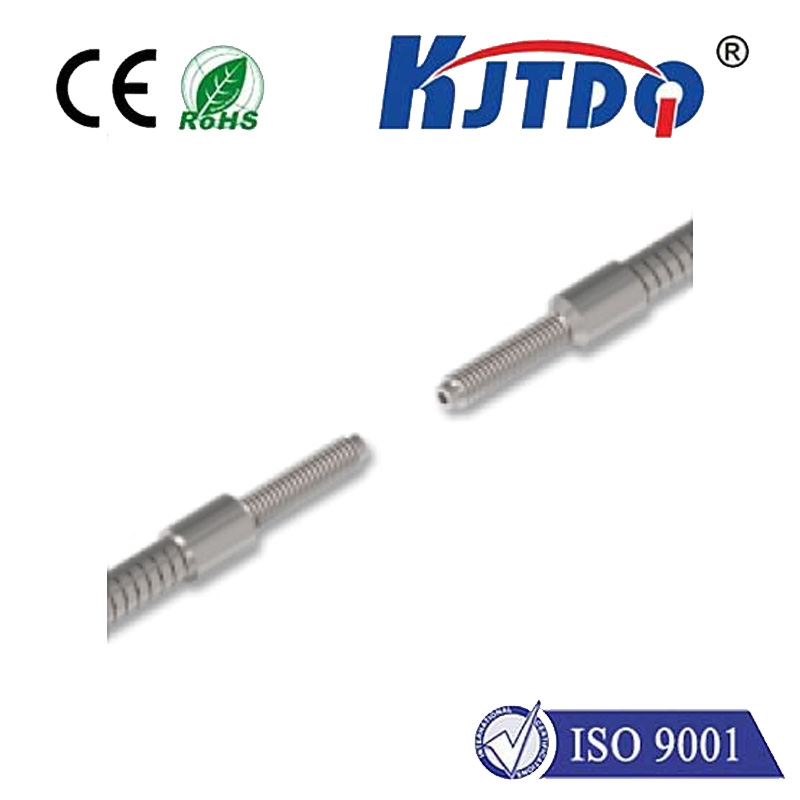
Very small parts or cramped mounting points: fiber-optic sensors carry light through an optical fiber to an amplifier, so a tiny head can sit where the sensor body cannot.
Glossy, dark, curved or transparent targets: ToF sensors judge distance by how long the light takes to return rather than by reflected brightness alone, which makes them steadier on complex surfaces, see-through objects, longer gaps and bright surroundings.
Labels and gaps on a web: label sensors detect label presence and gaps and help control labelling machines.
Printed marks: colour-mark sensors read the contrast between a mark and its background for cutting and positioning.
Start with whether both sides of the conveyor are accessible. If they are, through-beam is usually the steadiest choice. If only one side is free, a retro-reflective unit with a reflector or a diffuse unit is easier. Then think about the target: shiny, transparent or very dark items may favour through-beam or background suppression. Finally, consider the surroundings, including dust, ambient light and how close a reflective machine part sits behind the product. Range, response and output details are model-specific; check them on the product datasheet before the design is frozen.
Does a photoelectric sensor need to touch the product?
No. It works entirely with light, so the object is detected without contact and without wear on either side.
Can one general-purpose sensor detect boxes of different colours?
A through-beam arrangement usually can, because it only looks for a blocked beam. Diffuse sensors are more affected by colour unless they use background suppression.
What should I use if the sensor body will not fit near the target?
A fiber-optic sensor is the usual answer. The small fiber head goes to the detection point and the amplifier sits elsewhere.
Is a ToF sensor a replacement for a standard photoelectric switch?
It is an option for harder targets and longer gaps. For simple presence checks on ordinary products, a standard model often does the job.