

check

check

check

check

check

check

check

check

check

check
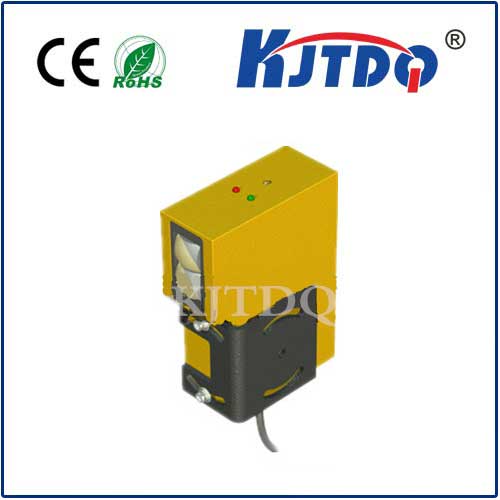
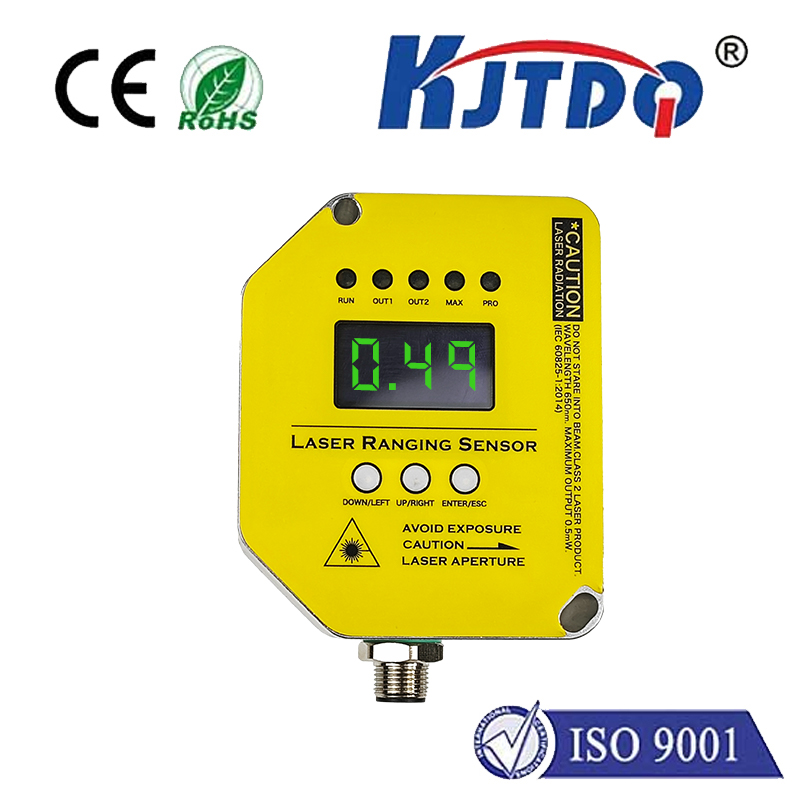
A laser photoelectric sensor detects small targets by projecting a narrow, concentrated beam of light and reacting when a tiny part interrupts or reflects it. Because the spot stays small, it can pick out thin pins, fine wires, small components and narrow gaps that a wider light spot would miss, and it does so without touching the part. KJT Sensors offers laser photoelectric sensors within a wider photoelectric range that also includes fiber-optic, background-suppression and ToF laser types for presence, position and distance tasks.


Figure 1. KJT Sensors laser photoelectric sensor for small target and edge detection.
A narrow beam makes the target a large share of the light spot, so even a small part causes a clear change in the signal. With a broad light spot, a thin pin or wire blocks or reflects only a fraction of the light, and the difference between part present and part absent becomes small. A laser concentrates the light into a tight, well-defined spot, so the same tiny part changes the received light by a much larger proportion. That contrast is what lets the sensor make a stable decision on very small objects.
The narrow beam also helps with aiming. A visible laser spot shows exactly where the sensor is looking, which makes it easier to align on a specific pin, edge or gap.
It suits jobs where a part is small, the detection point is precise and the line keeps moving. Typical examples include:
confirming that electronic components are present and in position;
checking small parts on precision assembly stations;
detecting thin film and packaging material;
counting small items on fast automated lines;
checking points inside machines where only a small target is visible.
One illustration is checking component leads on a circuit board. The pins are small and closely spaced, and the sensor has to confirm that each lead is present without touching the board. A laser photoelectric sensor can aim a fine beam at the lead position and report whether the pin is there as the board passes.
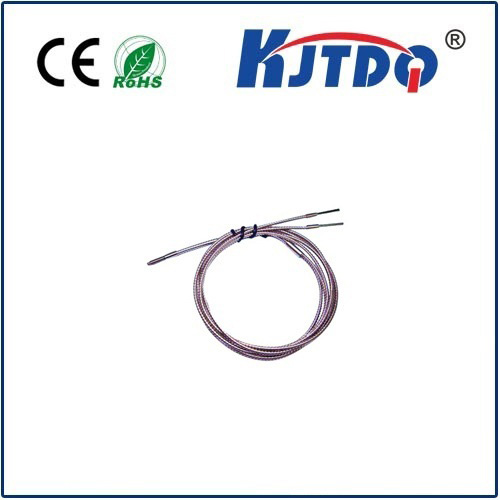
A fiber-optic sensor is often better when there is no room for a sensor body near the target. In a fiber-optic system, the light travels through an optical fiber to a small head at the detection point, while the amplifier sits somewhere more convenient. That makes it well suited to limited installation space, very small detection points, places near heat, vibration or electrical noise, and machines with crowded internal layouts. Fiber-optic sensors are also known for small heads, flexible installation and good resistance to electromagnetic interference.
A laser photoelectric sensor is usually the simpler choice when there is enough room for a compact housing and the target sits a little further away, since the focused beam keeps a small spot over a longer distance.
| Situation | Laser photoelectric sensor | Fiber-optic sensor |
|---|---|---|
| Room for a sensor body | Needed near the line | Only a small head at the point |
| Small spot at a distance | Strong point | Depends on the head |
| Crowded machine interior | Can be awkward | Strong point |
| Heat or electrical noise at the point | Body must cope | Electronics can sit elsewhere |
Start with the smallest feature that must be detected and how much its position varies from part to part. Then look at the surface: shiny metal, dark plastic and transparent film reflect light very differently, and a background close behind the target can confuse a diffuse sensor unless background suppression is used. Consider line speed too, because small parts pass through the beam quickly and the sensor must respond in time. Finally, check the space around the detection point, since that often decides between a laser body and a fiber-optic head.
Spot size, response time and detection range differ between models, so the datasheet should be compared and very small or reflective targets are worth trialling as part of an application review.
Does a laser photoelectric sensor touch the part it detects?
No. It works optically, so the part only interrupts or reflects the beam. That makes it suitable for delicate electronic components.
Can it detect transparent film?
It can in many cases, but transparent materials reflect and pass light differently from opaque parts, so the material should be tested with the chosen sensing mode.
What is the difference between a laser photoelectric sensor and a ToF laser sensor?
A standard laser photoelectric sensor mainly reports presence. A ToF laser sensor measures the time light takes to return, so it can also judge distance and cope better with complex backgrounds.
Is a fiber-optic sensor always more accurate on small parts?
Not always. It is mainly an advantage when space is tight or conditions at the detection point are harsh. Where a compact body fits, a laser sensor can be the simpler option.