check

check

check

check

check

check

check

check

check

check
A slot type photoelectric sensor detects an edge by watching a light beam that crosses a narrow U-shaped gap: when sheet, strip or a tab enters the gap and blocks the beam, the output changes. Because the emitter and receiver are fixed facing each other in one rigid body, there is no separate alignment to set up on site. KJT Sensors offers slot-type models within its photoelectric range for fast edge detection and positioning of sheet materials, strip feeding and rotating index tabs.


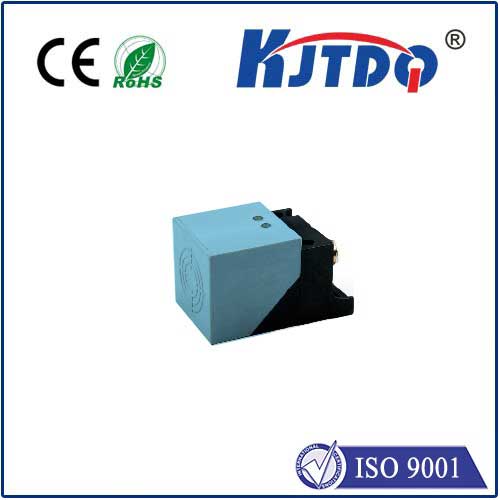
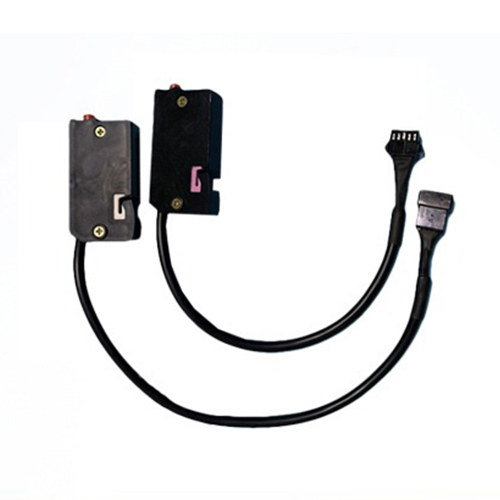
Figure 1. KJT Sensors slot-type photoelectric sensor for part counting and edge detection.
It finds the edge at the moment the material starts or stops interrupting the beam. One arm of the U-shaped housing carries the light emitter and the other carries the receiver. With nothing in the slot, the receiver sees the full beam. As the front edge of a sheet or strip moves in, the light is cut off and the output switches; as the rear edge leaves, the beam returns and the output switches back.
This is a through-beam arrangement packed into one housing. The target is never touched, and the sensor responds to the edge itself rather than to the colour or texture of the surface, which keeps the signal steady from one material batch to the next.
Because the alignment is built in. With a separate through-beam pair, someone must mount two devices facing each other and line them up precisely, and vibration or a knock can pull them apart later. In a slot sensor, transmitter and receiver sit in one stiff body, so the beam always points at the receiver. Installation becomes a matter of placing the slot where the edge passes.
The fixed geometry has another benefit on fast machines. The beam crosses a short, defined gap, so the switching point stays consistent and the sensor can follow quick changes in edge position.
Slot sensors are suited to thin materials and features that pass between the arms. Common tasks include:
sensing the front and rear edges of sheets on a feeder or stacker;
following the side edge of a strip or web so it can be guided straight;
detecting tabs, flags or holes on rotating index plates to confirm position;
confirming that material is present in a feed path before a cutting or punching step.
A printing press shows the idea clearly. The paper web runs continuously and at speed, and its side edge must stay in line for the print to register correctly. A slot sensor straddling the web edge reports when the edge drifts into or out of the beam, and the web guide uses that signal to steer the paper back.
The choice depends on how the target reaches the sensor and how much room is available.
| Option | How it sees the target | Typical fit for edge work |
|---|---|---|
| Slot (fork) sensor | Beam across a fixed U-shaped gap | Sheets, strips and tabs that pass through the slot |
| Fiber-optic sensor with amplifier | Light carried to a small head through optical fiber | Very small detection points or tight corners where a sensor body cannot sit close |
| ToF photoelectric sensor | Distance from the time light takes to return | Targets at longer range, transparent objects or strong ambient light |
KJT Sensors lists many photoelectric families, among them standard, square-housing, background-suppression, ToF laser, laser photoelectric, fiber-optic, colour-mark, label and slot types, so the slot design is one option among several. It is the natural pick when the material already travels through a narrow path.
Start with the material: its thickness, whether it is opaque, translucent or transparent, and how much it flutters as it moves. A very thin or translucent film may let some light through, which affects how cleanly the edge is seen. Next, look at the slot width and depth needed so that the material passes freely without rubbing the arms, and at how far the edge must sit inside the slot. Finally, describe the speed of the line and any dust, paper fibre or ink mist in the area. Slot dimensions, response time and light type are model-specific details to confirm on the datasheet for the intended machine.
Does a slot sensor need alignment after installation?
No. The emitter and receiver are fixed in the same rigid housing, so the beam is aligned by design.
Can a slot sensor detect transparent film edges?
Clear films let much of the light pass, so the signal change may be small. Material samples should be tested, and a label or ultrasonic sensor may be considered for very clear films.
Is a slot sensor suitable for counting index tabs on a rotating disc?
Yes. Each tab interrupts the beam as it passes through the slot, giving one pulse per tab for positioning or counting.