check

check

check

check
check
check
check
check

check

check
Excavators: KJT QK80 Millimeter-Wave Radar Tiered Anti-Collision Warning Solution
In an open-pit mine, a dump truck approaches an excavator for loading. Seated high in the cab, the driver must align with the loading zone while simultaneously watching for blind spots directly in front of the truck. Once heavy dust kicks up, judging the remaining clearance between the two machines by eye becomes nearly impossible.
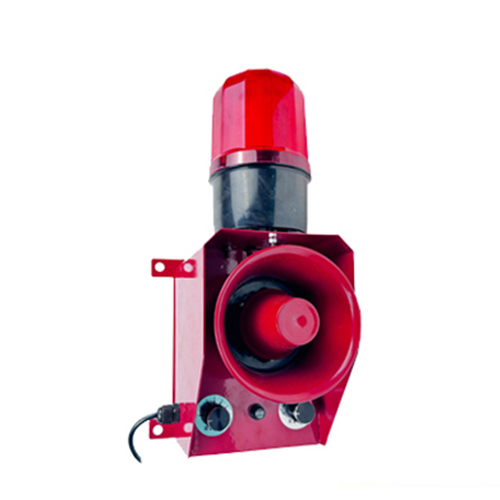
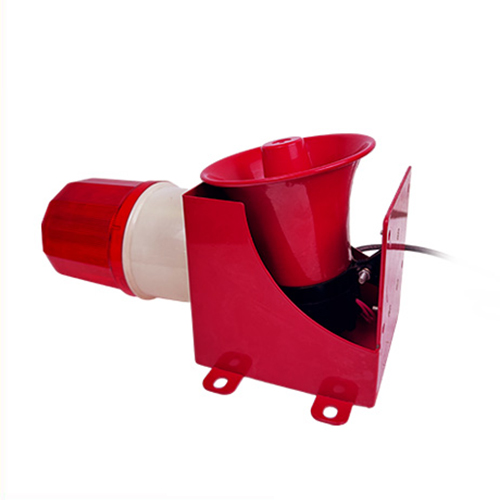
The KJT QK80 Series Anti-Collision Radar can be mounted on the front of the haul truck, facing the direction of travel to detect obstacles. Utilizing two discrete switching outputs, the onboard controller independently triggers cab warning lights and an audible buzzer—giving the driver timely alerts while there is still sufficient margin to decelerate safely.

The QK80 uses 81 GHz millimeter-wave radar echo ranging, requiring no ambient lighting or target illumination. It features a nominal detection range of 20 meters, with a maximum horizontal field of view of 120° and vertical coverage of 30°. Detection zones can be customized into a Pre-Warning Zone and an Alarm Zone based on truck body width, travel path, and forward blind spots.
Pre-Warning Zone (Outer Zone): When an obstacle enters the outer detection zone, the first output signal illuminates an in-cab warning light, prompting the driver to reduce speed and verify forward clearance.
Alarm Zone (Inner Zone): As the truck continues closing in and the obstacle enters the closer alarm zone, the second output signal activates a buzzer, alerting the driver to bring the vehicle to a full stop and confirm clearance.
The 3D application demos on our official website showcase haul truck loading, vessel berthing, and passenger boarding bridge (PBB) docking. Depending on the direction of approach, both the radar mounting position and the personnel receiving the alerts adapt accordingly:
| Application Scenario | Mounting Location & On-Site Alerting |
| Haul Truck Loading | Mounted on the truck front to monitor forward blind spots. The driver decelerates upon seeing the warning light and stops to verify upon hearing the buzzer. |
| Vessel Berthing | Mounted on the quay wall facing the ship's hull. When the vessel enters preset zones, shore personnel receive alerts to coordinate remaining clearance with the crew. |
| Boarding Bridge Docking | Mounted on the bridge head facing the aircraft fuselage. An external tri-color LED (green, yellow, red) indicates proximity, helping operators judge when to slow down and when to stop. |
While 20 meters is the nominal detection range, the two-stage warning thresholds for a haul truck must be determined based on vehicle speed, payload weight, and total stopping distance from the moment the driver receives an alert until the truck comes to a complete halt.
During commissioning, test the approach sequence under both empty and typical loaded conditions, record the actual separation distances when the warning light and buzzer trigger, and fine-tune the zone boundaries via PC software or the Android app.
If you are planning a proximity warning system, share your site layout drawings, equipment travel directions, and desired alert trigger points with KJT—we will work with you to confirm optimal mounting locations and warning zone configurations.