check

check

check

check

check

check

check

check

check

check
An analog photoelectric sensor gives a continuously varying output instead of a simple on or off signal, so the controller can follow how a distance, position or light level changes over time. It measures optically and never touches the target, which makes it useful for tracking a shrinking roll, a moving edge or a varying surface. KJT Sensors builds photoelectric sensors for presence, location, distance, color and transparency tasks, and the time-of-flight and fiber-optic designs in the range are the usual starting points when a line needs a measured value rather than a yes-or-no answer.

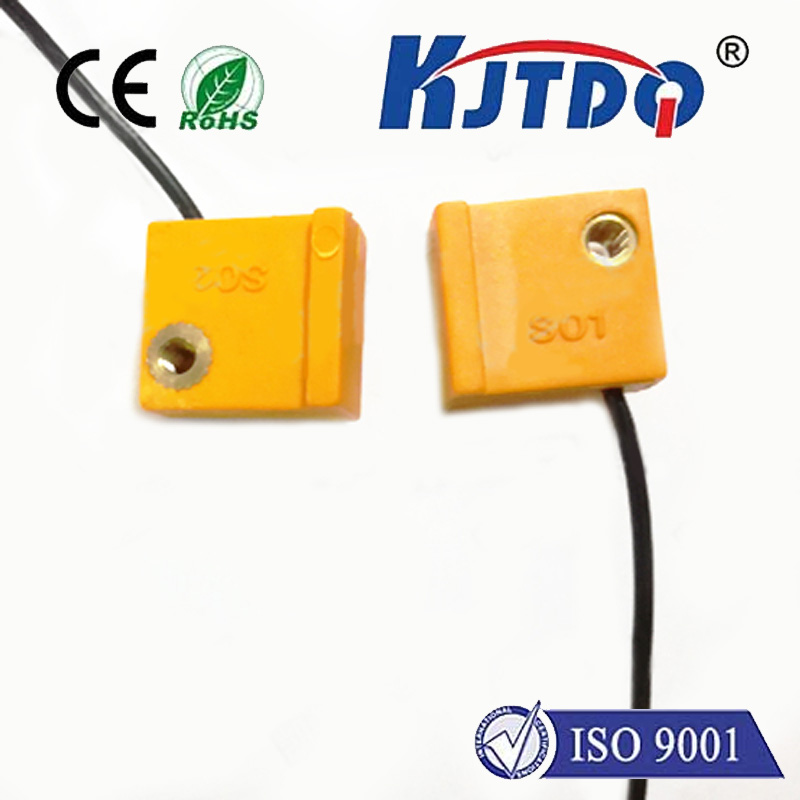
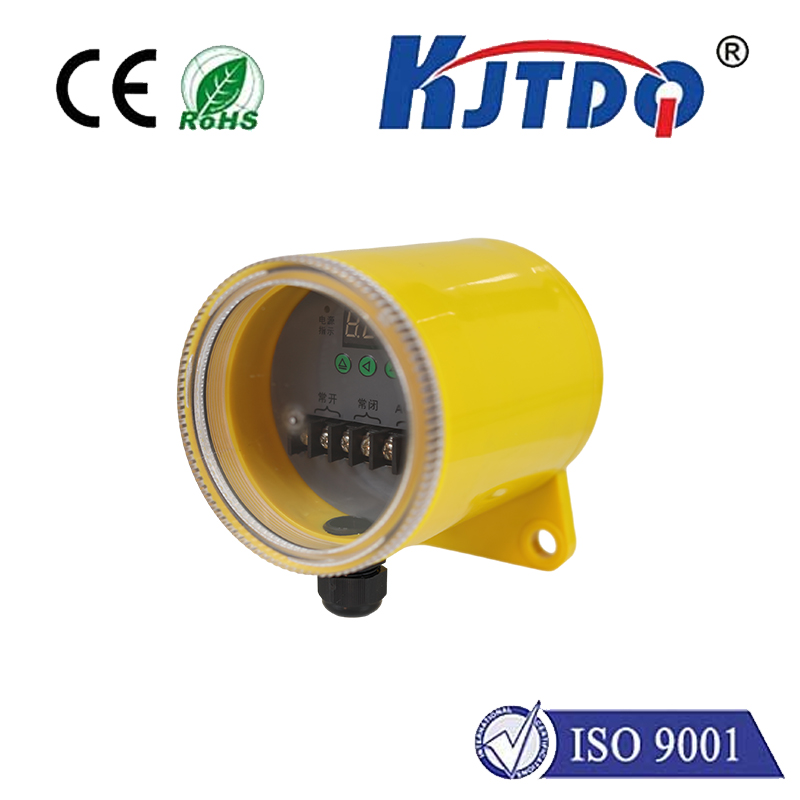
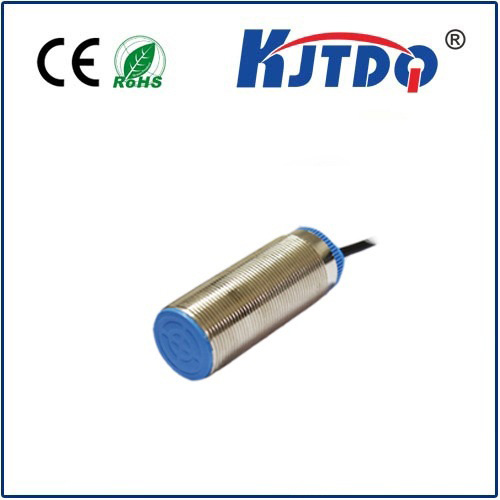
Figure 1. KJT Sensors analog photoelectric sensor for continuous optical measurement.
A switching sensor compares what it sees with a set point and changes state when that point is crossed. A continuous output reports the measured quantity itself, so the controller sees every small change between empty and full, near and far. That allows the machine to regulate a process smoothly instead of reacting only at fixed thresholds. Internally, both kinds of sensor start the same way: light leaves an emitter, interacts with the object, and returns to a receiver. The difference lies in how the received signal is processed. When the object alters the intensity, wavelength, frequency, phase or polarisation of the light, photoelectric conversion and demodulation turn that change into usable information, and the electronics can present it as a proportional value.
Two families appear most often in continuous applications.
A time-of-flight sensor works out distance from the time a light pulse takes to travel to the target and back. Since the result depends on travel time rather than reflected brightness, it holds steadier than a conventional photoelectric switch on complex surfaces, transparent objects, longer ranges and in strong ambient light. Such sensors combine a ranging function that calculates distance with presence detection, background suppression that keeps target color, curved surfaces, high reflectivity and surrounding ambient light from skewing the result, and fast response for quick lines.
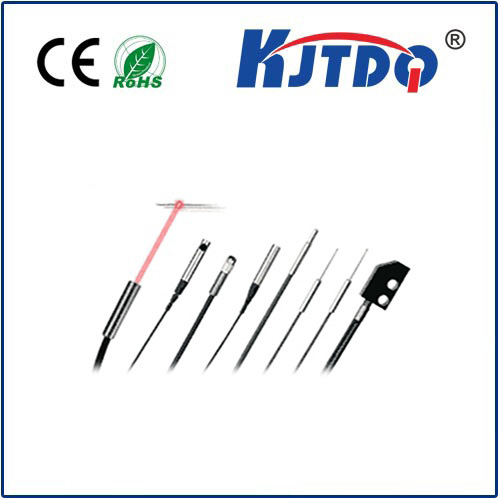
A fiber-optic sensor guides light through a fiber to the measurement point, then an amplifier processes the returning signal. The amplifier can report presence, shifts in position, color differences or changes in surface condition, and the slim fiber head reaches small targets, confined spaces and awkward locations where a full sensor body will not fit.
| Principle | What it measures continuously | Where it fits |
|---|---|---|
| Time-of-flight | Distance to the target | Rolls, stacks, levels, positioning over longer ranges |
| Fiber-optic with amplifier | Change in received light at a small point | Narrow gaps, small edges, surface or color variation |
It lets the controller know the roll diameter at every moment, not just when a limit is reached. On a web line with a tension accumulator, the unwinding roll shrinks steadily, and the drive needs to adjust speed and tension as it does. A distance-measuring sensor aimed at the roll surface sees the gap grow as material is used, and that growing value can be translated into diameter. The control system then trims the drive gradually, which keeps tension even and gives early warning before the roll runs out. A switching sensor at the same spot could only say that the roll had passed a single preset size.
Start with the quantity you actually need to follow and the surface you will be looking at. A matt cardboard roll behaves very differently from glossy film or a transparent web, and that difference often decides between time-of-flight ranging and a light-intensity method. Then consider the space available, since fiber heads solve tight mounting where a larger housing will not fit. Finally, define how fast the value changes and what the controller does with it. The measuring range, resolution and output form are model details, so confirm them on the datasheet and test with a sample of the real material where the surface is unusual.
Can an analog photoelectric sensor measure a transparent material?
It can in some cases. Time-of-flight sensors are steadier on transparent objects than simple intensity-based sensors, but the specific material should be tested first.
Is a fiber-optic sensor suitable for continuous measurement?
Yes, where the change shows up as a difference in received light at a small point, such as an edge position or a surface variation.
Does the sensor need to touch the roll or web?
No. It works optically from a distance, so the material is not marked or slowed by contact.
When is a switching sensor enough?
When the machine only needs to know that a limit has been reached, for example full, empty or present. Continuous output is worth it when the process is regulated in between.