check

check

check

check

check

check

check

check

check

check
A long range ToF photoelectric sensor detects objects by timing how long its light takes to reach a target and return, so it can confirm presence and measure distance over spans that ordinary photoelectric switches handle poorly. Because it judges distance by time and not only by reflected brightness, it stays steady on dark, glossy or transparent items and in strong ambient light. KJT Sensors uses this principle in its ToF laser photoelectric sensors for logistics, smart storage, packaging and outdoor detection.


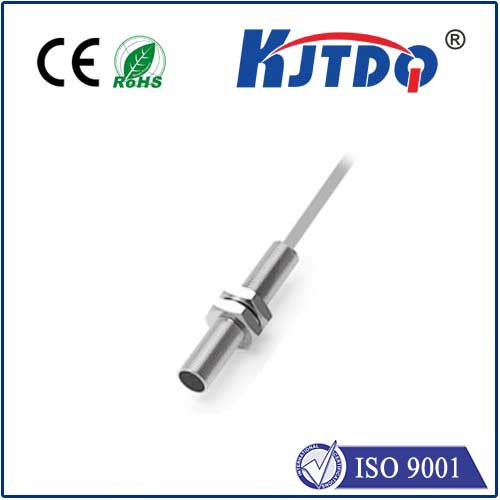
Figure 1. KJT-FG30 long-range ToF photoelectric sensor for industrial object detection.
It removes the dependence on how much light comes back. A conventional diffuse sensor decides "object present" when the reflected light is bright enough. Over a long distance the returning light is weak, and a black carton returns far less than a white one, so the switching point wanders with colour and surface. A ToF sensor sends out a light signal and calculates the target's distance from the time between emission and return. That makes it more stable than conventional photoelectric switches on complex surfaces, transparent objects, longer distances and in bright light.
The sensor still sees reflection; it simply uses the timing of that reflection as its main measure, which is why the method holds up when the target changes.
It covers three core jobs: assessing distance, detecting whether an object is present and recognising transparent objects. In practice that supports positioning, counting on fast lines, packaging checks, logistics sorting and outdoor detection. Background suppression is part of the design, so the sensor can ignore a wall, rack or machine frame behind the target and react only to objects inside the chosen range.
ToF laser sensors are also built for adjustable range, a relatively high switching frequency, stable diffuse operation and reliable detection under outdoor lighting, which suits sites where consistent detection matters more than anything else.
It can be pictured as a group of cooperating modules: a ToF ranging module, a photoelectric detection module, a background-suppression and interference-rejection module, a high-speed response module, a system interface and an industrial protective housing. The ranging part works out the distance. The detection part decides presence or in-position status. Background suppression reduces the influence of colour, curvature, reflectivity and ambient light. The high-speed module lets the sensor keep up with fast production lines.
| Detection challenge | Conventional diffuse sensor | ToF photoelectric sensor |
|---|---|---|
| Dark versus bright targets | Switching point shifts | Distance stays consistent |
| Long distance | Weak return, unstable | Time measurement still works |
| Transparent items | Often missed | Detectable with suitable settings |
| Busy background | May react to the background | Background suppression ignores it |
It is most useful where the distance between sensor and target is large or varies. Smart storage and automated warehouses, logistics sorting, conveyor lines with mixed packaging and outdoor loading areas are typical. In a high-bay warehouse, for example, an aisle crane must know whether a pallet or obstruction sits in a location some way down the aisle. A ToF sensor mounted on the crane can check presence across that span without depending on the colour or wrapping of the load.
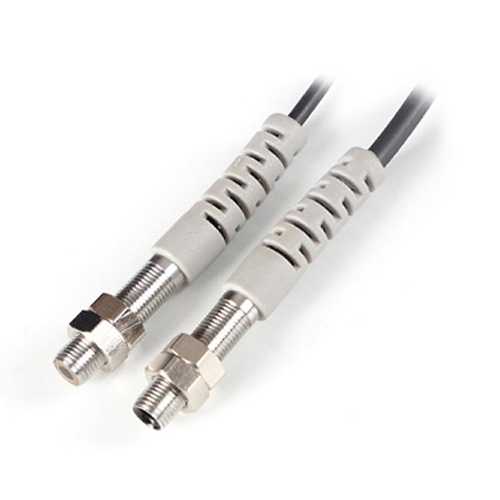
For very small targets or points where the sensor body cannot get close, fiber-optic sensors are the better match; long-range ToF is aimed at the opposite case.
Describe the target first: size, colour range, surface finish and whether it is transparent. Then fix the distance at which detection must happen and what lies behind the target, so the background suppression range can be set. Consider ambient light, especially near doors or outdoors, along with the speed of the line and the type of output the controller expects. The maximum range, response time and output options vary by model and should be confirmed on the datasheet against the actual layout.
Does a ToF sensor need a reflector on the far side?
No. It works in diffuse mode, measuring the light returned by the object itself, so no reflector or separate receiver is needed.
Can a ToF photoelectric sensor detect clear film or glass?
Transparent-object detection is one of its core functions, though the result depends on the item and the sensor settings and should be tested on real samples.
Why does bright sunlight affect it less than a standard sensor?
The sensor relies on the timing of its own light signal rather than on raw brightness alone, and its interference rejection helps it ignore ambient light.
Is long range the only reason to choose ToF?
No. Stable detection on mixed colours and glossy surfaces, plus background suppression, are equally common reasons at shorter distances.