check

check

check

check

check

check

check

check

check

check
A waterproof industrial limit switch is a mechanical position switch with a sealed actuator housing that keeps water out while a moving machine part presses its lever, roller or plunger. It suits washdown zones, wet process machinery and outdoor equipment where rain, spray and condensation would quickly reach the contacts of an ordinary switch. KJT Sensors offers sealed and stainless steel limit switches for these duties, giving the same positive end-of-travel signal as a standard switch while protecting the mechanism inside from moisture.


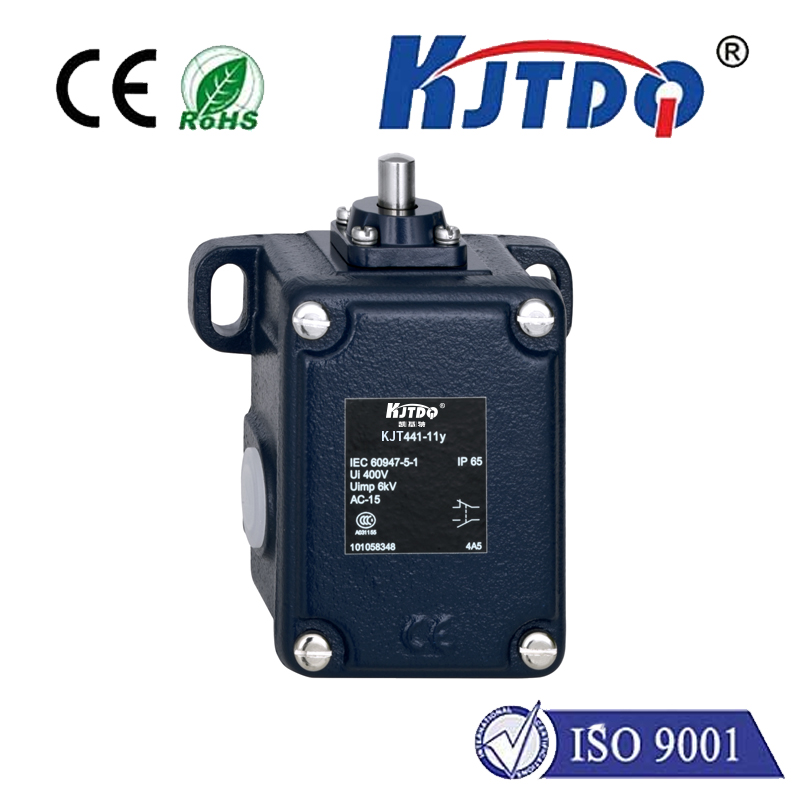
Figure 1. KJT Sensors waterproof industrial limit switch for wet and outdoor environments.
Mostly through the moving parts and the joints around them. A limit switch is a contact device: a cam, dog or carriage physically pushes the actuator, and that motion travels through a shaft or plunger into the body to operate the contacts. Every place where a shaft passes through the housing, where the cover meets the body and where the cable enters is a possible path for water. Spray, hose-down and repeated wetting and drying gradually work moisture past ordinary seals, and once inside it can corrode the contacts and the spring mechanism.
A waterproof design concentrates on exactly those points. The actuator housing is sealed so that the moving shaft can still turn or travel while the cavity behind it stays dry.
Sealing and material are the two deciding features. Standard models are economical and work well for conventional control circuits in dry areas. Sealed or high-protection models are meant for places that are dusty, oily, wet or exposed to corrosive gases. Where the switch is also hit by cleaning chemicals, salt spray or aggressive washdown, a stainless steel body adds corrosion resistance on top of the sealing.
| Condition at the machine | Standard limit switch | Sealed limit switch | Stainless steel limit switch |
|---|---|---|---|
| Dry indoor panel or frame | Good fit | Not required | Not required |
| Splash, rain, condensation | Limited | Good fit | Good fit |
| Regular hose-down or washdown | Not suitable | Depends on rating | Good fit |
| Salt spray or cleaning chemicals | Not suitable | Limited | Good fit |
Because it gives a simple, positive confirmation that a machine part has reached its end position. The core function is to control and protect the travel of mechanical equipment. Once the carriage or slide arrives at the preset limit, the contacts change state and the controller halts the drive or switches to the next step, preventing overtravel, climbing and mechanical collision. The structure is straightforward, the actuation is positive and the control logic is easy to follow, which is why maintenance staff can check it by hand even in a wet, dirty plant.
The trade-off is that the actuator and contacts are moving parts and wear over time. Good sealing slows that wear by keeping water and grit away from the mechanism.
They belong wherever a mechanical travel limit sits in water or spray. Common points include:
conveyor ends and transfer points that are hosed down or stand outdoors;
door and gate closure detection on wash cabinets and outdoor enclosures;
travel control on slides, lift tables and carriages in wet process areas;
position confirmation along conveyor lines in quarries, food plants and water treatment works.
An outdoor gravel wash plant shows the problem clearly. At the conveyor transfer, sprays rinse the aggregate and the switch is soaked many times a day by water carrying fine grit. A sealed switch with a corrosion-resistant body keeps signalling the end of travel while the spray stays outside the housing.
Begin with the type of water exposure: occasional splashes, steady rain, direct jets or chemical washdown each call for a different level of protection. Next, confirm the actuator style and the direction from which the machine part approaches. Consider the cable entry and how the cable is routed away from standing water. The exact enclosure rating, materials and electrical details differ between models, and the datasheet for the intended switch should be compared with the real conditions on site.
Is a waterproof limit switch still operated by physical contact?
Yes. A moving part presses the actuator and the internal contacts switch mechanically. Only the housing and seals are adapted to keep water out.
When is stainless steel worth the extra step up from a sealed plastic or alloy body?
When the switch faces cleaning chemicals, salt spray or frequent harsh washdown. Stainless steel resists that corrosion over a longer service life.
Can a waterproof switch also cope with dust and oil?
Sealed and high-protection models are intended for dusty, oily and wet locations, so the same switch often covers all three.
Do sealed switches wear out like standard ones?
The actuator and contacts still wear with use, as on any mechanical switch. Sealing mainly prevents water and grit from speeding up that wear.