
check

check

check

check

check

check

check

check

check

check
A standard industrial limit switch detects the end point of a machine's travel by physical contact: a moving part presses the switch's roller lever, plunger or rod, and that mechanical movement opens or closes the internal contacts to produce an electrical signal. The controller uses this signal to stop the motion, reverse it or start the next step. KJT Sensors supplies these position switches as a basic travel-control component for conveyors, lifting equipment, slides and automated machines that need a clear, physical confirmation of position.


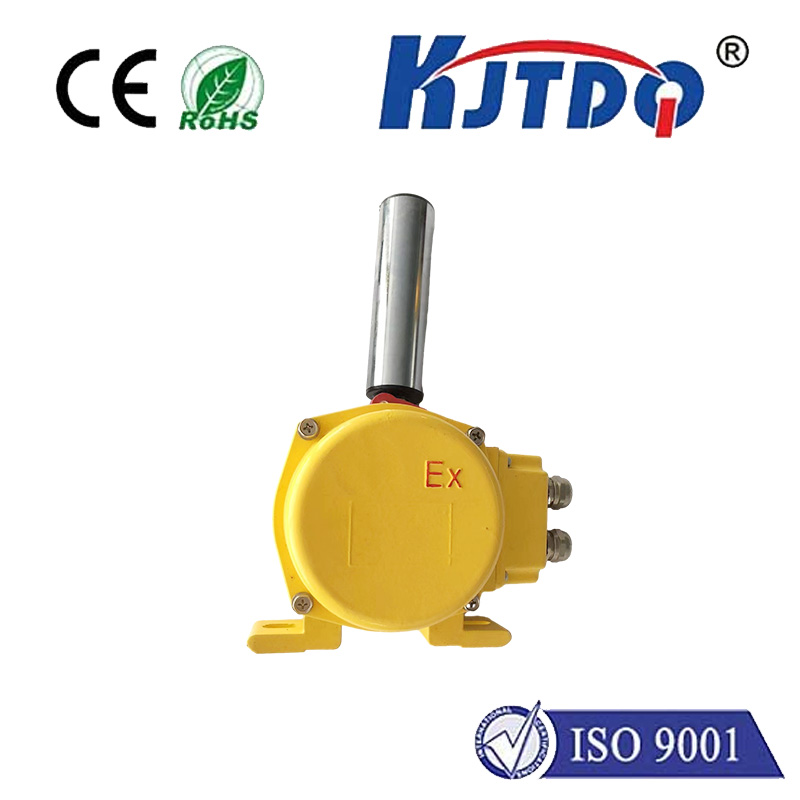
Figure 1. KJT Sensors standard industrial limit switches for machine endpoint detection.
It converts a mechanical push into an electrical switching action. The switch body carries an actuator that sticks out into the path of a moving machine part. When that part arrives at its end position, it strikes the actuator and moves it through its operating travel. Inside the housing, this movement drives a contact mechanism that changes state, so a circuit that was open closes, or the reverse. When the moving part withdraws, a spring returns the actuator and the contacts go back to their original state.
This is a contact device with moving parts, and that is the point of it. The signal exists because something physically arrived. A travel switch of this kind is a low-current control device: it carries a signal to the controller rather than switching the motor's main power directly.
Because the logic is simple and easy to verify. A limit switch has a straightforward structure, positive actuation and simple control logic, which suits mechanical travel control well. A technician can see the actuator, press it by hand and hear or measure the change of state. When the moving part reaches the preset end of travel, the switch triggers a stop or changeover, which keeps the mechanism from overrunning its track, climbing past its limit or colliding with the frame.
The cost of that directness is mechanical wear. The actuator, its pivot and the contacts age with every operation, so the switch has a finite mechanical life and should be chosen with the number of operations and the impact it will receive in mind.
They appear wherever a machine part moves to a defined stop and the control system must know it got there. Common examples include:
hoists, cranes and lifting platforms, where upper and lower travel limits are detected;
conveyor lines, where the end of a transfer or the arrival of a carrier is confirmed;
slides, manipulators and packaging tools on automated lines, which report that a workpiece or tool has reached its station;
storage and logistics equipment such as stacker cranes and lifting tables, which need end-of-travel detection and return-to-home signals;
machine doors and guards, where the switch confirms that a door is closed.
A heavy conveyor diverter gate shows the idea well. The gate swings between two positions to send material one way or the other, and the controller must know that it has fully reached one side before material is released. A limit switch at each end of the gate's travel gives that confirmation through direct mechanical contact, which is easy to check visually and does not depend on how the gate's surface looks.
| Version | What changes | Typical setting |
|---|---|---|
| Standard limit switch | General-purpose housing and actuator | Ordinary machine and conveyor areas |
| Heavy-duty limit switch | Reinforced housing and actuator for impact | Cranes, heavy conveyors, large machines |
| Waterproof limit switch | Sealed actuator housing | Wet machinery, washdown zones, outdoor use |
| High-temperature limit switch | Heat-resistant contacts, metal enclosure | Near furnaces, ovens and foundry lines |
| Micro limit switch | Compact snap-action design | Mechanisms with very little space |
All of them work the same way; the differences lie in housing, sealing, materials and size. A standard switch is the starting point when none of these special conditions apply.
Describe how the moving part approaches the switch, how far it travels beyond the switching point and how hard it strikes. That decides whether a roller lever, plunger or rod actuator suits the motion. Then consider the surroundings, the expected number of operations and the electrical load on the contacts. Operating travel, contact arrangement and ratings vary by model, so confirm the final choice on the product datasheet.
Does a limit switch need to be touched by the moving part?
Yes. It is a contact device; the moving part must physically operate the actuator for the contacts to change state.
What is the difference between a limit switch and a position switch?
In everyday use they are the same device. Travel switch, position switch and limit switch are common names for a switch that detects mechanical position and limits travel.
Will a limit switch wear out over time?
Yes. Its actuator and contacts are mechanical parts and wear with use, so expected operating frequency should guide the choice of model.
Can one limit switch detect both ends of a stroke?
Usually a separate switch is fitted at each end, so the controller receives a distinct signal for each end position.