check

check

check

check

check

check

check

check

check

check
A compact laser distance module is the measuring core of a laser sensor, packaged so that a machine builder can embed it inside their own equipment instead of bolting a finished sensor onto the outside. It sends out a beam, receives the reflection and calculates how far away the target is, then passes that value to the host controller. KJT Sensors supplies OEM laser distance modules and compact time-of-flight sensors for frames, vehicles and handling equipment where space is tight and the measurement has to become part of the machine design.


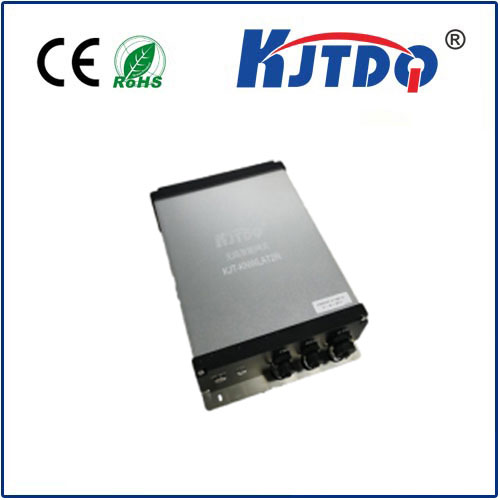
Figure 1. KJT Sensors compact laser ranging module for integration into industrial equipment.
At its heart is a ranging section that emits the measurement beam, collects the returning light and works out the distance. Around that core, a complete laser product usually adds a signal output section, a way to set parameters and read status, industrial protection for the housing, and features that help it fit into a larger system. In product terms, a finished laser sensor comprises a laser-ranging module, a signal-output module, a parameter-setting and display module, an industrial-protection module and a system-integration module. A module keeps the ranging core and the essential interface while leaving much of the outer packaging to the integrator. That is the point of choosing one: the host machine already has a frame, a controller and often its own enclosure, so duplicating them inside a stand-alone sensor body wastes space.
Integration saves room and makes the measurement look and behave like part of the product. A finished sensor arrives with its own housing, bracket and display, which is convenient for retrofits but bulky inside a compact design. A module can sit behind a window in a panel, inside a vehicle bumper or within a lifting mechanism, with the host controller reading its distance value directly. For equipment built in series, this also means the sensor is aligned once at the design stage rather than adjusted on every unit in the field.
An automated guided vehicle docking unit illustrates the idea. The builder wants the vehicle to know its distance to a charging station or a transfer table, but there is little room in the chassis and no place for an external bracket. A compact module fitted inside the body can provide that distance reading through a small opening, keeping the vehicle outline clean.
It times how long light takes to reach the target and come back. Because the calculation depends on travel time rather than on how bright the reflection is, it stays steadier across targets of different color and reflectivity. Compact time-of-flight designs often combine several functions: the ranging part calculates the distance, a detection function decides whether something is present or in position, background suppression limits how much the color, curvature and reflectivity of the target, or stray ambient light, can disturb the reading, and a fast response section keeps up with quick machines. For an integrator, this means one small device can provide both a distance value and a presence decision.
Builders of equipment that moves, lifts or handles material tend to gain the most. Common examples include:
guided vehicles and mobile robots that need distance for docking and positioning;
compact material handling equipment such as shuttles, lifts and transfer units;
machine frames where a finished sensor would protrude into the working area;
inspection or dosing equipment that needs a distance value fed straight into its own control logic.
In all of these, the module turns changes in distance at the machine into a signal the control system can recognise, which removes manual measurement steps and helps the machine respond automatically. Non-contact laser measurement with continuous data output supports in-line measurement, automatic evaluation, quality control and process optimization, and it lowers the risk of missed detection.
| Factor | Integrated module | Finished laser sensor |
|---|---|---|
| Space needed | Small, fits inside the host design | Larger housing with bracket |
| Housing and protection | Partly provided by the host machine | Complete housing included |
| Setup | Defined at design stage | Adjusted on site |
| Typical buyer | Equipment manufacturer building in series | Plant engineer retrofitting a line |
Neither is better in general; the choice depends on whether the measurement is part of a product or an addition to an existing machine.
Does a laser module touch the target?
No. It measures optically, sending light to the target and reading the reflection, so the target is never contacted.
Can a compact module report presence as well as distance?
Many compact time-of-flight designs can, because they combine ranging with a presence or in-position decision.
What does the host machine need to provide?
Typically a suitable window or opening, mechanical support and protection from dust and moisture, plus a controller able to read the module's output.
How should I start an OEM integration?
Share the target, distance range, space envelope and environment with the supplier and review the module datasheet before freezing the mechanical design.