
check

check

check

check

check

check

check

check

check

check
A laser hot and cold metal detector is an optical sensor that tells a steel plant whether a billet, bar, slab or plate is present at a given point on the line, and roughly where it is, without touching the metal. It works on light rather than contact, so glowing stock leaving a furnace and cooled stock on a finishing conveyor can both be followed. KJT Sensors offers optical and laser sensors for steel production metal detection along rolling lines, transfer tables and conveyor sections.


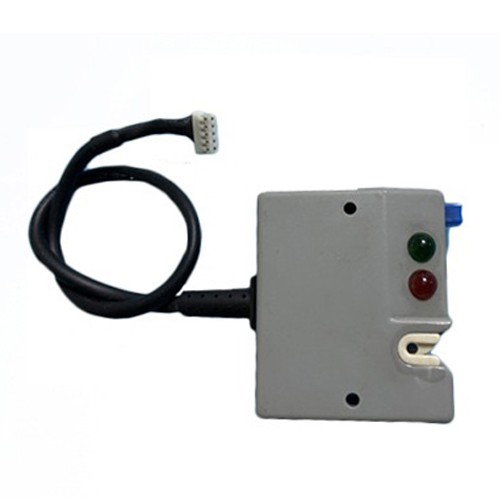
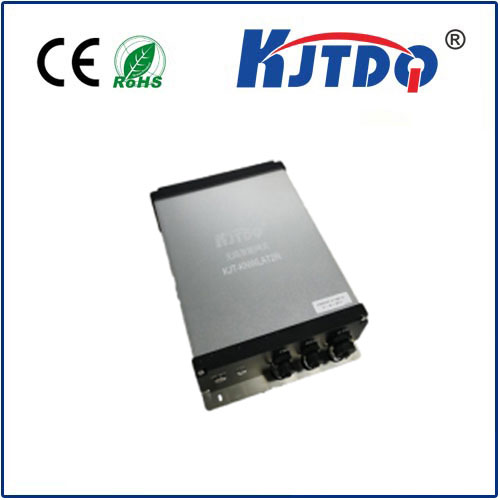
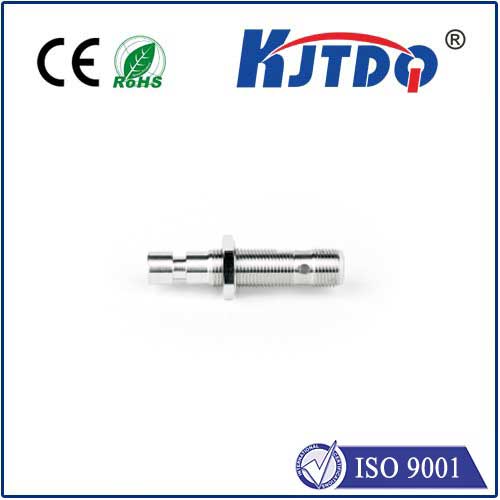
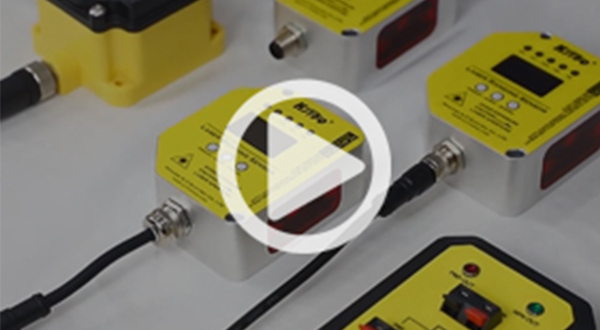
Figure 1. KJT Sensors laser hot and cold metal detector for steel production lines.
It reports presence, passage and approximate position of the workpiece. On a rolling mill, the control system has to know when the head of a bar reaches a stand, when the tail leaves a roller table and whether a section of conveyor is occupied before the next piece is released. Steel production optical sensors answer exactly these questions: is the metal here, has it passed, and roughly where along the section is it. That information drives the sequence of rolls, shears, pushers and transfer devices.
Because touching the metal is usually impractical. Hot stock is far too hot for a mechanical feeler, scale and water spray foul anything in the path, and moving bars would batter a lever or wheel. A laser sensor sits at a distance, projects its beam across or onto the path and evaluates the returned light, so the workpiece is detected without any mechanical contact.
A time-of-flight design helps on steel lines. It determines distance from the travel time of the light rather than relying only on how strongly the target reflects, which reduces the influence of colour, curvature, surface material and changing conditions. That matters when the same position sees a bright, freshly rolled bar one minute and a dark, scaled one the next.
It can be thought of as a set of modules working together. A laser emitter generates the beam, an optical imaging section collects the returning light, a photoelectric receiver converts it into a signal, and a signal-processing stage decides what that signal means. A data-output stage passes the result to the controller, and a mounting and protection module keeps the optics stable and shielded on site.
In a steel environment, the last of these modules carries much of the load. Dust, scale, steam, radiant heat and vibration are part of daily operation, so housing, window protection and mounting deserve as much attention as the sensing principle.
Laser sensors cover several jobs beyond simple presence detection. The table groups the common ones.
| Task | What the sensor provides |
|---|---|
| Rolling line and roller table tracking | Presence, passage and rough position of the workpiece |
| Distance measurement at metallurgical sites | Distance to equipment, stock or structures |
| Crane collision avoidance | Distance between moving cranes or to an end stop |
| Molten metal level | Laser measurement of molten steel or molten aluminium level |
| Material handling | Material height and roll diameter measurement |
These tasks share the same advantage: the measurement is taken from a distance, so the sensor does not have to survive direct contact with heavy, hot or moving metal.
The first question is the state of the stock at the mounting point: hot and glowing, warm and scaled, or cold and possibly wet. That affects how the beam and the receiver behave. Next comes the geometry, meaning how far the sensor sits from the path, the size of the workpiece and how fast it moves. Then list the conditions around the sensor, such as radiant heat, water, steam, scale and vibration, since these decide the protective housing and any cooling or purge arrangement. Detection range, response time and environmental limits differ by model, and an application review against the datasheet is the right way to settle them.
Can one laser sensor detect both hot and cold metal?
It can, provided the model is suited to the temperature at its mounting point and the optics are protected. A time-of-flight design is less affected by the changing appearance of hot and cold surfaces.
Does the sensor need to touch the bar or plate?
No. It detects the workpiece optically from a distance, which is why it suits hot and fast-moving stock.
Is presence detection the only use for laser sensors in a steel plant?
No. They also measure distance, help cranes avoid collisions, check material height and roll diameter and can measure molten metal level.