check

check

check

check

check

check

check

check

check

check
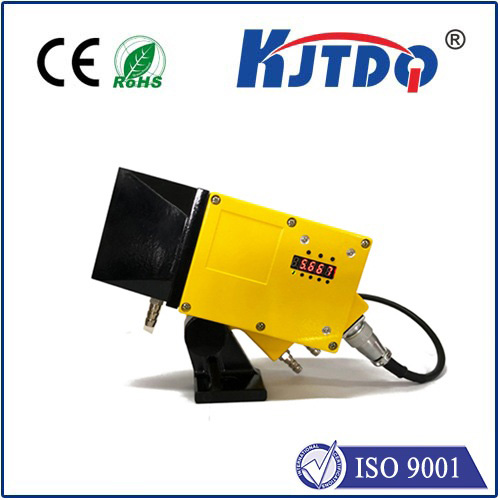
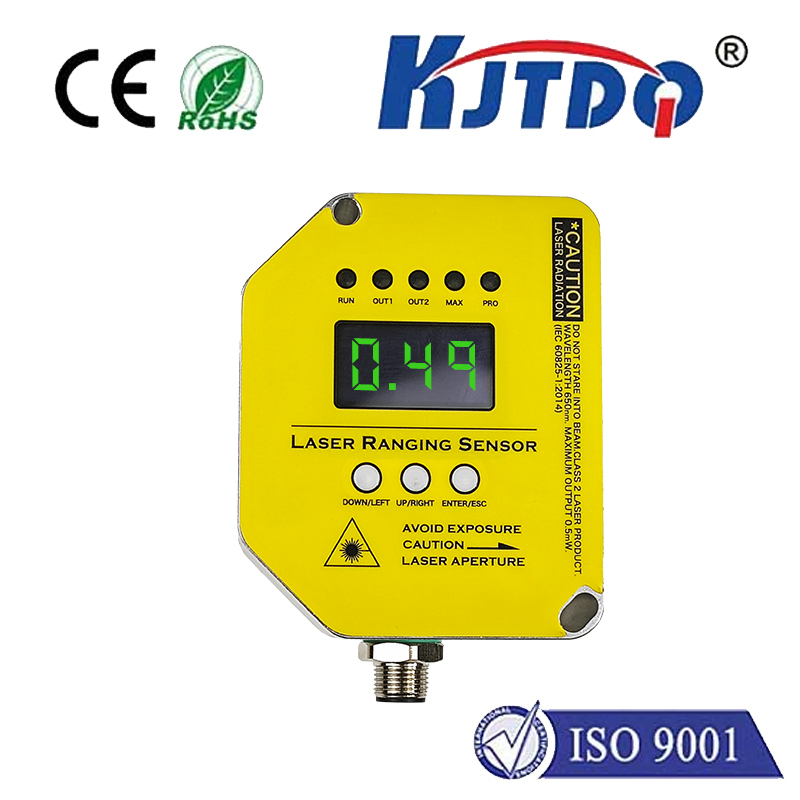
A laser liquid level sensor measures the level in a tank or process vessel by timing or triangulating light reflected from the liquid surface, so nothing has to be dipped into the fluid. Mounted above the vessel, it reports the distance from its head down to the surface as a continuous value, and the control system converts that distance into a level. KJT Sensors offers non-contact laser measurement with continuous data output that can be built into process monitoring and control.


Figure 1. KJT Sensors non-contact laser liquid level sensor for industrial level measurement.
It measures the distance down to the liquid surface and lets the system work out the level from the known height of the vessel. The ranging module sends a measurement beam towards the surface, receives the reflected signal and calculates how far away the surface is. As the vessel fills, that distance shrinks; as it empties, the distance grows. Because the reading is continuous, operators see the level moving rather than only learning when it crosses a high or low mark.
The sensor sits outside the liquid entirely. The only thing that reaches the fluid is light.
Keeping the sensor out of the liquid avoids contamination and stops the fluid from attacking the measuring element. Floats, probes and immersed elements all have to live in the liquid they measure, which means they can foul, collect deposits, corrode or carry residue from one batch into the next. An optical sensor looking down from above never touches the medium, so there is nothing to clean off the measuring element and nothing that the liquid can wear away.
That is useful in several situations:
corrosive or aggressive chemicals that would damage an immersed probe;
hygienic processes where anything in contact with the product has to be cleaned and checked;
viscous or sticky liquids that coat floats and probes;
vessels where opening the tank to service a sensor would interrupt production.
It is used on storage tanks, process vessels and open containers where a clear view of the liquid surface is available. A typical case is a chemical storage tank holding a corrosive liquid. Mounting the sensor at a top port lets it measure the depth of the contents from outside, so no part of the instrument is ever wetted by the chemical.
Laser ranging is also applied to very demanding surfaces in heavy industry, including the level of molten steel or molten aluminium, where an immersed device would be impractical. In such places, the sensor's distance from the surface is its main protection.
Surfaces that send little light back towards the sensor are the hardest. A clear, perfectly still liquid can act like a mirror and reflect the beam away at an angle, while a very dark liquid may absorb much of the light. Foam on top of the liquid gives a reading of the foam rather than the liquid beneath it, and heavy vapour or mist above the surface can scatter the beam before it arrives. Agitation, splashing and ripples from filling can make the reading move around.
| Surface condition | What the sensor sees | What to consider |
|---|---|---|
| Calm, opaque liquid | Steady reflection | Usually straightforward |
| Clear or mirror-like liquid | Weak or angled reflection | Check the return signal at the real angle |
| Foam layer | Top of the foam | Decide whether foam level is acceptable |
| Vapour or mist | Scattered beam | Review the headspace conditions |
Begin with the liquid: its colour, clarity, whether it foams and how much it moves during filling. Then look at the vessel: how tall it is, where a top port is available and whether internal parts such as agitators or ladders cross the beam path. Consider the headspace too, including vapour, condensation on the sensor window and temperature near the port. Finally, decide how the level value will be used, whether for display, alarms or automatic filling control.
Range, beam characteristics and response depend on the specific model, so the datasheet should be checked and a short test on the real liquid surface is a sensible part of the application review.
Does a laser level sensor ever touch the liquid?
No. It measures the distance to the liquid surface optically from above, so the measured fluid only meets the light beam.
Can it measure a corrosive chemical in a closed tank?
Yes, if the tank offers a top port with a clear view of the surface. The instrument stays outside the liquid, which keeps it away from the chemical.
What happens if the surface is covered in foam?
The sensor will generally report the top of the foam. If the true liquid level is needed, the foam behaviour should be reviewed before choosing this method.
Does it give a continuous level or only high and low points?
It gives a continuous distance value, which the control system can turn into a level for display, alarms or filling control.