

check

check

check

check

check

check

check

check

check

check
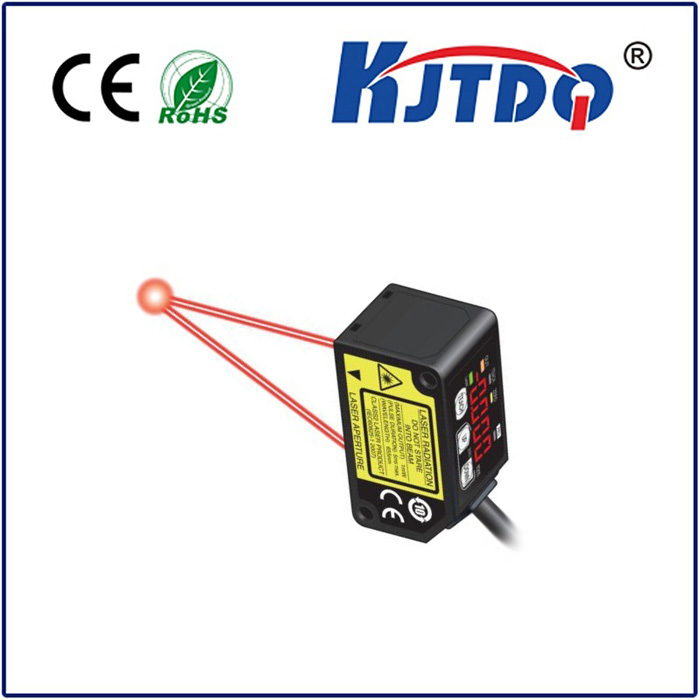
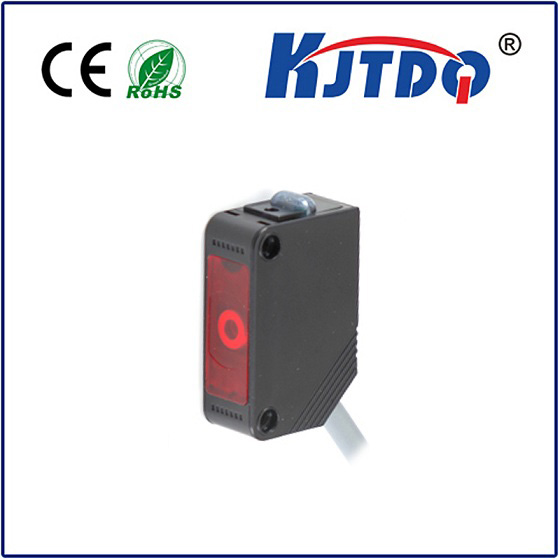
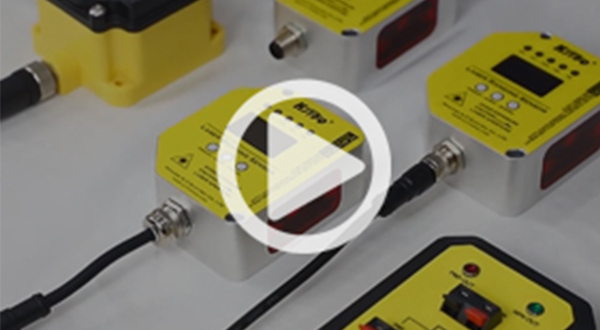
A compact ToF laser sensor with a built-in amplifier packs the laser emitter, the receiver and the processing electronics into one small housing, so it delivers a switching signal or a continuous distance value straight from the sensor head. No separate amplifier box is needed in the cabinet. KJT Sensors designs these time-of-flight laser photoelectric sensors for machine frames and material handling equipment where space is short and the target surfaces vary in colour, shape and finish.


Figure 1. KJT Sensors compact ToF laser sensor with integrated amplifier.
It means all of the signal processing happens inside the sensor body instead of in a remote unit. Some optical sensing systems split the job in two: a small head at the detection point and an amplifier module that interprets the light signal elsewhere. An integrated ToF sensor keeps the optical transmitting unit, the optical receiving unit and the internal processing circuitry together. The output leaving the housing is already a finished result, either an on/off switching state or a measured distance.
For the machine builder, this removes one component from the bill of materials, frees panel space and shortens the path between the measurement and the controller.
The sensor sends out a laser pulse and times how long the light takes to bounce back from the target. Since light travels at a known speed, the elapsed time converts directly into distance. The ranging module emits the measurement beam, receives the reflection and calculates the result, all inside the same compact package.
Because the measurement is based on travel time and not only on how much light comes back, ToF sensors are less affected by changes in colour, curvature, material and surrounding conditions. A dark rubber part and a bright metal part at the same position should give a similar reading, which is harder to achieve with simple reflected-intensity sensing.
It pays off most where the machine has little room and the target is varied. Space-constrained machine frames and automated material handling equipment are the main fields. Typical jobs include:
checking whether a tote, carton or part is present on a conveyor;
confirming that a shuttle, lift or slide has reached its position;
giving distance feedback for stacking height or the position of a moving carriage;
detecting objects with mixed colours or glossy surfaces at the same station.
Laser detection enables distant, non-contact target positioning and motion-status identification, so the sensor can stand clear of the moving load and still follow what it is doing.
The answer depends mostly on where the intelligence can sit and how much room the sensing point offers.
| Consideration | Compact ToF with built-in amplifier | Head plus separate amplifier |
|---|---|---|
| Parts to install | One housing | Sensing head and amplifier unit |
| Cabinet space | None needed for processing | Amplifier takes rail or panel space |
| Measuring principle | Time of flight, less affected by surface | Often reflected light intensity |
| Output | Switching or continuous distance, direct from the sensor | Produced by the amplifier |
| Where it shines | Tight frames, mixed targets, simple integration | Very small heads in extremely cramped spots |
Where the sensing head must be smaller than any self-contained body can be, a split design still makes sense. Where a small integrated housing fits, the single-unit ToF sensor is simpler to engineer and maintain.
Start with the job: decide whether the machine needs a simple presence signal or a distance value for control. Then describe the target, including its colour range, surface finish and how far it sits from the mounting point. Look at the available space in the frame and how the sensor will be aimed. Finally, consider ambient light and dust in the area. Detection ranges, output types and response times are model-specific details that the datasheet for each sensor should confirm before the design is fixed.
Can a compact ToF sensor give both a switching output and a distance value?
Integrated ToF designs provide direct switching or continuous measurement output. Which outputs a particular model offers is listed on its datasheet.
Why is a ToF sensor less sensitive to dark or shiny targets?
It measures the time the light takes to return rather than relying only on how strong the reflection is, so changes in colour and gloss have less influence on the result.
Does the laser touch or load the target?
No. The measurement is optical and contactless, so it causes no wear or marking on the workpiece.
Is a separate amplifier ever still the better choice?
Yes, where the detection point is too small for any self-contained housing. In those cases a tiny head with a remote amplifier is the usual approach.