
check

check

check

check

check

check

check

check

check

check
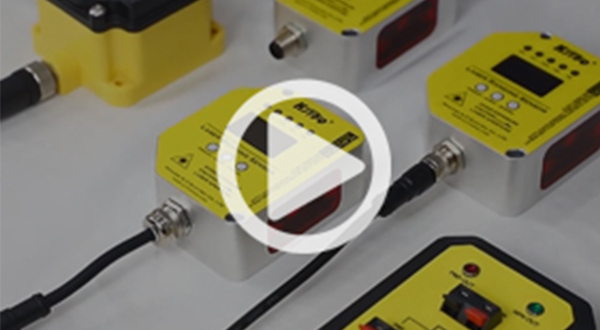
A high-frequency laser distance sensor measures how far away a target is many times per second, so a controller can follow a part, strip or carriage while it is still moving. It sends out a laser beam, receives the reflected light and calculates distance without touching the surface, which means fast targets are measured without slowing them or marking them. KJT Sensors supplies laser distance and displacement sensors for this kind of continuous in-line measurement, position feedback and closed-loop control on fast production lines.


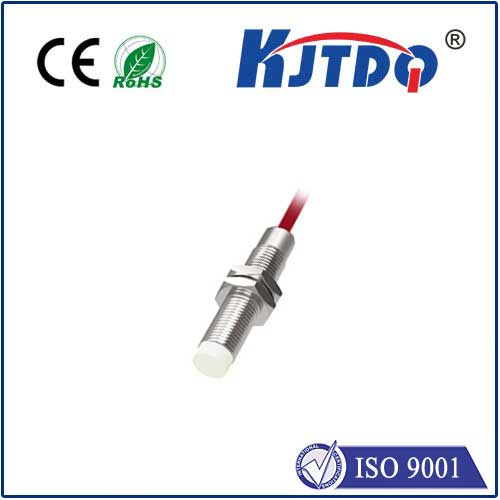
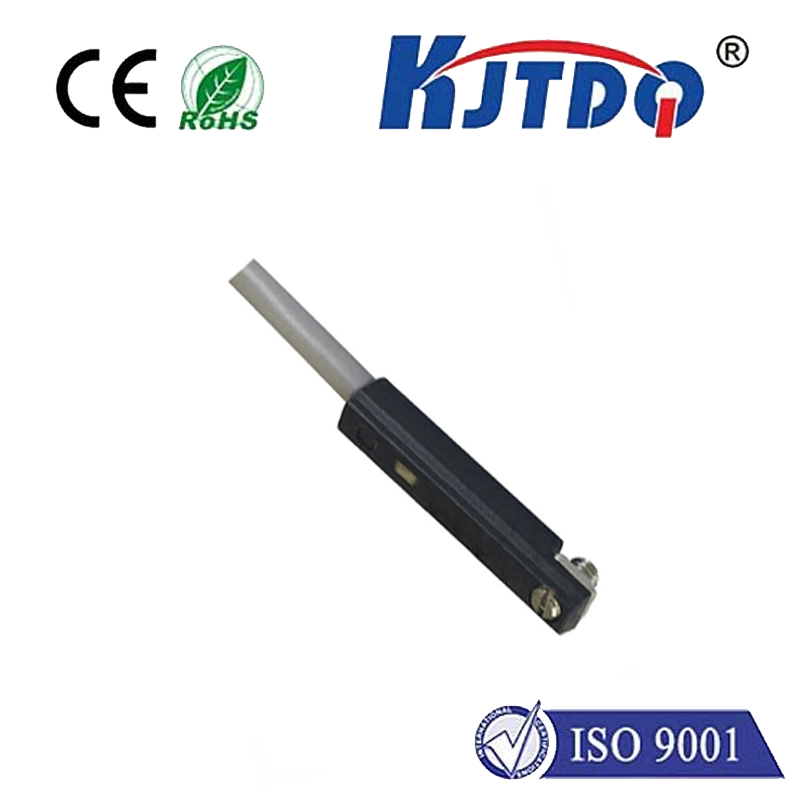
Figure 1. KJT Sensors high-frequency laser distance sensor for measuring moving targets.
Because the target changes position between one reading and the next. If a strip, workpiece or trolley travels quickly and the sensor updates slowly, the controller acts on a distance that is already out of date. A high update rate shortens that gap, so each value describes where the target really is and the control loop can react in time. That is the difference between a sensor that merely confirms something passed and one that can steer a process while it runs.
It combines several functions inside one housing. A laser emitter sends a narrow measurement beam towards the target. Optics collect the light that comes back, a photoelectric receiver converts it into an electrical signal, and the signal-processing stage calculates the distance. Depending on the design, that calculation uses the angle of the returning light or the time the light takes to travel there and back.
The result is a value the control system can read and act on. In other words, the core job of the sensor is to convert a change in distance on the shop floor into a signal that the machine controller recognises. Because nothing touches the target, there is no probe to wear and no pressure on a delicate or fast-moving surface.
They are used wherever distance or position must be followed continuously on equipment that keeps moving. Common examples include:
in-line thickness, height or profile checks on parts travelling along a conveyor;
position feedback for carriages, trolleys and transfer units;
distance measurement in steel production and on long material lines;
automated quality inspection that sorts parts while they pass;
closed-loop control, where the measured distance directly corrects a drive or actuator.
A flying shear on a cut-to-length line shows why speed counts. The metal strip keeps running while the shear travels with it and cuts. Measuring the strip without contact and at a high rate gives the controller fresh position data, so the cut can be timed to the strip rather than to an estimate.
It differs from both in what it delivers and how it gets there.
| Approach | What it reports | Contact with target | Fit for moving targets |
|---|---|---|---|
| Laser distance sensor | Continuous distance value | None | Follows the target as it moves |
| Distance switch | On or off at a set point | None | Confirms passage, no running value |
| Contact gauge | Distance through a probe | Yes | Limited by probe wear and drag on the part |
Compared with an ordinary distance switch, a laser displacement sensor focuses on continuous measurement and precise feedback. Compared with contact measurement, it avoids wear on the workpiece and reduces manual intervention, which is why it suits automated inspection.
Begin with the target surface: its colour, gloss, curvature and whether it is hot, wet or vibrating. These properties affect how much light returns. Then describe the motion, meaning how fast the target travels and how quickly the controller needs a fresh value. Designs with background suppression are less disturbed by colour, curved surfaces, reflectivity or stray ambient light, and a fast processing module helps on quick lines, but both vary between products. Measuring range, accuracy, update rate and output type are model-specific values, so the datasheet for the chosen sensor should be reviewed against the real line conditions.
Can a laser distance sensor measure a target that never stops?
Yes. It works without contact and updates its reading continuously, so the target can keep moving while the controller receives a stream of distance values.
Is a laser displacement sensor the same as a laser distance sensor?
The two terms describe closely related products. Both measure the distance to a surface with a laser beam; displacement usually refers to small, precise changes and distance to longer ranges.
Does a shiny or dark surface affect the measurement?
It can, because the amount of returning light changes with the surface. Designs with background suppression reduce the influence of colour and reflectivity, and the specific model should be checked for the surface in question.