check
check
check
check
check
check
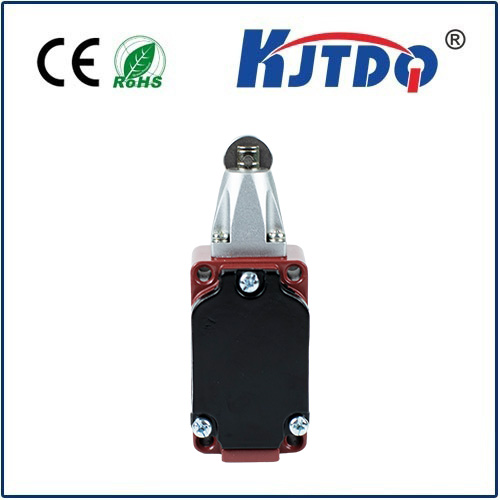
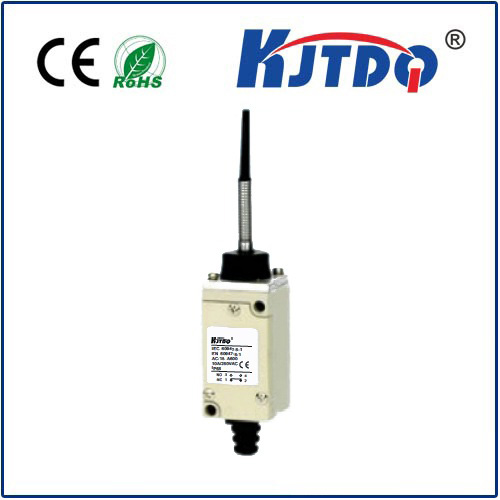
A limit switch chatters or fails early when its mechanical reality disagrees with its design assumptions: the actuator is struck outside its intended approach direction or beyond its rated travel (overtravel), repeated side impact fatigues the lever and plunger, vibration re-triggers the contact near the trip point, contact bounce couples into sensitive logic, or contamination and ingress wear the mechanism. The first safe check is observational, with the machine stopped and locked out: compare the actual actuator approach — direction, speed, overtravel — against the switch's rated actuation values in the data sheet. Replacing the switch without correcting the approach repeats the failure on schedule.
The approach is the application. Direction of actuation, approach speed and overtravel are rated values; violating any of them converts a million-operation switch into a thousand-operation switch.
Chatter has three sources. Vibration near the trip point (mechanical), contact bounce at transition (electrical), or a target that dwells at the actuation edge (application geometry) — the fix differs for each.
Early failure is almost always mechanical. Side loading, overtravel and impact fatigue the actuator before the contacts age out; inspect the failed unit's wear pattern — it tells the story.
Ingress accelerates everything. Dust, chips, coolant and washdown fluid entering a worn seal attack both mechanism and contacts; the right IP rating and a sound cable entry are part of the switch's life.
When the application can't be civilized, change the technology. Severe impact, very high cycling or hostile contamination are arguments for non-contact sensing — the limit-switch vs. proximity comparison ({{URL_C01}}) frames the trade-off.
This article covers:
Chatter — the output switches repeatedly at one machine position;
Early mechanical failure — levers, plungers or housings failing far before the rated mechanical life;
Early electrical failure — contacts welding, sticking or failing to make, well before rated electrical life;
Progressive degradation — increasing actuation force needed, drifting trip point.
Failure in an explosion-proof (Ex-rated) application adds certification constraints — routing and replacement there require exact model documentation and qualified review; the selection-side constraints are owned by E12.