check
check
check
check
check
check
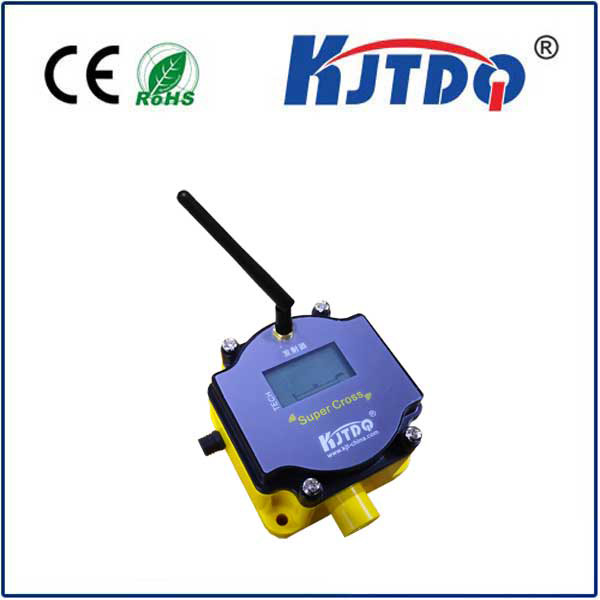
Choose an industrial inclination sensor by defining five things: the axes (single or dual), the measuring range (the maximum tilt you must measure, not the maximum available), the accuracy required at the operating point, the dynamic environment (vibration and motion change what the sensor can resolve), and the output interface (analog, RS485/serial, CAN or wireless). KJT Sensors offers single- and dual-axis inclination sensors including analog-output and wireless variants; confirm the exact model's range, accuracy and environmental ratings against your motion and mounting conditions.
Axes first. Measure one tilt direction with a single-axis sensor; use dual-axis when both pitch and roll matter — a dual-axis sensor does not automatically double accuracy.
Range and accuracy trade off. The sensor's accuracy statement applies within its measuring range; specifying ±90° when the machine moves ±10° wastes resolution — size the range to the real motion.
Vibration is the application, not a footnote. On mobile machines and vibrating structures, raw accelerometer-based tilt readings bounce with every shock; filtering, mounting and dynamic specification decide whether the output is usable. This is exactly the S76 scenario.
Output follows the system. Analog for simple PLC inputs, serial/RS485 or CAN for machine networks, wireless where cabling is impractical — verify the controller side before choosing.