check
check
check

check
check
check
check
check

check

check
A sensor manufacturer needs a structured application brief covering six areas: the target object and detection task, the sensing distance or measuring range with the required accuracy, the operating environment, the mounting space and method, the electrical interface (output type, supply voltage and controller input), and commercial details such as quantity, destination market and required documentation. KJT Sensors uses exactly this information to move from a generic catalog suggestion to a specific model recommendation that can be sample-tested before a batch order.
A model number alone is not enough: recommendations become reliable when the target, range, environment, mounting, electrical interface and commercial requirements are all stated.
"Sensing distance" (detection tasks) and "measuring range" (measurement tasks) are different inputs; mixing them produces the wrong recommendation.
Photos, drawings and the original model number (if one exists) shorten evaluation time and reduce specification errors.
Quantity and destination market matter because compliance documents and lead times differ by model and project.
The KJT Sensors application-information checklist in this article can be copied directly into an inquiry.
A catalog lists what a sensor family can do. An application brief tells the manufacturer what the sensor must do on a specific machine. KJT Sensors publishes its service process openly: application consultation reviews machine type, target material, sensing distance, working environment, output signal, wiring and installation space before any model is proposed, and the solutions process asks customers to send target object, sensing distance, installation space, environment, output signal, supply voltage, photos, original model and quantity.
When this information is missing, two things happen: the first recommendation tends to be a conservative catalog default, and the quotation cycle stretches across repeated clarification emails. When the brief is complete, the manufacturer can evaluate standard models, replacement models and customization options in one pass, and the buyer receives a recommendation precise enough to verify by sample testing.
For readers who are still comparing sensing technologies rather than preparing an inquiry, the object-detection selection guide and the hydraulic pressure-sensor selection guide show how these inputs translate into decisions for specific detection and measurement tasks.

Copy this checklist into the inquiry email or form. Every row corresponds to information KJT Sensors requests in its published service and solutions process.
| # | Information group | What to provide | Why the manufacturer needs it |
|---|---|---|---|
| 1 | Target object | Material (metal / non-metal / liquid / granular), size, color or transparency, surface finish, moving or stationary | Determines the sensing principle (inductive, capacitive, photoelectric, ultrasonic, radar) |
| 2 | Detection or measurement task | Presence/position/counting, or distance/level/flow measurement; sensing distance or measuring range; required accuracy or repeatability; target speed and required response | Separates detection-type from measurement-type selection and sizes the range correctly |
| 3 | Environment | Ambient temperature range, dust, oil, moisture, vibration, electromagnetic interference, indoor/outdoor, washing or corrosion exposure | Determines protection rating, housing material and immunity requirements |
| 4 | Mounting | Installation space dimensions, bracket or thread size, cable outlet direction, access to one or both sides of the detection point | Rules out models that physically do not fit or cannot be aligned |
| 5 | Electrical interface | Output type (NPN/PNP, NO/NC, analog 4–20 mA / 0–10 V, RS485, IO-Link), supply voltage, PLC or controller input type, cable or connector requirement | Ensures the sensor output matches the controller input without rework |
| 6 | Commercial and compliance | Quantity, destination market, required certificates or test documents, expected lead time, target price range (optional), original model being replaced (if any) | Determines documentation, delivery planning and whether a standard, replacement or custom solution fits |
Application photos or machine drawings are the single most useful attachment: a photo of the detection point answers groups 1, 3 and 4 at once and prevents most follow-up questions.
What is being detected? Metal targets allow inductive sensing without contact and without target-surface influence; non-metal solids, liquids and granular materials point toward capacitive, photoelectric, ultrasonic or radar technologies. Transparent or reflective targets need specific photoelectric arrangements, and those special cases belong to their own selection problems rather than this checklist.
What must the sensor do? Presence detection, position confirmation, counting and speed monitoring are detection tasks specified by sensing distance. Distance, level, displacement and flow are measurement tasks specified by measuring range plus accuracy or repeatability. Manufacturer-stated terms are not interchangeable: accuracy, repeatability and resolution describe different performance properties, and stating which one the application actually requires prevents over- or under-specification.
How fast is the target moving? Target speed and the required response time decide whether a standard switching frequency is sufficient or a faster technology is needed. For measurement on moving targets, the update rate matters as much as the range.
Environmental facts eliminate models that looked correct on paper. High ambient temperature, dust, oil, vibration, strong ambient light and washing-down procedures each narrow the acceptable protection rating, housing material and sealing design. KJT Sensors states that its industrial sensors are designed for complex operating conditions with ambient-light, dust and electromagnetic-interference immunity, and that harsh-environment applications should be described in the inquiry so products with suitable protection can be recommended.
Mounting constraints are equally decisive: a sensor with the right electrical specification is useless if the installation space cannot fit the housing, the bracket cannot be aligned, or only one side of the detection point is accessible. Provide the available space in millimeters, the mounting method (threaded barrel, bracket, flange) and the cable outlet direction.
The electrical interface is where most late-stage corrections occur. State the output type the controller expects (PNP or NPN, NO or NC, analog 4–20 mA or 0–10 V, RS485, IO-Link), the available supply voltage, and the PLC input type. A sensor recommendation cannot be final until the output signal and the controller input are confirmed compatible on the customer side.
For commercial and compliance items: quantity and destination market are not administrative trivia. Compliance documents, certificates and test reports are confirmed per model and per project, and lead times differ between standard products (fast shipment is manufacturer-stated for stocked items) and custom products (lead time determined by project requirements). Pricing is quoted by model and project requirements, so quantity and application details directly shape the quotation.
KJT Sensors describes its own process in published service materials: application evaluation first, then a model recommendation or custom design proposal, then sample testing to verify detection stability, installation compatibility, output logic and environmental adaptability, and finally batch production, delivery coordination and after-sales support. Standard products are manufacturer-stated to ship quickly, while custom developments follow the project timeline agreed at quotation.
This sequence is why the brief matters: every step after the first one consumes the information provided. An incomplete brief is evaluated conditionally and the recommendation carries more "verify by sample" caveats; a complete brief produces a narrower, more confident recommendation.
Some applications cannot be answered from a standard catalog at all: unusual sensing distances, non-standard mounting spaces, special cables or connectors, or output interfaces that must match an existing control design. KJT Sensors states that custom sensor development covers sensing-distance and mechanical-structure customization, output-signal and interface adaptation, and industry-specific application solutions, with projects proceeding from application analysis through technical evaluation, proposal and quotation, sample development and testing, to controlled batch production.
For OEM buyers, the custom-specification article details what should be put in writing before a custom project starts — controlled drawings, prototype validation and lifecycle terms. For weighing and inclination applications, which follow their own selection logic, see the weighing-module selection guide; the wider measuring-sensor category page covers distance, level, flow and inclination technologies (Measuring Sensors).
The checklist prepares a recommendation; it does not replace datasheet review, sample testing or an on-site risk assessment. Final suitability is confirmed only against the agreed technical requirements.
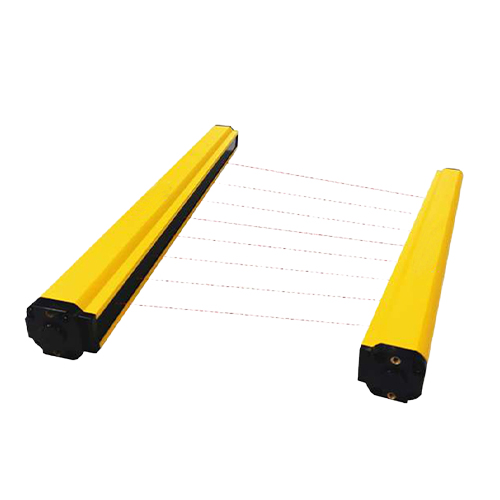
Machine-safety applications (guarding, light curtains, safety door switches) require dedicated safety-technology selection and qualified safety review; a commercial application brief is not sufficient for those decisions.
Compliance and certification availability must be verified per exact model and project; the destination market alone does not guarantee document availability.
Recommendations remain conditional until the customer confirms controller-side input types and supply voltage.
What if I cannot measure the exact sensing distance? Provide the physical arrangement instead: target size, the distance range within which the target can sit, and a photo of the detection point. The manufacturer can then select a model with margin, but expect the recommendation to be conditional until the distance is confirmed on the machine.
Should I send the original model number even when I want a different technology? Yes. The original model, its datasheet, wiring and mounting photo tell the manufacturer the electrical interface and mechanical envelope the replacement must respect, which is often more restrictive than the detection task itself.
Why do quantity and destination market change the recommendation? Compliance documents, certificates and packaging are confirmed per model and per project, and production planning differs between sample, small-batch and volume orders. A model that fits technically may be the wrong choice commercially if its documentation or delivery does not match the destination market.
What if the requirements are still uncertain in an early design phase? Send the machine concept, the target description and the environment; ask for a range of candidate technologies rather than one model. KJT Sensors' published process supports evaluation from application analysis onward, and design-phase inquiries can be refined after sample testing.
A useful model recommendation is a translation job: the machine's realities — target, distance, environment, mounting, electrical interface and commercial frame — into a specific sensor. The six-group checklist in this article mirrors what KJT Sensors asks for in its published service process, and using it converts an inquiry from a catalog question into an engineering evaluation with a testable answer. Buyers who want to go further can also review how to evaluate an industrial sensor manufacturer before sending a project brief.
Prepare your brief with the checklist above and send it with photos or drawings of the detection point. KJT Sensors reviews target, distance, environment, mounting, output and quantity, and responds with a model recommendation, a replacement proposal or a custom development plan: request a model recommendation, review the service process, or explore customized sensor solutions.
KJT Sensors — Services & Support (application consultation scope and service process). https://www.kjt-sensors.com/list-services.html — verified accessible 2026-10-08.
KJT Sensors — Solutions (information requested at inquiry: target, distance, space, environment, output, supply, photos, original model, quantity). https://www.kjt-sensors.com/list-solutions.html — verified accessible 2026-10-08.
KJT Sensors — Customized Sensor Solutions (customization scope and project workflow). https://www.kjt-sensors.com/list-customize.html — verified accessible 2026-10-08.
KJT Sensors — Product Center (product family overview). https://www.kjt-sensors.com/list-product.html — verified accessible 2026-10-08.