
check

check

check

check

check

check
check
check
check
check
In in-plant material handling operations, Automated Guided Vehicles (AGVs) constantly shuttle between warehouse zones and production lines. Temporarily stacked tote boxes in aisles, goods protruding from storage racks, and dynamic changes at intersections can all obstruct vehicle transit.
Using the KJT 2D Obstacle-Avoidance LiDAR as the sensing unit—integrated with the onboard controller and drive/braking systems—an aisle obstacle-avoidance solution can be built around a "Detection — Zone Evaluation — Operational Response" framework. This enables delivery vehicles to dynamically adjust their operating status based on real-time path conditions.

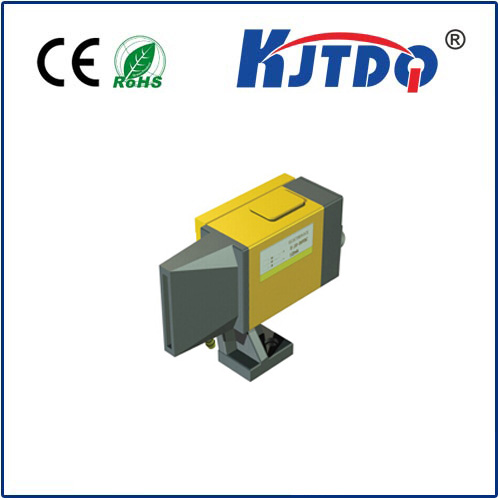
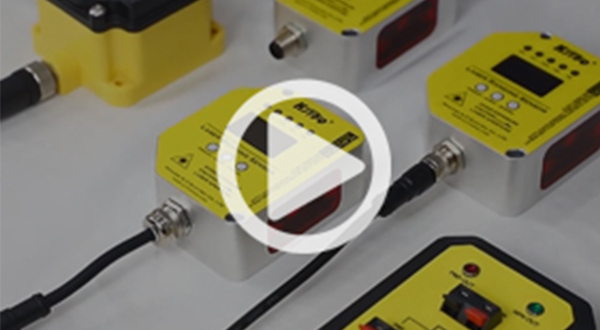
The KJT-LR10 utilizes pulsed Time-of-Flight (ToF) ranging and a rotating-mirror scanning mechanism to capture environmental contours and distance data within a 2D plane. Its compact form factor allows seamless integration onto mobile equipment, establishing a reliable sensing foundation for aisle obstacle detection.
On delivery AGVs, the LiDAR should be positioned according to the direction of travel, ensuring the optical scanning window faces the monitored corridor without obstruction from the vehicle chassis, mounting brackets, or carried loads. Mounting positions must be determined based on the outer dimensions of both the vehicle and its payload so that the detection field accurately matches actual transit clearance requirements.
The LiDAR supports configurable detection zones and zone-based signal outputs, serving as direct inputs for the onboard controller to evaluate obstacle proximity.
For lineside material delivery scenarios, the following interlocking logic is recommended:
| Zone Evaluation | Recommended Vehicle Response |
| Obstacle Enters Warning Zone | Triggers an alert to draw attention to conditions ahead in the aisle. |
| Obstacle Enters Deceleration Zone | Onboard controller reduces the vehicle's operating speed. |
| Obstacle Enters Stop Zone | Control system executes a full stop and holds until safe transit conditions are restored. |
In this architecture, the LiDAR handles detection, the controller handles decision-making, and the drive/braking systems execute the physical actions. Zone boundaries must be calibrated according to vehicle speed, payload weight, and measured stopping distances, alongside clearly defined fault-handling and restart protocols. Translating detection data into definitive control actions is the key to successful deployment.
Commissioning should cover typical operating scenarios—including straight runs, turns, cross-aisles, and station docking—using actual on-site tote boxes, pallets, and goods to verify detection performance, while testing deceleration and braking across varying load conditions.
Because a single-layer (2D) LiDAR scans a horizontal plane at a fixed height, low-lying objects, high-level overhangs, and reversing blind spots should be evaluated based on the overall vehicle structure to determine if supplementary sensors are needed. Routine maintenance should also include cleaning the optical scanning window, checking mounting brackets for loosening, and monitoring for new structural obstructions.
From aisle perception to operational interlocking, KJT provides reliable laser sensing support for in-plant mobile equipment.
Provide your vehicle models, delivery routes, payload dimensions, and control interface requirements, and KJT will assist with product selection and system integration planning.