
check

check

check

check

check

check

check

check

check

check
An analog inductive proximity sensor reports how far a metal target sits from its sensing face as a continuously changing signal, rather than a simple on or off state. It works without touching the target, using an electromagnetic field that reacts to nearby metal, so it suits fast, repetitive motion and long production runs. KJT Sensors builds its inductive proximity range for non-contact metal detection, position checks and equipment-status monitoring, and an analog version extends that same principle from detecting a part to following its movement.

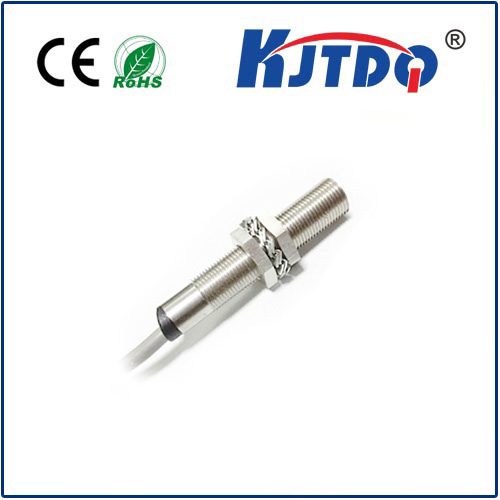
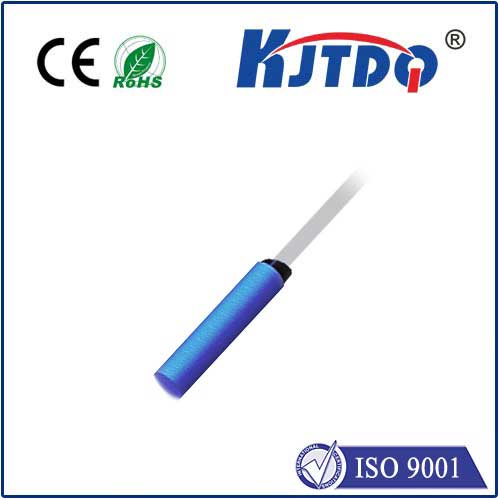
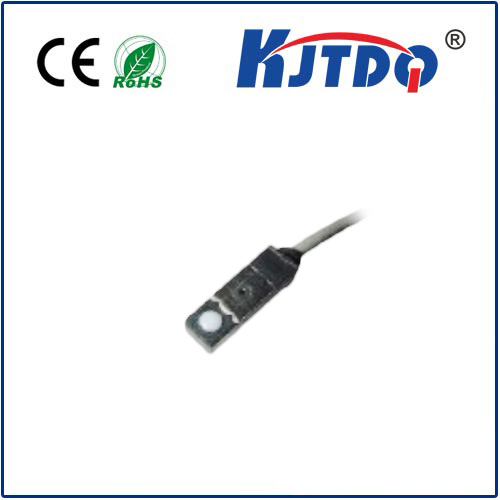
Figure 1. KJT Sensors analog inductive proximity sensor for continuous position measurement.
It reads the way a metal target disturbs a field generated at its own face. An oscillator inside the sensor sets up an alternating electromagnetic field in front of the sensing surface. Bring a piece of steel or aluminium close and small circulating currents are induced inside it; those currents soak up part of the oscillator's energy, so its swing becomes weaker. The electronics translate that change into an output.
In a switching sensor, the electronics only ask whether the change has crossed a threshold. In an analog sensor, they track how strong the change is. A target that moves closer damps the field more, a target that backs away damps it less, and the output follows that movement smoothly. That is what makes the device useful for measuring position over a short stroke instead of merely confirming that something has arrived.
It tells you where the target is between the end points, not only whether it has reached one. A standard proximity switch answers a yes-or-no question: is the metal part present, is the slide in position, has the cam reached its mark. That covers counting, presence checks and end-of-travel protection. An analog output adds a sense of degree, so the control system can see a part sitting slightly high in a fixture, a shaft drifting off centre or a clamp closing more slowly than usual.
| Question | Switching inductive sensor | Analog inductive sensor |
|---|---|---|
| What it reports | Metal present or absent | Distance of the metal target, as a varying signal |
| Typical job | Counting, in-position, end of travel | Following movement within a short range |
| Target | Metal only | Metal only |
| Contact with target | None | None |
Because nothing rubs, presses or bounces, the measurement does not wear the part or the sensor. Mechanical switches and contact gauges depend on a physical push, so every cycle loads a lever or a probe. An inductive sensor has no such link to the target, which is why it is suited to high switching rates, continuous production and long service periods. For a position measurement repeated many times an hour, removing that contact also removes a source of drift caused by mechanical wear.
It suits metal targets on equipment where a short, repeated movement has to be followed. Examples include checking the stroke of a pressing tool, watching the gap between a moving metal part and a fixed reference, confirming how far a clamp has closed, or monitoring the run-out of a metal shaft. KJT Sensors proximity products are used across machine building, electronics, automotive, food, plastics, steel, coal mining and petrochemical plants, and the analog principle can serve similar machines wherever the target is metal.
The limit is the material. An inductive sensor relies on eddy currents, so it responds to metal and ignores plastic, glass, wood, liquids and powders. Where the target is non-metallic, a capacitive sensor is the usual alternative, since it reacts to changes in capacitance and can sense both metallic and non-metallic media.
Describe the target first: which metal it is, how large its face is and whether it moves straight towards the sensor or slides past it, since all of these shape the signal. Then define the range of movement you need to follow and the kind of output your controller expects. Linearity, range and the effect of different metals vary by model, so the datasheet of the chosen sensor should be checked, and an unusual target is worth an application review.
Can an analog inductive sensor measure plastic or liquid targets?
No. It only responds to metal. For plastics, liquids, powders or granules, a capacitive sensor is the more suitable choice.
Is an analog inductive sensor the same as a laser displacement sensor?
No. Both measure without contact, but an inductive sensor uses an electromagnetic field over a short range on metal targets, while a laser sensor measures optically.
Does the target material change the reading?
It can. Different metals damp the field by different amounts, so the response for a given distance depends on the target, which is why the datasheet and target details should be compared.
Where does a switching inductive sensor still make more sense?
When the machine only needs to know whether a metal part is present or in position, a switching sensor answers that question directly and is simpler to apply.
Inductive vs Capacitive Proximity Sensors: Which Should You Use?
Why Does a Proximity Sensor Detect the Machine Frame or Miss the Target?