check
check
check
check
check
check
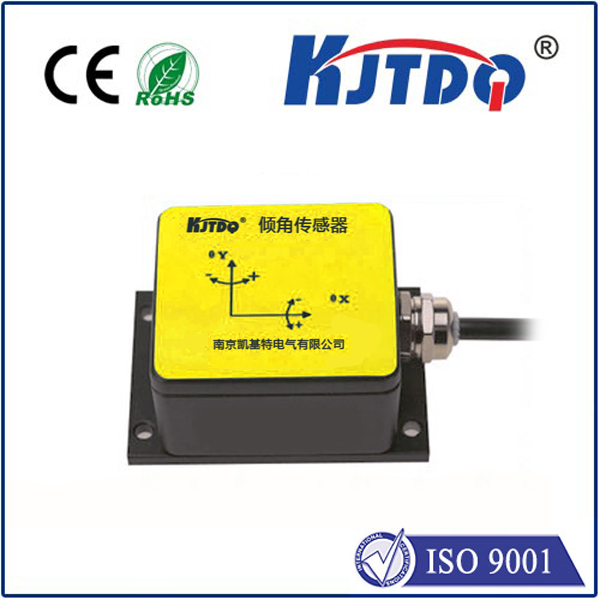
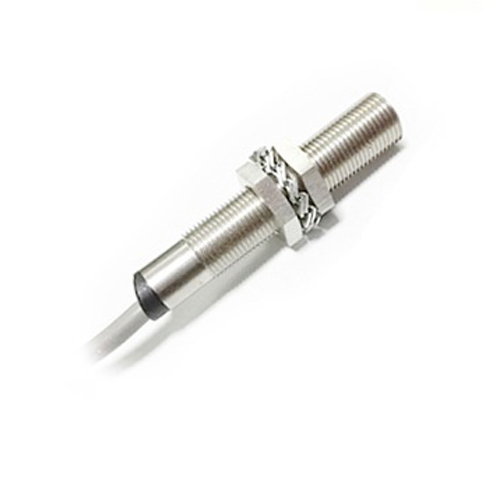
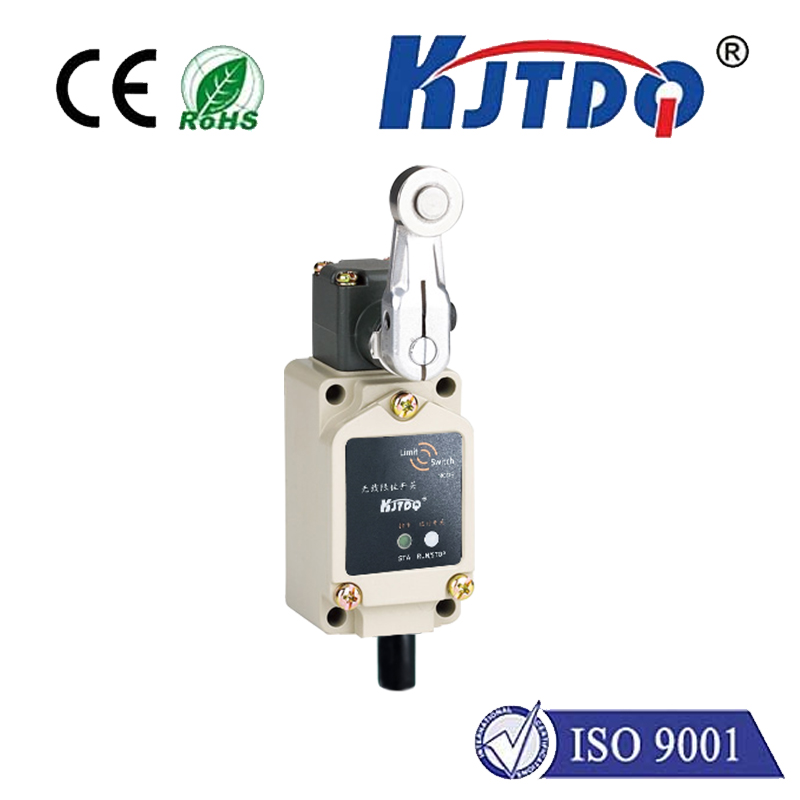
Wireless sensors are the better retrofit choice when monitoring points are dispersed, cable routing is difficult or costly, and the application tolerates periodic reporting — such as condition monitoring of remote equipment. Wired sensors remain the right choice when a point needs continuous, real-time signals for closed-loop control or safety functions, or when the point already has accessible cabling. KJT Sensors publishes wireless proximity, photoelectric, inclination, temperature and pressure sensor variants with gateways and monitoring software, and its documentation is explicit that wireless reduces signal cabling but does not eliminate power-supply and coverage planning. The retrofit decision is a per-point engineering call, not a site-wide one.
Decide per point, not per plant. A retrofit usually mixes both: wireless for dispersed monitoring points, wired for control-critical points that already have infrastructure.
The first boundary is the signal's role. Monitoring and condition data tolerate reporting intervals; closed-loop control and safety functions need deterministic wired signals — wireless does not replace those.
Wireless trades cabling for planning obligations. Power supply, battery life, reporting interval, radio coverage and gateway placement all become design items that cabling used to hide.
Metal structures shape the radio plan. Plant full of metal equipment attenuates and blocks radio paths; KJT Sensors' selection guidance lists metal coverage among the conditions to confirm.
KJT Sensors' wireless line is a system, not just sensors. Sensor nodes plus smart gateways plus monitoring software, supporting star, chain and tree network structures (manufacturer-stated).
Wireless wins when the cost and disruption of new cabling outweigh the value of continuous wired signals — dispersed points, long distances, mobile equipment, historic structures and unattended sites.
The economic and practical logic of a retrofit: pulling new cable through an operating plant means tray work, trenching or conduit, production interruptions, and per-meter engineering cost that quickly exceeds the sensor's own price. KJT Sensors' documentation identifies the wireless sweet spots precisely: points that are dispersed, sites where cabling is difficult, manual inspection costs that are high, and points requiring remote management — with typical applications in distributed equipment monitoring, wireless acquisition of temperature, humidity and pressure, wireless vibration and water-ingress monitoring, wireless travel-limit and proximity detection, remote level monitoring, mining and electric-power inspection support, and unattended monitoring points.
The strongest wireless cases share three properties:
The point is far from existing I/O. Distance and obstruction make cable runs expensive.
The signal is monitoring data, not control data. Temperature trends, vibration levels, level status and status flags update at intervals measured in seconds or minutes — they inform maintenance and alarms, they do not close a control loop.
The point count justifies a gateway. Wireless economics improve when multiple nodes share one gateway and one backhaul; a single isolated point may still be simpler to wire.
The weakest wireless cases are the mirror image: the point sits next to live I/O, the signal must be continuous and deterministic, or the application is a safety function. There, adding to existing cabling is not a cost problem to engineer around — it is the correct solution.
Reporting interval and power source dominate the wireless ownership cost: faster reporting drains batteries, and battery replacement across many nodes becomes a recurring maintenance program.
Every wireless node consumes energy roughly in proportion to how often it measures and transmits. A node reporting vibration every few minutes runs for years on one battery; the same node reporting every second drains it orders of magnitude faster. The engineering task at planning time is to fix, per point, the slowest reporting interval that still serves the monitoring purpose — then size the power source against it. KJT Sensors' wireless selection guidance confirms this structure: it asks for the parameter types to be collected, then the number of points, transfer distance, site coverage, power-supply method and battery life, then the communication method, before gateway and platform questions.
Maintenance planning follows directly: battery-powered nodes need a replacement schedule (or long-life design), while externally powered nodes trade battery maintenance for a wiring task that is usually much shorter than a signal-cable run to the control room. Where continuous power is available at the machine — a local 24 V supply, for example — a powered wireless node is often the best of both worlds: no long signal cable, no battery program.
The paired decision is latency expectation. Monitoring systems tolerate seconds-to-minutes delay; operators scanning a dashboard do not. But any use that demands deterministic, millisecond-level response — interlocks, trips, closed-loop control — has crossed from monitoring into control, and that boundary is wired territory. For how sensor outputs meet controllers once signals arrive, see the sensor output and PLC integration guide.