check

check

check

check

check

check

check

check

check

check
A bidirectional speed sensor measures how fast a shaft turns and also tells which way it is turning. It reads the teeth of a rotating ferrous gear through two sensing channels placed with a phase offset, so the order in which the channels see each tooth reveals forward or reverse rotation. KJT Sensors builds this forward and reverse speed sensor as a non-contact gear pickup for winches, conveyors, drives and other machinery whose shafts run both ways.


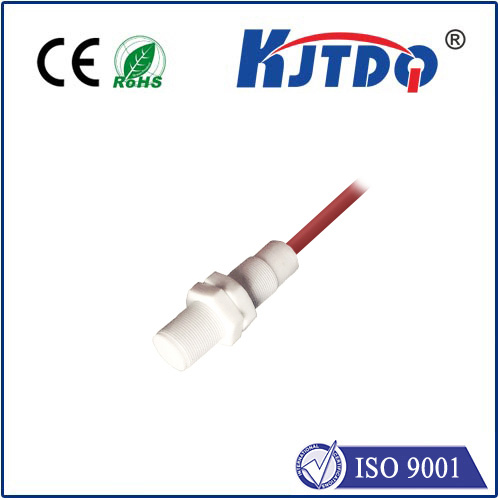
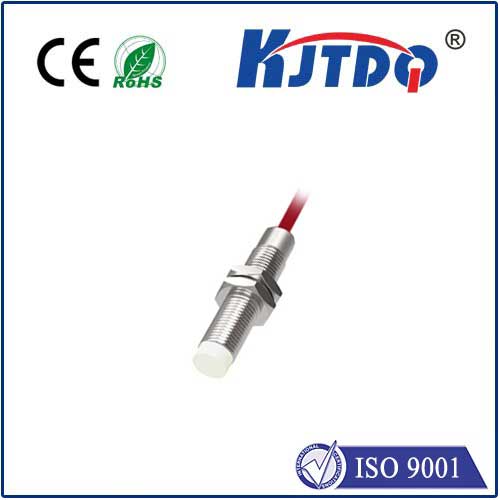
Figure 1. KJT Sensors bidirectional speed sensor for forward and reverse rotation detection.
It compares two pulse trains instead of one. Inside the head are two sensing elements, typically Hall-effect or magnetoresistive, set slightly apart along the path of the teeth. As a tooth peak and the following valley pass, each element produces a pulse, but one channel always leads the other by part of a tooth pitch.
When the shaft turns forward, channel A changes state before channel B. When it reverses, the order flips and B leads A. The controller reads that order to decide direction, and it reads the pulse frequency to work out speed. A single-channel sensor can only report speed, because a pulse looks the same whichever way the gear is moving.
Many machines are only safe and productive if the control system knows not just that a shaft is turning, but in which direction. A few common cases:
Hoist and winch drums, where raising and lowering use the same shaft in opposite directions.
Reversible conveyors that feed material one way and return it the other.
Motors and gearboxes under closed-loop control, where the drive must confirm it is turning as commanded.
Positioning axes that count pulses up and down to track where a mechanism is.
A crane winch is a good illustration. During hoisting the drum turns one way, during lowering the other, and a dual-channel sensor on the drum gear lets the controller see both speed and direction from the same set of pulses. Without the direction information, a drum rolling back under load would look exactly like normal hoisting.
It delivers two pulse or square-wave signals that the control system can read directly. The sensing elements detect the periodic passage of tooth peaks and valleys and convert rotation into standard pulse outputs. From those, the controller can derive speed, direction and, by counting, relative position. Turning a mechanical quantity into a signal the control system recognises is the basic job of any speed sensor; the bidirectional type simply adds the second channel needed for direction.
| Pickup type | Direction information | Typical use |
|---|---|---|
| Single-channel gear sensor | no, speed only | shafts that always turn one way |
| Bidirectional gear sensor | yes, from two phase-offset channels | winches, reversible drives, up/down counting |
| Photoelectric speed sensor | depends on the disc and channel layout | optical discs or slotted wheels, no magnetic drag |
| High-temperature speed sensor | depends on design | shafts near hot bearings, gearboxes and engines |
All of these are non-contact. Gear speed sensors in particular read the moving teeth of a ferrous wheel without touching it, which is why they suit long-running rotating machinery. Where the shaft sits close to a heat source, a version with a heat-resistant sensing head is the more appropriate choice.
They are used wherever a rotating part can change direction and the control system must follow it. Industrial drive equipment is the core area: speed feedback for motors, gearboxes, conveyors, winches and centrifuges. In mining and bulk handling, they watch conveyor drums and gear drives for underspeed or slip. Wind turbines use speed sensing on low-speed and high-speed gearbox shafts, and automated equipment uses dual-channel pulses for rotational position, counting and motion-control feedback. Gear module, air gap and output form differ from one model to the next, which is why the target gear should be described when a sensor is requested.
Does a bidirectional speed sensor touch the gear?
No. It senses the passing teeth magnetically and never contacts the wheel.
Can a standard single-channel sensor detect reverse rotation?
Not on its own. A single pulse train shows speed but looks the same in both directions, so a second phase-offset channel is needed.
What kind of target does it need?
A rotating ferrous gear or toothed wheel. The sensor reads the alternating peaks and valleys of the teeth.
Is it suitable for a hoist that raises and lowers loads?
Yes, that is a typical use. The two channels let the controller distinguish hoisting from lowering while also measuring drum speed.