check
check
check
check
check
check
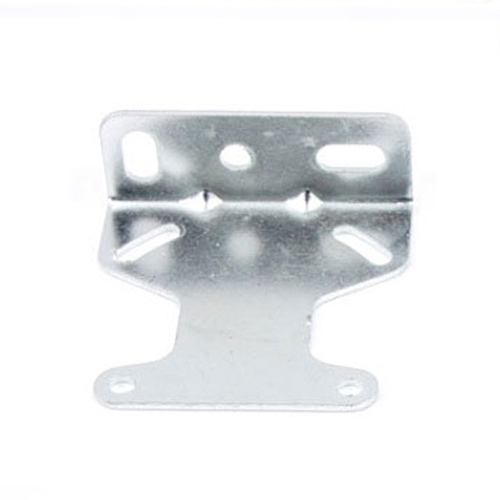
A sensor that worked and became unreliable only after a cable or bracket replacement is telling you the replacement was not equivalent: a different pinout that fits the connector but crosses wires, added cable resistance or length that erodes supply or signal margin, a missing or differently terminated shield, a degraded connector seal letting contamination in, a less stiff bracket that vibrates or shifts alignment, or lost grounding that invites noise. The first safe check is a paper comparison — the old and new accessory specifications side by side, especially the pinout drawing — before touching anything energized. All electrical verification is qualified-personnel work; do not probe energized circuits or modify wiring casually.
"Fits" is not "equivalent." An M12 plug that mates can carry a different pin assignment; a bracket with the same hole pattern can have different stiffness. Replacement failures are specification mismatches, not bad luck.
Pinout is the first suspect on cable replacement. Crossed supply, output and common produce exactly this pattern: partially working, intermittent, or damaged channels.
Longer or thinner cable is a margin decision. Added resistance lowers supply at the sensor and shifts analog readings on voltage loops; current loops tolerate it far better — the interface properties are compared in the interface selection guide ({{URL_T20}}).
Mechanical replacements change the measurement. A softer bracket adds vibration modulation and alignment drift; both degrade detection margin even with a perfect sensor.
Compare old vs. new on paper, then verify on the machine. The equivalence checklist below catches most replacement faults without energizing anything.