check
check
check
check
check
check
Textile machinery needs sensors chosen for four conditions at once: fine targets (yarn, thread, wire), high operating speeds, lint- and fiber-rich air, and compact mounting spaces. Select by detection task first — yarn presence or breakage calls for photoelectric or capacitive yarn detectors, mechanism position calls for proximity sensors, machine speed calls for speed sensors, and tension monitoring calls for tension sensors — then verify each candidate against speed, environment, installation space and connection requirements. KJT Sensors maintains a textile-specific product line including wire-breaker detectors (KJT-DU3B, KJT-DU3C, KJT-DU3A, KJT-DU30, KJT-D12), a speed sensor specialized for textile machines, and M8/M12 standard and custom cables; model, interface and electrical parameters are confirmed for the specific model.
Task first, environment second: identify what is detected — yarn, thread, wire, rotation, position, tension, voltage — before comparing sensing principles; the textile environment then filters the candidates.
Yarn detection has two main principles: photoelectric yarn detectors for presence and breakage; capacitive yarn detectors for non-contact detection. KJT Sensors offers both, plus wire-breaker detector models KJT-DU3B/DU3C/DU3A/DU30 and KJT-DU12 (manufacturer-stated).
Lint and fiber dust attack optical sensing first: cleaning intervals, enclosure choice and — where optics are impractical — capacitive or non-optical principles are the countermeasures.
High speed and compact space are textile-specific constraints: response capability must match yarn speed and machine cycle, and miniature housings, bracket design and connector orientation decide whether a sensor fits at all.
Connection planning is part of selection: M8/M12 standard cables and custom cables are available in the textile line, which simplifies replacement and maintenance across a machine fleet.
KJT Sensors' textile selection guidance begins with the detection object: confirm whether the machine needs to detect slurry or linear material (yarn/thread/wire), equipment rotation speed, voltage, or mechanical position. Each task maps to a sensing family:
| Detection task | Sensing family | What it provides |
|---|---|---|
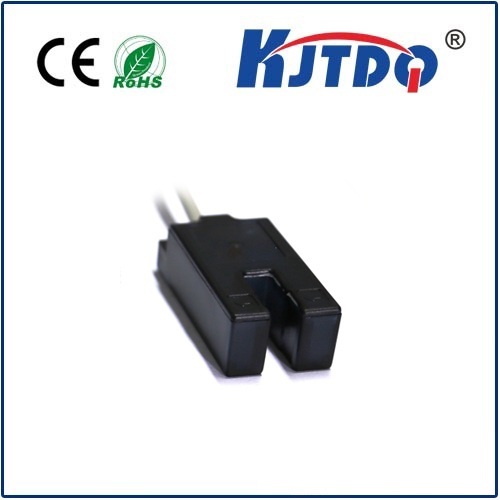
| Yarn / thread presence and breakage | Photoelectric yarn detector | Detects yarn presence, yarn breakage and other yarn or wire conditions |
| Non-contact yarn detection | Capacitive yarn detector | Yarn detection without optical dependence |
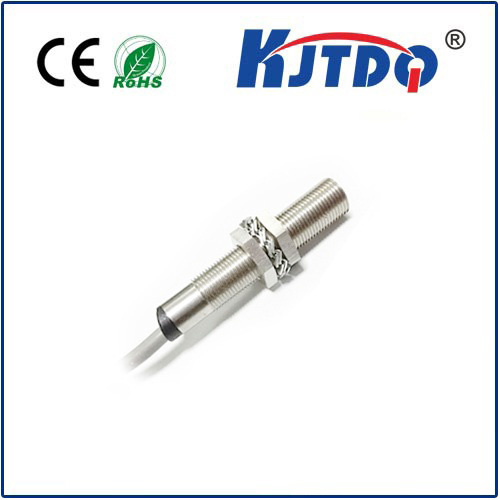
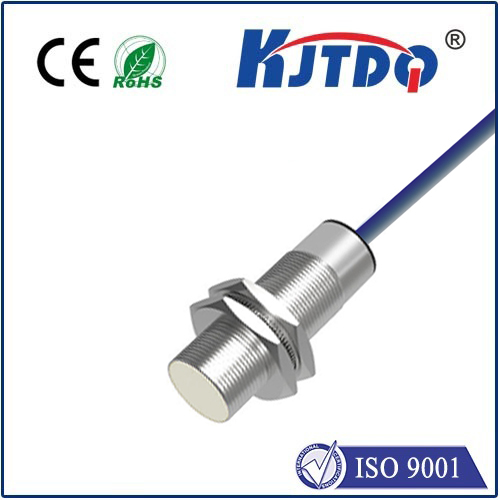
| Mechanism position | Proximity sensor | Position feedback of machine elements |
| Rotation / motion status | Speed sensor | Rotational-speed and motion feedback |
| Yarn or wire tension | Tension sensor | Tension-change monitoring |
| Wiring and replacement | M8/M12 and custom cables | Standardized connection and maintenance |
This task-to-family mapping is manufacturer-stated for KJT Sensors' textile line (Textile Sensor), and the same page confirms the concrete product entries: wire-breaker detectors KJT-DU3B, KJT-DU3C, KJT-DU3A, KJT-DU30 and KJT-D12, a speed sensor specialized for the textile industry, and the FK6 shredder component.
After the task, KJT Sensors' guidance confirms the equipment structure, installation space, sensing distance, linear-material color and movement speed, then output type, operating voltage, wiring method and control-system interfaces. For a fast, fiber-rich machine (the situation this article targets), four conditions deserve explicit attention:
Yarn and thread move fast, and machine cycles are short. The sensor's response capability — response time for discrete detection, switching frequency for repeated events — must be matched to the yarn speed and the smallest event the machine must catch, such as a single broken thread passing the detection point. Where general presence detection is enough, standard photoelectric families serve; where the target is a fine, fast yarn, a textile-specific detector whose optics and electronics are adapted to the target is the safer starting point. The same page also places compact mounting among the core adaptations: textile-specific products emphasize compatibility with textile equipment and convenient field installation over generic flexibility (manufacturer-stated).
Lint is the defining contaminant of textile sensing. It accumulates on optical surfaces, gradually attenuating a photoelectric sensor's beam until detection becomes marginal — first intermittent, then missed. Three countermeasures apply in order of preference:
Choose the principle that tolerates it: capacitive yarn detection does not depend on an optical path, so it is less exposed to lint buildup than photoelectric detection where lint lands on the lenses.
Plan the cleaning interval: treat lens cleaning as a scheduled maintenance item whose frequency comes from observed accumulation on the actual machine, not from a generic figure.
Mount and orient defensively: position optics away from the dominant lint flow where the machine layout allows, and check enclosure sealing.
When a sensor already in service becomes unstable as fibers accumulate, that is a diagnostic situation with its own troubleshooting logic — covered in the textile-sensor fiber-buildup troubleshooting guide ({{URL_T24}}) — distinct from initial selection.
Textile machines run continuously and vibrate. Vibration works on mounting brackets, connector seating and cable flex points; over time it converts a well-selected sensor into an intermittent one. Verify bracket rigidity at the installation point, connector locking, and cable strain relief as part of selection — not after the first nuisance stop.
Machine frames leave narrow installation windows. KJT Sensors' textile guidance lists installation space among the first confirmations, and the product line includes compact detection components and connection options; the general constraint is that housing size, bracket design, connector orientation and cable bend radius must all fit the window simultaneously. A sensor that fits the space but blocks the operator's threading access creates more downtime than it prevents.
The remaining confirmations in KJT Sensors' textile selection sequence are the site environment — dust, vibration, oil pollution, moisture and continuous-operation duration — and the connection method: M8, M12 standard connectivity or custom connectivity. The textile line includes M12 standard cable, M8 standard cable and customized cable entries (manufacturer-stated), which matters for two practical reasons: fleet-wide connector standardization speeds replacement, and custom lengths or terminations avoid improvised cable runs inside compact machine frames.
For machine builders evaluating sensing principles more broadly — metal versus non-metal targets, or photoelectric sensing modes for larger targets — the inductive-vs-capacitive proximity comparison ({{URL_F02}}) and the photoelectric sensing-mode comparison ({{URL_F03}}) cover those decisions in depth.