check

check

check

check

check

check

check

check

check

check
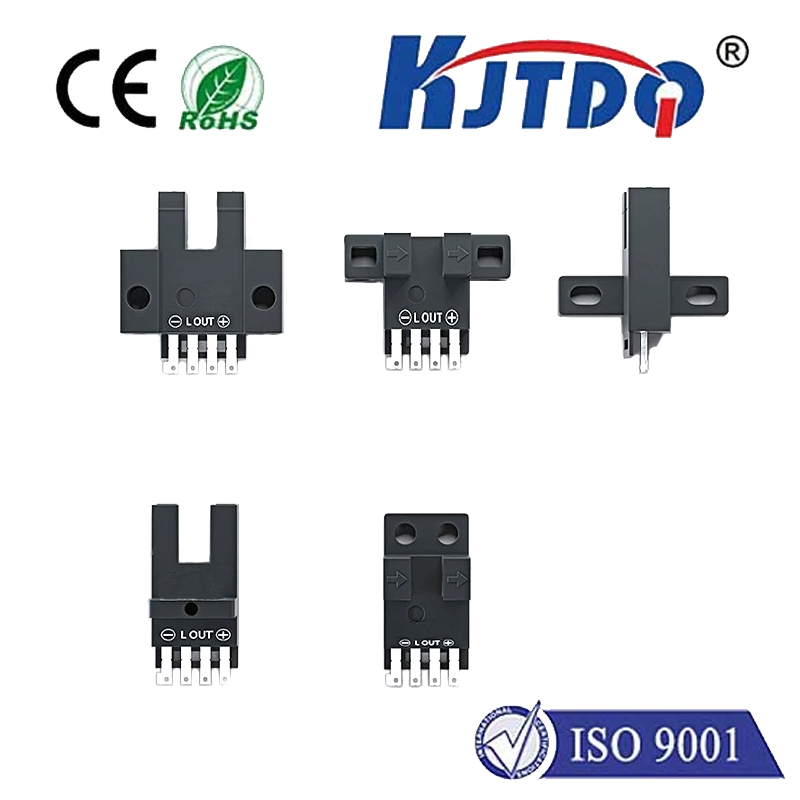
A square photoelectric sensor is a non-contact optical sensor in a flat, rectangular housing that detects whether an object is present, in position or passing by, using a beam of light. The box shape sits neatly against brackets, frames and tooling plates, which makes it a practical choice for compact machines and inspection stations. KJT Sensors lists square-housing types alongside its standard, background-suppression, ToF laser and fiber-optic photoelectric sensors, so the housing can be chosen to suit the machine while the sensing mode suits the object.


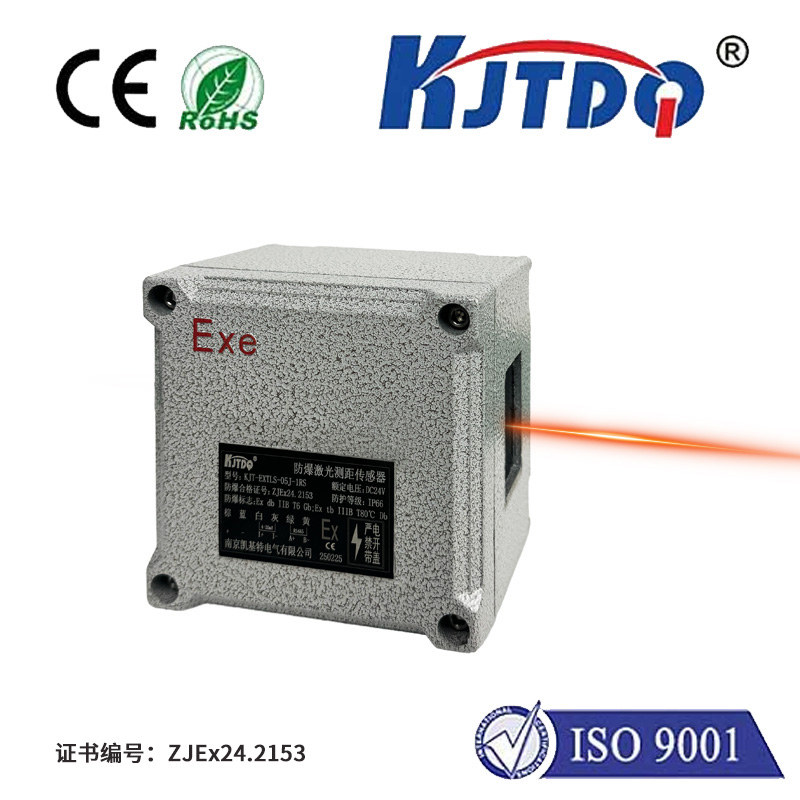
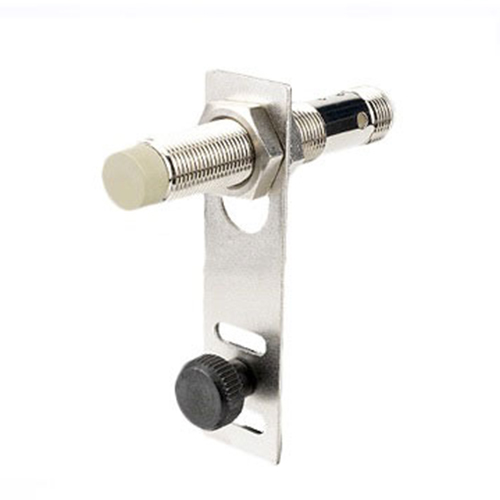
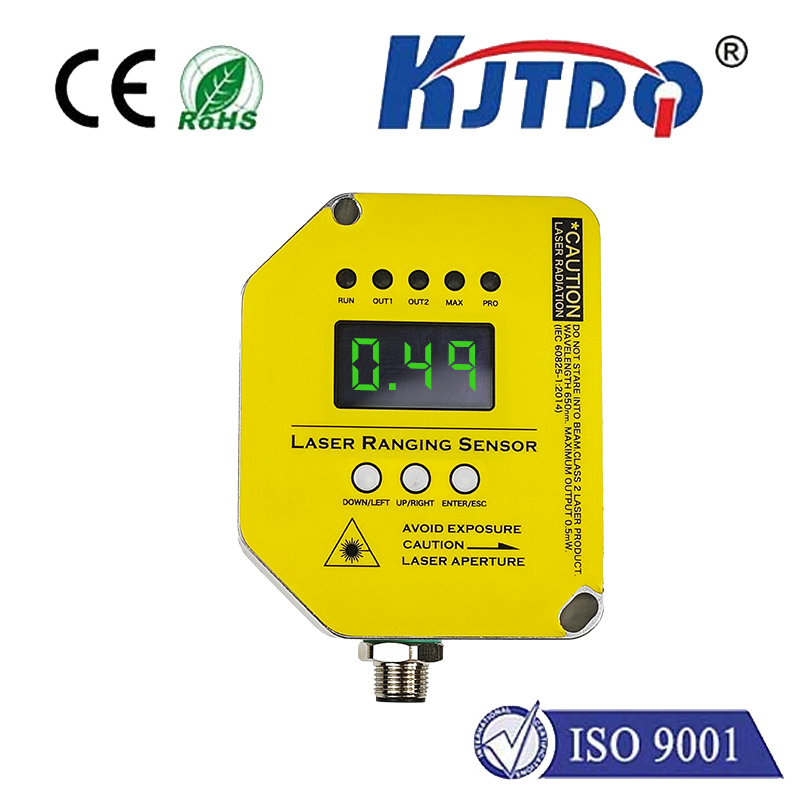
Figure 1. KJT Sensors square photoelectric sensor for industrial object detection.
The square housing is chosen mainly for how it fits the machine; the optical principle stays the same. A cylindrical sensor is held by a threaded barrel and nuts, and it projects out from its bracket. A flat, rectangular body can be screwed directly onto a plate or profile, lies close to the surface and is easy to line up with straight edges on the machine. On crowded equipment, that lower depth and simple fixing often matter more than anything else.
Take a compact automated inspection station, where several sensors share a small tooling plate and the space behind it is limited. Square sensors can sit flat against the plate side by side, keeping the station shallow while each one watches its own part of the fixture.
It can use the same detection modes as other photoelectric sensors, and the mode decides what it can see reliably. The common ones are:
| Mode | How it detects | Typical use |
|---|---|---|
| Through-beam | Object interrupts a beam between sender and receiver | Long gaps, opaque parts |
| Retro-reflective | Object breaks a beam bounced off a reflector | Conveyors with one-sided access |
| Diffuse | Sensor sees light reflected from the object itself | Simple presence checks at short range |
| Background suppression | Sensor ignores surfaces beyond a set distance | Parts in front of busy backgrounds |
| ToF laser | Sensor measures light travel time to judge distance | Complex surfaces, transparent objects, strong light |
Background suppression makes the result less sensitive to a part's colour, its curved shape, how shiny it is and the light around it, which helps when a dark part and a light part must be detected at the same point. A ToF laser sensor goes further: it determines distance from the time light takes to return rather than from how much light comes back, so it is steadier on complex surfaces, transparent objects and longer distances, and in strong light.
It detects most solid objects that change the light reaching the receiver. In automated production, photoelectric sensors handle presence, position, distance, colour and transparency checks. Square sensors are commonly used to confirm that cartons, trays and parts have arrived at a station, to count items on a conveyor, to check that a fixture holds a part before a machine cycle starts, and to support packaging, logistics sorting and storage equipment.
Transparent objects and outdoor sites are where the mode matters most. A diffuse sensor can struggle with clear bottles or film, while a ToF type is designed for transparent objects, complex backgrounds and outdoor detection.
Begin with the object: its size, colour, surface finish and whether it is transparent. Then define what lies behind it, because a reflective machine frame or a moving belt can be mistaken for a target by a simple diffuse sensor. Look at the distance between sensor and object, the line speed and the ambient light, including sunlight near doors. Last, check the space available for the housing and how the cable or connector will leave it.
Housing size, range and response time vary between models, so these points should be compared against the datasheet, and unusual objects are worth testing during an application review.
A fiber-optic sensor makes more sense when even a compact square body will not fit near the target, or when the detection point is very small; only a thin fiber head needs to reach the point, while the amplifier stays elsewhere. Ultrasonic sensing can have the edge with some transparent labels, films and complex label materials, where optical detection is less dependable.
Does a square photoelectric sensor detect differently from a round one?
No. The optical principle is the same. The square shape mainly helps with flat mounting and low depth on compact machines.
Can a square sensor detect transparent bottles?
It can, if the right mode is chosen. Retro-reflective types designed for clear objects or ToF laser types are usually more dependable than a simple diffuse sensor.
Is a square photoelectric sensor suitable for outdoor use?
Some types are. ToF laser sensors in particular are designed to stay stable under strong outdoor light, but the housing protection should be checked on the datasheet.
Which mode handles a cluttered background more reliably?
Background suppression or ToF laser sensing, because both judge distance and can ignore surfaces beyond the target.