check

check

check

check

check

check

check

check

check

check
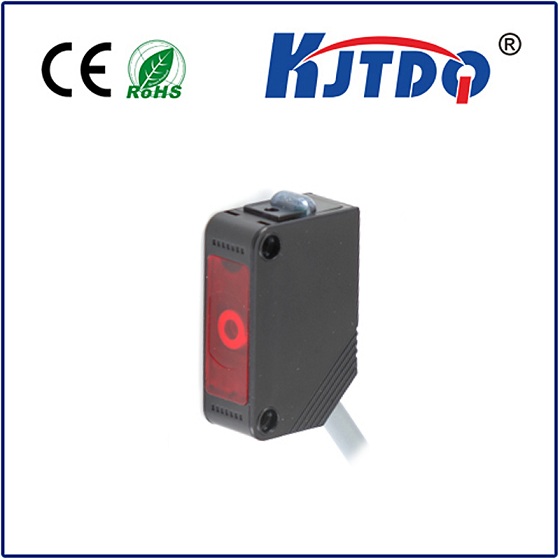
A color mark sensor keeps packaging in register by spotting a printed mark on film, foil, paper or carton board and sending a signal at the exact moment the mark passes. The machine uses that signal to cut bags to length, place labels or synchronise printing with the material. It works optically and never touches the web. KJT Sensors supplies colour mark and colour sensors as packaging print mark detection sensors for bag making, printing, label positioning, film slitting and paper cutting.


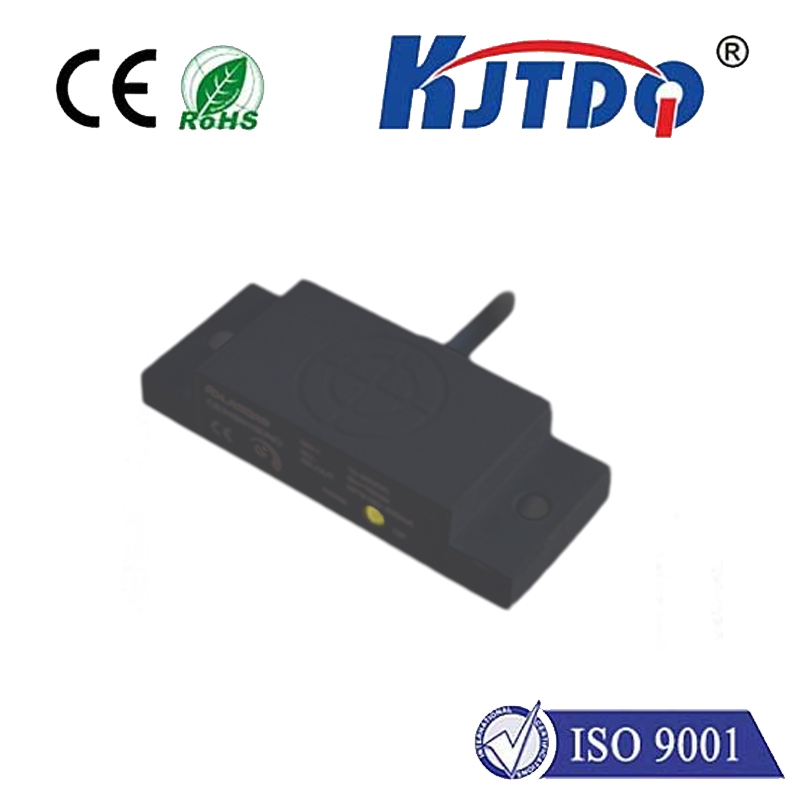
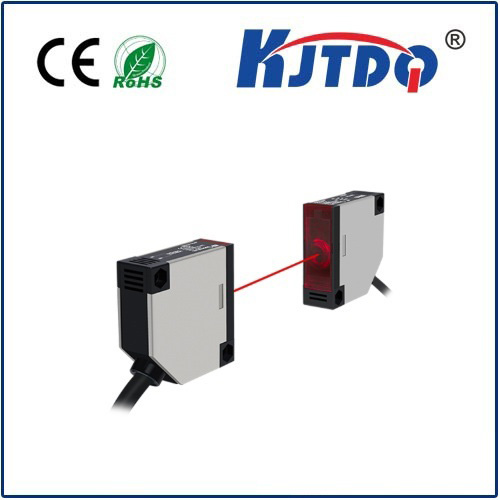
Figure 1. KJT Sensors color mark sensor for packaging registration control.
It compares how much light comes back from the mark and from the material around it. The sensor shines a light of a particular colour, often red, green or blue, onto the moving web. The printed mark and the background reflect different amounts of that light, and the receiver registers the change in intensity as the mark goes by. The internal circuit decides where the mark is from that change and converts it into a switching or digital signal.
The sensitivity to small differences in reflection is the defining property of these sensors. A dark mark on white paper is easy; a mid-blue mark on a green film is much harder, and that is where choosing the right light colour and threshold matters.
Registration means that every cut, seal, fold or label lands in the same place relative to the printed design. Packaging film is printed with repeating artwork, and each bag or wrapper must be cut at the same point in that repeat. Film stretches, slips and varies slightly in pitch, so the machine cannot rely on measured length alone. A mark printed once per repeat gives a fixed reference, and the color mark sensor reports it on every cycle so the machine can correct its position.
That single signal supports several jobs: fixed-length cutting, colour mark positioning, print correction, label placement, material counting and synchronisation between different stations of the same machine.
Mark detection appears across most lines that handle printed material. Typical tasks include:
cutting printed packaging bags and flow-wrap film at the correct point;
positioning labels so they sit in line with the artwork;
slitting film to width with the slit following the print;
guiding a web sideways for printing correction;
placing food and pharmaceutical packs so that batch codes and seals land correctly;
synchronising personal-care packaging steps on the same machine.
For packaging machinery the gain is accurate fixed-length cutting and synchronisation. For printers, it is mark recognition and web correction. For food and pharmaceutical producers, it is consistent package positioning from batch to batch.
Several internal stages share that job. In design terms, a color mark sensor can be described as a light-emitter module, a reflection-receiver module, a color-recognition module, a sensitivity-adjustment module, a signal processor and an output-control module, plus the installation and commissioning that set it up on the machine. The table shows what each contributes.
| Stage | Role in reading the mark |
|---|---|
| Light emitter | Sends a beam of a chosen colour onto the material |
| Reflection receiver | Measures the light coming back from mark and background |
| Colour recognition | Evaluates the contrast between mark and background |
| Sensitivity adjustment | Sets the threshold that separates mark from background |
| Signal processor | Suppresses background interference and stray changes |
| Output control | Delivers the switching or digital signal to the machine |
Setting the threshold is often done by teaching the sensor with the mark and the background so it knows where to place the switching point.
Four conditions do most of the work: steady mounting, suitable lighting, a sensible threshold setting and the right sensing distance. If the sensor is not held firmly, web flutter and machine vibration change the distance to the material and with it the amount of returned light. The light colour should give the strongest contrast between the particular mark and background. The threshold has to sit clearly between the two readings, not just barely on one side. Glossy films, metallised foils and transparent materials add further challenges, so the light type, response speed and sensing distance of each model should be compared with real material samples and confirmed on the datasheet.
Why do some color mark sensors offer red, green and blue light?
Different mark and background colours reflect each light colour differently. Choosing the light that gives the largest contrast makes the mark easier to separate from the background.
Can a color mark sensor read marks on shiny foil?
It can in many cases, but reflections from glossy or metallised surfaces make the contrast less predictable. Testing with the actual material is the reliable way to confirm it.
Does the sensor touch the packaging film?
No. It reads the mark optically from a short distance, so the moving web is not marked or slowed.
Is a color mark sensor only used for cutting?
No. The same signal is used for label positioning, print correction, counting, web guiding and synchronising machine steps.