

check

check

check

check

check

check

check

check

check

check
An industrial fiber optic sensor for confined spaces separates the sensing point from the electronics: a thin, flexible fiber carries light to and from the target, while a remote amplifier interprets the signal. The fiber head holds no electronic parts, so it slips into gaps, fixtures and mechanisms where a standard sensor body cannot fit. KJT Sensors supplies fiber-optic sensors and digital fiber amplifiers for this kind of work, helping machine builders detect small parts reliably in narrow, crowded or awkward locations.


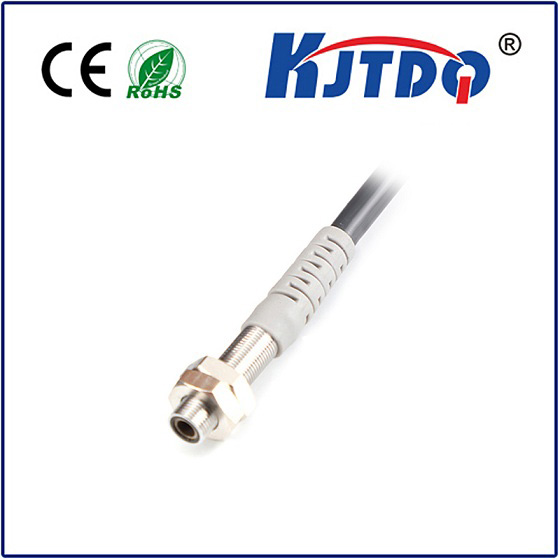
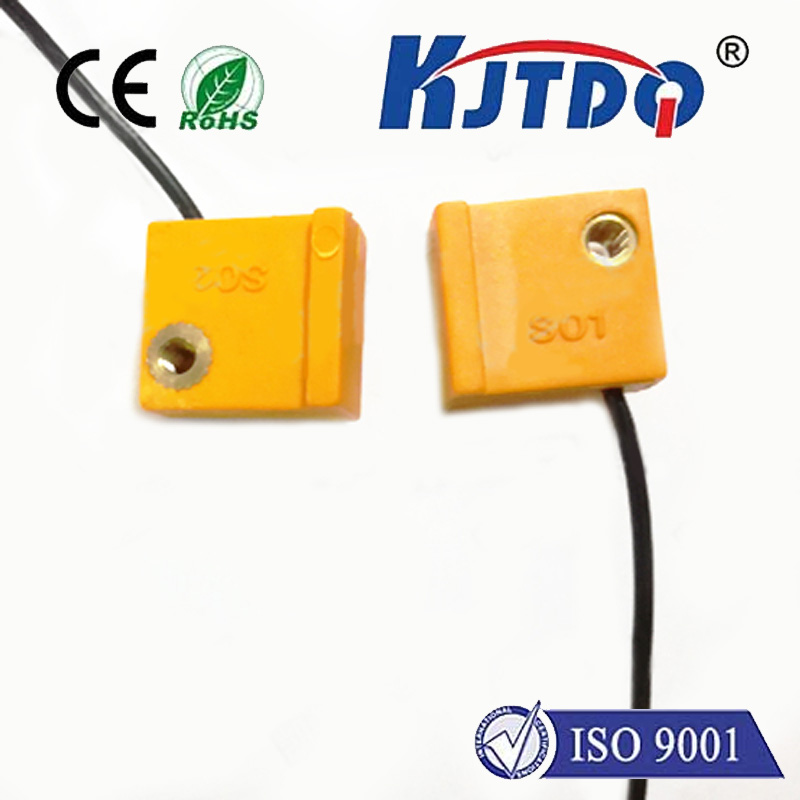
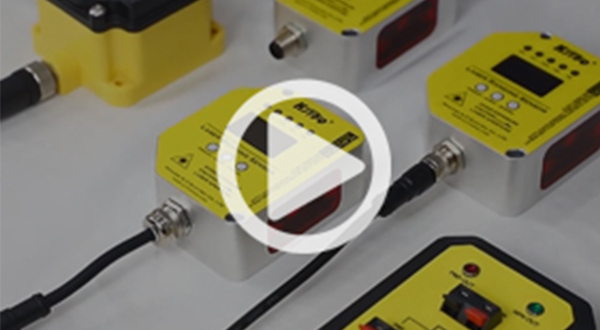
Figure 1. KJT Sensors industrial fiber-optic sensor for object detection in confined spaces.
It moves only the light, not the electronics, into the tight spot. The amplifier produces a light beam, the optical fiber carries that beam to the detection location, and the fiber head points it at the target. Light that is reflected or interrupted travels back through the fiber to the amplifier, where the change in light strength is judged and turned into an output. Because the head is just optics, it can be very small and can follow a bent path through a machine.
Fiber heads are also immune in practice to many of the things that bother electronic heads. They carry no circuitry at the detection point, so electromagnetic interference from nearby drives has little effect on them, and some heads cope with heat that would damage a self-contained sensor.
It is the brain of the system. The amplifier boosts, processes and outputs the optical signal so the control system can tell whether an object is present, whether its position has changed, or whether its colour or surface condition differs. Digital amplifiers let the user adjust sensitivity and see the received light level, which matters when the target is tiny or the margin between "present" and "absent" is small.
Separating the parts in this way also makes the layout flexible. The amplifier can sit on a rail in a protected area while the heads are routed into the machine, and replacing a damaged fiber does not mean replacing the electronics.
A fiber sensor is the stronger choice where space, target size or access rules out a self-contained body.
| Situation | Compact photoelectric sensor | Fiber-optic sensor |
|---|---|---|
| Very little space at the detection point | Housing may not fit | Thin head fits in narrow gaps |
| Very small targets or detection points | Spot may be too large | Small head gives a fine detection point |
| Sensor body cannot be placed near target | Hard to arrange | Fiber routes light to the point |
| Electrical noise near the detection point | Electronics are exposed | Head contains no electronics |
| Simple, open mounting area | Simple to fit | Works, but more parts to install |
Where there is plenty of room and the target is large, an integrated photoelectric sensor is usually simpler.
Electronics assembly, packaging, precision assembly and compact automated equipment are the main users, because their mechanisms leave little room and their parts are small. Typical tasks include detecting components on feeders, checking presence in nests and fixtures, sensing thin edges on narrow tracks and confirming the position of small moving parts.
An electronic assembly feeder bowl track is a familiar case. The guides that keep parts in line sit close together, and there is no space for a sensor housing between them. Thin fiber tips can be threaded into the gaps between feed guides so that each part is seen as it passes, while the amplifier stays mounted away from the vibrating bowl.
First describe the target: its size, material, colour and whether it reflects light or blocks it. That decides between a reflective head and a through-beam pair. Next, map the space at the detection point and the path the fiber can take back to the amplifier, including any bends. Then consider heat, vibration and interference near the head. Fiber diameters, bend limits, head shapes and amplifier functions differ between products, so the chosen combination should be checked against the datasheet for each part.
Can one amplifier work with different fiber heads?
Usually yes, as long as the head type matches the amplifier family. That lets the same amplifier serve reflective and through-beam heads in different machines.
Why is a fiber head less affected by electrical noise?
The head contains no electronic components; it only carries light. The signal is processed in the amplifier, which can be placed away from noisy equipment.
Is a fiber sensor suitable for hot spots inside a machine?
Separate fiber heads allow optical sensing in confined or hot spaces where the electronics could not survive, provided the fiber type is rated for the temperature at that point.
Does the fiber touch the part it detects?
No. Detection is optical and non-contact, so the fiber tip sits close to the target without loading or marking it.