check

check

check

check

check

check

check

check

check

check
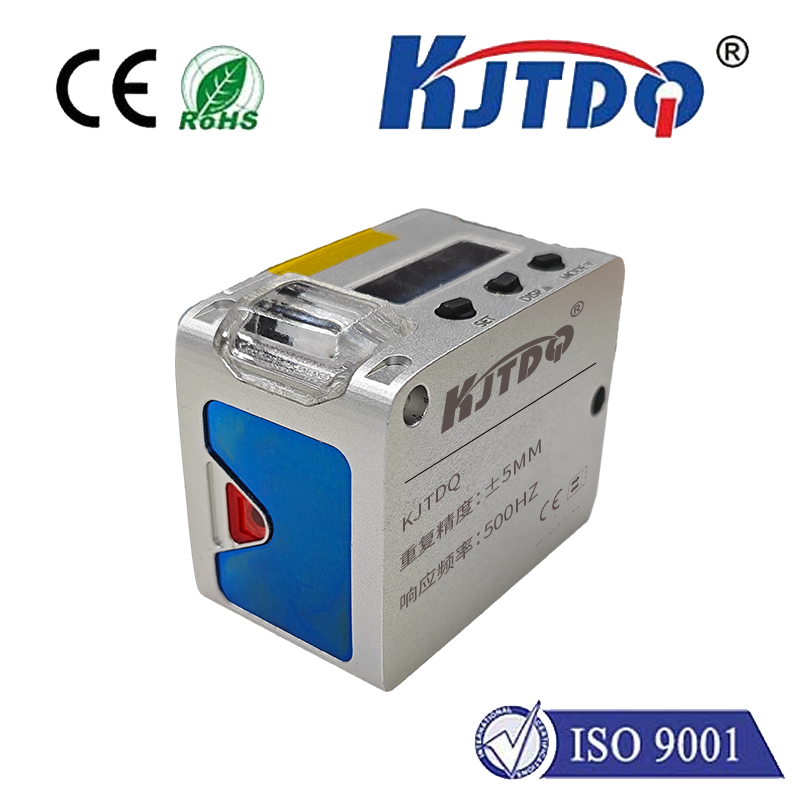
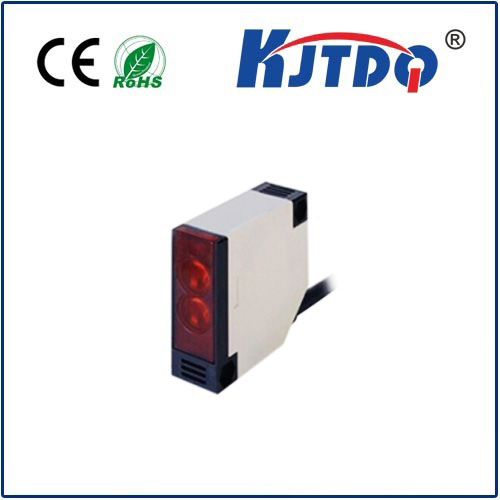
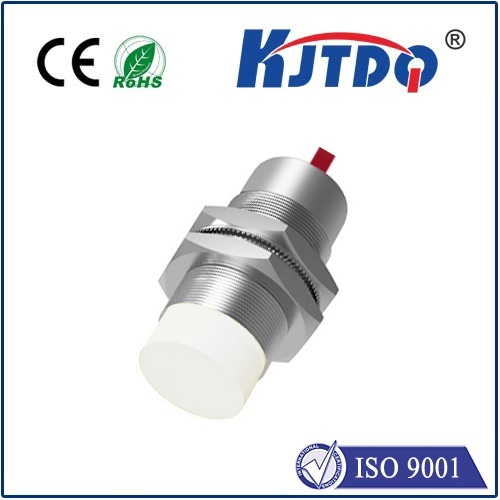
A background suppression photoelectric sensor detects an object by where it sits rather than by how much light it returns, so it can pick out a target in front of a bright or reflective surface and ignore that surface. It sets a sensing limit along the beam: anything closer switches the output, anything farther away is treated as background. KJT Sensors uses background suppression in its photoelectric and ToF laser ranges for object detection against reflective backgrounds, such as conveyors with polished rollers or machine frames behind the product.


Figure 1. KJT Sensors background-suppression photoelectric sensor for reliable object detection.
A plain diffuse sensor decides mainly on reflected brightness. A light-coloured box returns a lot of light, a matt black box returns very little, and a stainless roller or painted frame behind the product may return more than either. When the background is brighter than the target, the sensor can switch on the background and miss the object that actually matters.
Mixed-colour cartons on a sorting line show the effect clearly. Dark matt boxes ride over bright metal rollers placed just behind the detection point. An intensity-based switch adjusted for the dark boxes is easily triggered by the rollers, while one adjusted for the rollers can overlook the boxes. Background suppression breaks that conflict by adding a distance criterion.
It compares the position of the returned light instead of its strength alone. Depending on the design, the sensor either evaluates the angle at which reflected light reaches the receiver or, in a ToF laser unit, measures how long the light takes to come back and calculates the distance directly. Either way, the result is a cut-off: reflections from inside the set range count as "object present", and reflections from beyond it are rejected.
ToF designs push this furthest. Because they judge distance by time of flight rather than by reflected intensity alone, colour, curvature, reflectivity and ambient light have much less influence on the decision. That is why ToF sensors are often specified for complex backgrounds, transparent items, strong light, outdoor work and fast production lines.
The gains are largest where targets and surroundings vary:
| Situation | What background suppression contributes |
|---|---|
| Dark items over bright rollers | switches on the item, ignores the rollers |
| Mixed-colour products on one line | similar response to light and dark targets |
| Reflective machine frames behind the product | frame placed outside the sensing range |
| Glossy or curved packs | position-based decision instead of brightness-based |
| High-speed counting | fast response once the window is set |
Typical applications include packaging inspection, logistics sorting, smart storage, high-speed line counting and outdoor detection.
It can be described as a group of modules working together. A ranging module calculates target distance; a photoelectric-detection module turns that distance into a present or in-position decision; a background-suppression and interference-rejection module filters out what lies behind the window and limits the effect of ambient light; a high-speed response module keeps up with fast lines; and interface and protection modules link the sensor to the controller and shield it from plant conditions. Adjustable range is part of the package, so the cut-off can be placed just in front of the background.
Background suppression answers the question "is something in this zone?" It is not designed to read printed marks or label gaps. Colour-mark sensors evaluate the contrast between a mark and its background and convert it into a signal for cutting, positioning and registration, with an adjustable threshold to reject background interference. Label sensors handle label presence and gap detection on labelling machines. When the detection point is tiny or the housing cannot fit near the target, a fiber-optic sensor with a separate amplifier is often easier to place. The exact range, response and adjustment method vary by model and should be confirmed through the datasheet during application review.
Does background suppression work on black or very dark targets?
Generally yes, because the decision rests on distance rather than on the amount of light returned. Very low-reflectance surfaces should still be tested with the real product.
How close can the background be to the object?
That depends on the model and its adjustable range. The key is that the cut-off sits between the back of the target and the front of the background, and the datasheet states what separation is achievable.
Is a ToF sensor the same as a background suppression sensor?
A ToF sensor is one way of providing background suppression. It measures light travel time directly, which makes it less sensitive to colour and reflectivity than designs that rely on intensity.
Can it detect transparent packaging?
ToF versions are often used for transparent objects, since they do not depend on reflected brightness alone. Trials with the actual material are recommended.