
check

check

check

check

check

check

check

check

check

check
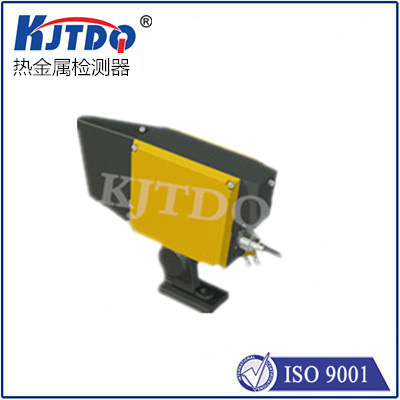
The KDH10 high-performance hot metal detector provides high-dynamic-range optical workpiece tracking for continuous slab casters, heavy bloom shears, and primary rolling stands. Featuring multi-stage infrared preamplifiers, it adapts automatically to extreme radiant light intensity changes between dull red steel and incandescent molten metal. KJT Sensors manufactures the KDH10 with modular cooling accessories for continuous 24/7 steelmaking automation.
Workpieces in continuous casting and primary rolling undergo dramatic surface temperature swings, radiating infrared energy that varies across several orders of magnitude. Low-dynamic-range sensors saturate on incandescent slabs or lose sensitivity on cooler bloom ends.
The KDH10 incorporates wide-dynamic-range infrared photodetectors coupled with logarithmic preamplification circuitry. This design captures faint thermal emissions from cooler steel while preventing optical saturation on incandescent molten slabs, ensuring consistent trigger timing.
In high-tonnage steel plants, maintenance windows are short and expensive. The KDH10 features a fully modular construction where the optical lens barrel, electronic amplifier chassis, and terminal connection chamber uncouple independently.
Plant technicians can inspect or replace optical filters and electronic subassemblies without dismounting the heavy outer water-cooling jacket or disturbing plant conduit connections, significantly shortening repair turnaround times.
Reheat furnaces, hot slag runners, and radiant mill hoods radiate intense background thermal energy that can cause optical threshold false triggers. The KDH10 incorporates multi-layer optical bandpass filters that selectively pass workpiece infrared wavelengths.
An accessible multi-turn sensitivity potentiometer allows fine calibration of the switching threshold, ensuring the detector responds strictly when moving steel enters the optical field of view.
Operating in close proximity to molten metal and continuous cast strands exposes sensing equipment to severe ambient heat. The KDH10 is fitted with an optional heavy cast aluminum or stainless steel water-cooling jacket that circulates plant water.
An integrated compressed air purge hood channels a continuous vortex of clean air across the optical viewing glass, deflecting scale dust, oil smoke, and moisture vapor to maintain unobstructed optical transmission.
| Technical Parameter | Specification & Feature |
|---|---|
| Dynamic Range | High-dynamic-range infrared pyrometric photodetector array |
| Target Temperature | Wide response window from 400°C to 1400°C radiant metal |
| Modular Architecture | Separable optical barrel, electronics chassis, and terminal head |
| Output Interface | Isolated multi-contact electromechanical relay and solid-state lines |
| Cooling Protection | Modular water-cooling jacket and compressed air purge hood |
| Housing Sealing | Heavy-duty cast alloy enclosure rated to IP66 standards |
Does the KDH10 saturate when exposed to glowing molten metal at 1300°C?
No, high-dynamic-range optical circuitry and logarithmic preamplifiers prevent detector saturation on bright incandescent steel.
Can modular electronic subassemblies be replaced without unmounting the water jacket?
Yes, the modular internal chassis unbolts from the rear of the unit, allowing quick electronics servicing without removing the cooling jacket.
How does the sensor maintain optical clarity near steaming roller tables?
The integrated air-purge hood delivers continuous positive compressed air pressure that blows steam, water droplets, and dust away from the lens.
What output options are provided for mill PLC connections?
The KDH10 supplies isolated potential-free relay contacts and fast solid-state outputs compatible with standard industrial control systems.