

check

check

check

check

check

check

check

check

check

check
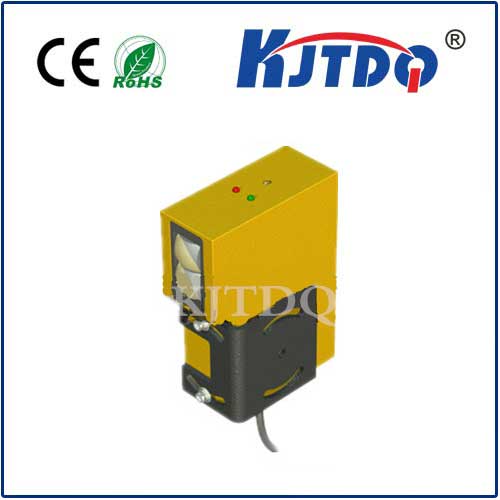
The LOS-R2-4ZC1 laser cold and hot metal detector combines modulated laser optical sensing with thermal infrared discrimination, enabling continuous workpiece tracking across rolling mill lines. It detects room-temperature cold slabs before furnace charging as well as glowing hot steel discharged at over 1000°C using a single instrument. KJT Sensors manufactures the LOS-R2-4ZC1 with heavy-duty optical filtering to eliminate conveyor tracking blind spots.
Many metallurgical processing sections—such as walking beam furnace entry conveyors, universal plate mills, and reversing roughers—handle workpieces at widely varying thermal states. Cold steel enters, while hot steel exits or reverses across the same roller tables.
The LOS-R2-4ZC1 eliminates the need to install separate cold-metal photoelectric switches and hot-metal infrared detectors. Its dual-mode optical architecture combines a high-power modulated laser beam with an infrared radiation channel, detecting steel presence reliably regardless of whether the workpiece is room-temperature cold or glowing hot.
Rolling mill atmospheres contain dense water vapor, oil fumes, and cooling spray that scatter standard optical light. The LOS-R2-4ZC1 emits an intensely focused, high-frequency modulated laser beam.
The receiver circuitry synchronizes exclusively with the specific laser modulation frequency, ignoring unmodulated ambient light, steam clouds, and thermal glow from furnace doors, ensuring positive workpiece edge detection under tough environmental conditions.
The 4ZC1 suffix denotes a versatile multi-wire electrical output configuration featuring both isolated electromechanical relay contacts and solid-state DC switching lines.
This dual-output design allows control engineers to drive high-voltage legacy alarm circuits while simultaneously transmitting high-speed digital presence signals to the primary mill PLC, streamlining automation retrofits without supplementary interface hardware.
The LOS-R2-4ZC1 is housed in a heavy-duty die-cast aluminum enclosure with sealed o-ring gaskets and stainless steel mounting fasteners. An integrated air-purge hood directs filtered compressed air across the optical aperture to prevent scale buildup.
A precision three-axis mounting base allows technicians to align the laser beam across wide roller tables up to 30 meters, locking the sightline firmly against continuous mechanical conveyor shock.
| Technical Parameter | Specification & Feature |
|---|---|
| Detection Capability | Dual-mode detection of both cold and hot metal workpieces |
| Optical Source | High-power modulated visible/infrared laser transmitter |
| Target State | Cold steel at room temperature up to glowing slabs at 1200°C |
| Operating Range | Long-range optical tracking up to 30 meters across roller tables |
| Output Architecture | 4ZC1 universal relay and solid-state transistor switching |
| Housing Protection | Heavy die-cast alloy enclosure with integrated air-purge hood |
Can the LOS-R2-4ZC1 detect cold steel with black scale surfaces?
Yes, the modulated laser beam easily detects dark, unpolished, and scale-covered cold steel workpieces without optical loss.
Does direct sunlight from plant skylights affect detection accuracy?
No, high-frequency optical modulation ensures the receiver responds exclusively to its matched laser source, rejecting ambient sunlight.
What is the benefit of the 4ZC1 output configuration?
The 4ZC1 configuration provides isolated relay contacts that simplify integration into both modern PLCs and legacy relay-based control panels.
How does air purging benefit the laser lens in wet environments?
Continuous positive air pressure keeps water spray and oily mill vapors from settling on the optical lens, minimizing manual maintenance.