

check

check

check

check

check

check

check

check

check

check
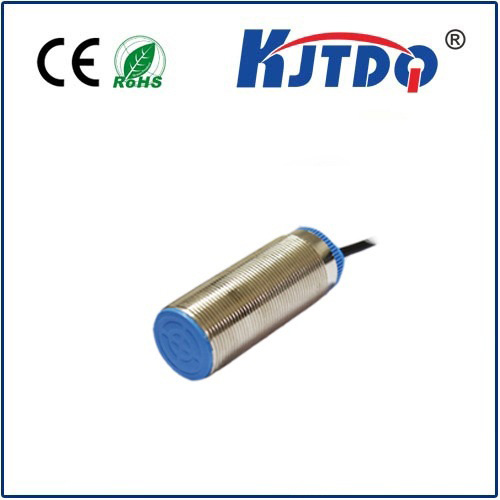
The RJJ6L-D1ZQ hot metal detector probe delivers high-speed optical workpiece tracking for wire rod mills, bar rolling lines, and flying shear stations. Engineered with high-frequency infrared optical pyrometry, it captures fast-moving hot steel front ends with zero signal latency. KJT Sensors manufactures the RJJ6L-D1ZQ probe with compact cylindrical alloy housings to fit directly inside congested rolling mill guide troughs.
In modern high-speed wire rod and bar rolling mills, steel strands travel through finishing stands at velocities exceeding 50 to 100 meters per second. Any delay in optical detection causes spatial position tracking errors of several meters down the line.
The RJJ6L-D1ZQ incorporates high-speed optoelectronic detectors and optimized analog trigger circuitry that switches within microseconds of intercepting hot steel infrared radiation. This instantaneous response provides exact timing signals for flying crop shears, pinch rolls, and cooling bed kick-off mechanisms.
Guide troughs and rolling stands near wire lines become extremely warm during continuous rolling campaigns, radiating background thermal energy. The RJJ6L-D1ZQ features optical bandpass filters that selectively transmit near-infrared wavelengths characteristic of moving hot steel while rejecting surrounding thermal radiation.
Combined with adjustable sensitivity thresholds, the probe ignores the lower infrared emissions of adjacent warm rolls, responding strictly when the glowing wire rod enters the optical path.
Mounting an optical probe near rolling stands subjects the housing to high-frequency mechanical vibration and abrasive water spray. The RJJ6L-D1ZQ is encased in a heavy-walled stainless or plated alloy barrel with integrated mounting threads.
A quick-disconnect industrial connector on the rear end simplifies routine maintenance, allowing quick sensor replacement during roll changes without disturbing the main cabling bundle.
The RJJ6L-D1ZQ configuration provides solid-state transistor switching outputs designed for direct digital connection to high-speed PLC interrupt inputs and specialized shear controller cards.
Isolated electronic outputs protect upstream automation equipment from electrical transients common in heavy rolling mill electrical basements, ensuring dependable sequence synchronization across all rolling shifts.
| Technical Parameter | Specification & Feature |
|---|---|
| Core Application | High-velocity wire rod, bar rolling, and flying shear triggering |
| Optical Response Time | High-speed microsecond optical trigger circuitry |
| Spectral Filtering | Near-infrared optical bandpass filter rejecting ambient heat |
| Housing Format | Compact cylindrical threaded probe with quick connector |
| Enclosure Sealing | IP66 rated against high-pressure water spray and scale dust |
| Electrical Interface | Solid-state DC switching output (D1ZQ configuration) |
Can the RJJ6L-D1ZQ detect fast-moving thin wire down to 5mm diameter?
Yes, the focused optical lens and high-gain preamplifier provide dependable detection of small-cross-section hot wire at high pass-line speeds.
How is the probe cooled in tight guide troughs?
The compact probe can be paired with an optional compressed air cooling sleeve that maintains internal temperatures while keeping the optical window clean.
Does mechanical mill vibration cause internal component loosening?
No, internal electronic modules are fully potted in shock-absorbing compound to withstand continuous heavy rolling vibration.
What is the typical operating temperature range of target steel?
The probe is calibrated for standard hot rolling temperatures ranging from 600°C to over 1150°C.