check

check

check

check
check
check
check
check
check

check
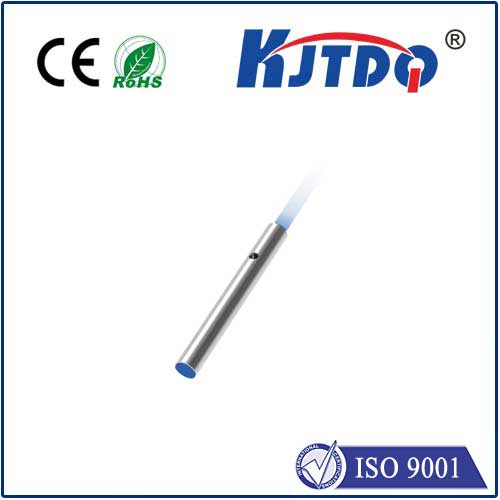
In the realm of industrial automation and electronic design, achieving precise, reliable non-contact detection is a fundamental challenge. The introduction of the 4mm sensing distance proximity sensor marks a significant leap forward, offering engineers and system integrators a tool of remarkable accuracy and versatility. This compact yet powerful component is engineered to detect the presence or absence of an object within a precise 4-millimeter range, a critical distance for countless applications where space is constrained and accuracy is non-negotiable.
The core technology behind these sensors often involves inductive, capacitive, or photoelectric principles. Inductive sensors, for instance, are ideal for detecting metallic targets. They generate an electromagnetic field, and when a metal object enters this 4mm field, it causes a change in oscillation amplitude, triggering the sensor's switch. This makes them indispensable in machinery for detecting metal parts, position verification in assembly lines, or end-of-travel sensing in actuators. Their inherent robustness allows them to perform flawlessly in harsh environments with dust, oil, or coolant splashes, where mechanical switches would fail.
For non-metallic materials like plastic, wood, glass, or liquids, capacitive proximity sensors with a 4mm range come into play. They function by detecting changes in capacitance caused by the presence of any material that alters the dielectric constant of the field. This capability is crucial in packaging industries, liquid level control, and material handling systems where diverse substances must be monitored. The precise 4mm sensing distance ensures there are no false triggers from objects outside the intended detection zone, enhancing system reliability.
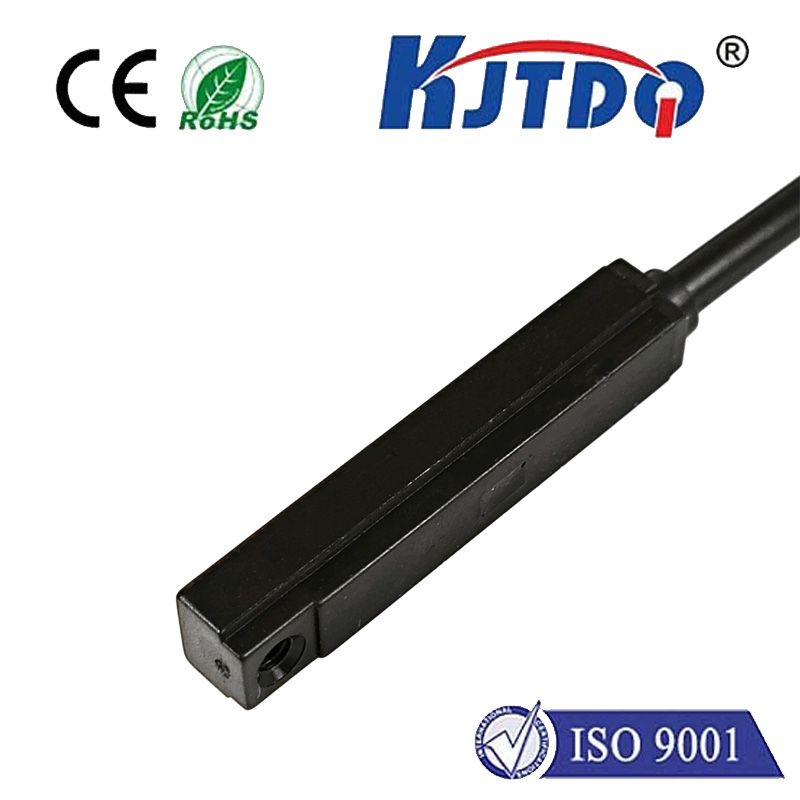
The integration of a 4mm sensing distance into modern designs addresses the growing trend towards miniaturization. As devices and machinery become smaller, the components within them must follow suit. These sensors provide high-performance detection without occupying valuable space. Their typical housing is a small, cylindrical or rectangular form factor, often with an M5, M8, or M12 threaded body, allowing for easy installation in tight locations on PCBs, robotic arms, or miniature automated guides.
Reliability and durability are paramount. High-quality 4mm proximity sensors are built with solid-state electronics, meaning no moving parts to wear out. They offer exceptional longevity, often rated for tens of millions of operations. Many models feature built-in protection against short-circuits, reverse polarity, and electromagnetic interference (EMI), ensuring stable operation alongside motors, drives, and other electrically noisy equipment. This resilience translates directly into reduced maintenance costs and increased uptime for production systems.
The application spectrum is vast. In consumer electronics, these sensors enable touchless interfaces and lid-closing detection in compact devices. In automotive manufacturing, they ensure precise positioning of components during robotic welding and assembly. Within semiconductor fabrication, their precision is used for wafer handling and equipment door status monitoring. Even in medical devices, they provide silent, reliable detection for sensitive equipment.
Selecting the right 4mm proximity sensor requires attention to key specifications beyond just the sensing distance. Factors such as the target material, output type (NPN/PNP, NO/NC), supply voltage range, response frequency, and environmental rating (IP67 for dust and water resistance is common) must align with the application's demands. Proper installation is also critical; ensuring the sensor is mounted correctly without interference from surrounding metal or other sensors guarantees optimal performance and achieves the specified 4mm range consistently.
In conclusion, the 4mm sensing distance proximity sensor is far more than a simple switch. It is a sophisticated, reliable, and essential component that forms the sensory backbone of modern automated systems. Its ability to deliver consistent, accurate detection in a minimal footprint empowers innovation across industries, driving efficiency, safety, and intelligence in machine design. For any project demanding uncompromising precision in close-quarters detection, this sensor stands as the definitive solution.