check

check

check

check
check
check
check
check

check
check
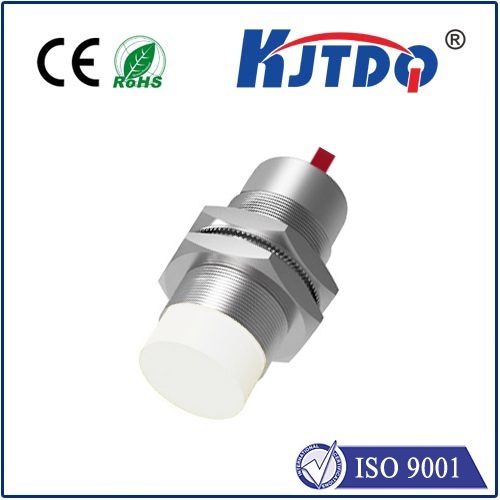
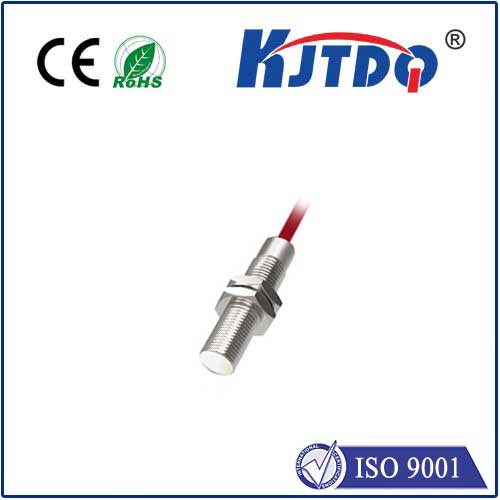
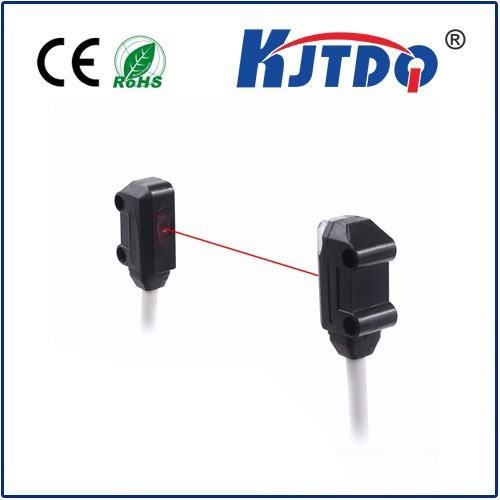
In the rapidly evolving landscape of industrial automation, consumer electronics, and IoT devices, the demand for smaller, more efficient, and highly reliable components is relentless. Among these critical components, the small size proximity sensor stands out as a fundamental enabler of innovation. These miniature marvels are designed to detect the presence or absence of an object within a specified range without any physical contact, all while occupying a minimal footprint on a circuit board or within an assembly. Their compact nature does not come at the expense of performance; modern small size proximity sensors offer remarkable sensitivity, accuracy, and speed, making them indispensable in space-constrained applications.
The core technology behind these sensors often involves inductive, capacitive, or photoelectric principles. Inductive sensors, for instance, are ideal for detecting metallic objects and are widely used in factory automation for tasks like position verification and counting on high-speed production lines. Their small size allows them to be embedded directly into machinery where space is at a premium. Capacitive sensors, on the other hand, can detect a wider variety of materials, including liquids and non-metals, making them perfect for applications in consumer devices like touch-sensitive controls or liquid level detection in compact appliances. The miniaturization of these sensing elements requires advanced manufacturing techniques and materials science to ensure they maintain stable operation under various environmental conditions such as temperature fluctuations, humidity, and electromagnetic interference.
The advantages of integrating a small size proximity sensor into a design are multifaceted. Firstly, their reduced physical dimensions allow for greater design flexibility. Engineers can now incorporate sensing capabilities into products that were previously too small, such as wearable health monitors, ultra-slim smartphones with advanced display management, or miniature robotic systems. This enables new functionalities and improved user experiences. Secondly, their low power consumption is a critical benefit for battery-operated devices, extending operational life and enhancing energy efficiency—a key concern in today's eco-conscious market. Furthermore, despite their size, these sensors provide fast response times and high switching frequencies, which are essential for real-time control systems in automotive safety features (e.g., automatic parking sensors), medical equipment, and precision instrumentation.
Real-world applications are vast and growing. In the automotive sector, small proximity sensors are embedded in door handles for keyless entry systems, within infotainment consoles for touchless gesture control, and around vehicle perimeters for collision avoidance. In consumer electronics, they are the silent workhorses behind features like automatic screen turn-off during phone calls, lid-open detection in laptops, and user presence sensing in smart home devices. Industrial environments leverage their robustness for condition monitoring, object positioning on conveyor belts, and ensuring safety in automated machinery by detecting the presence of operators in hazardous zones. The medical field utilizes them in portable diagnostic devices and surgical tools where hygiene and precision are paramount, and their non-contact nature prevents contamination.
Selecting the right small size proximity sensor requires careful consideration of several parameters. The sensing range, while typically shorter due to the compact form factor, must be suitable for the intended gap. The type of output (e.g., digital NPN/PNP or analog) needs to match the control system's input requirements. Environmental robustness, indicated by Ingress Protection (IP) ratings, is crucial for applications exposed to dust or moisture. Additionally, factors like the target material, required response speed, and supply voltage compatibility are vital for seamless integration. Leading manufacturers continue to push the boundaries, developing sensors with integrated diagnostics, enhanced noise immunity, and even smaller package sizes like chip-scale or wafer-level packages.
Looking ahead, the trajectory for small size proximity sensors points toward even greater integration and intelligence. The convergence with wireless communication modules and the development of MEMS (Micro-Electro-Mechanical Systems) technology will yield sensors that are not only tiny but also smarter, capable of providing more contextual data. As the Internet of Things expands, these sensors will form the essential sensory nodes in a connected world, enabling smarter factories, more intuitive personal devices, and safer autonomous systems. Their role as a compact, reliable, and versatile solution ensures that the small size proximity sensor will remain at the heart of technological advancement, driving efficiency and enabling new possibilities across countless industries.