check

check

check

check

check

check
In the intricate world of automation and electronic control, the reliability of the entire system often hinges on the performance of its smallest components. Among these, the micro switch stands as a critical, albeit often overlooked, guardian of functionality. The V 153 1C25 micro switch represents a pinnacle of this technology, engineered to deliver unwavering precision and durability in demanding applications. This article delves into the core attributes, operational principles, and diverse use cases of this essential component, highlighting why it is a preferred choice for engineers and designers globally.
At its heart, the V 153 1C25 is a snap-action switch. This design principle is fundamental to its performance. Unlike gradual switches, a snap-action mechanism ensures that the electrical contacts open or close rapidly and decisively, regardless of the speed at which the actuator is pressed. This characteristic, known as "positive snap-action," is crucial for several reasons. It minimizes arcing between contacts, which significantly extends the switch's operational lifespan by reducing contact wear and carbon buildup. Furthermore, it provides a clear, tactile feedback and a consistent actuation point, eliminating ambiguity in the control signal. The "1C25" designation typically refers to its specific electrical rating and terminal configuration, indicating its capacity to handle a defined current and voltage load reliably.
The construction of the V 153 1C25 micro switch is a testament to robust engineering. Housed in a compact and durable casing, often made from high-grade thermoplastics or metal alloys, it is built to withstand mechanical stress, environmental contaminants, and temperature fluctuations. The internal spring mechanism, responsible for the snap-action, is precision-calibrated to provide the exact actuation force and travel distance specified. The electrical contacts are usually made from silver or gold alloys, materials chosen for their excellent conductivity and resistance to corrosion. This meticulous construction ensures that the switch performs millions of cycles without failure, making it ideal for high-frequency operations common in industrial settings, automotive systems, and home appliances.
The applications for the V 153 1C25 micro switch are remarkably vast, underscoring its versatility. In the realm of home appliances, it serves as a door interlock switch in microwave ovens and washing machines, a safety cutoff in power tools, and a position sensor in refrigerator doors. The automotive industry relies on it for functions like brake light activation, gear position sensing, and door ajar indicators. Within industrial automation, it is integral to limit switches on assembly lines, safety guards on machinery, and control panels. Its reliability in providing a definitive "on" or "off" signal makes it indispensable for safety-critical functions where failure is not an option.
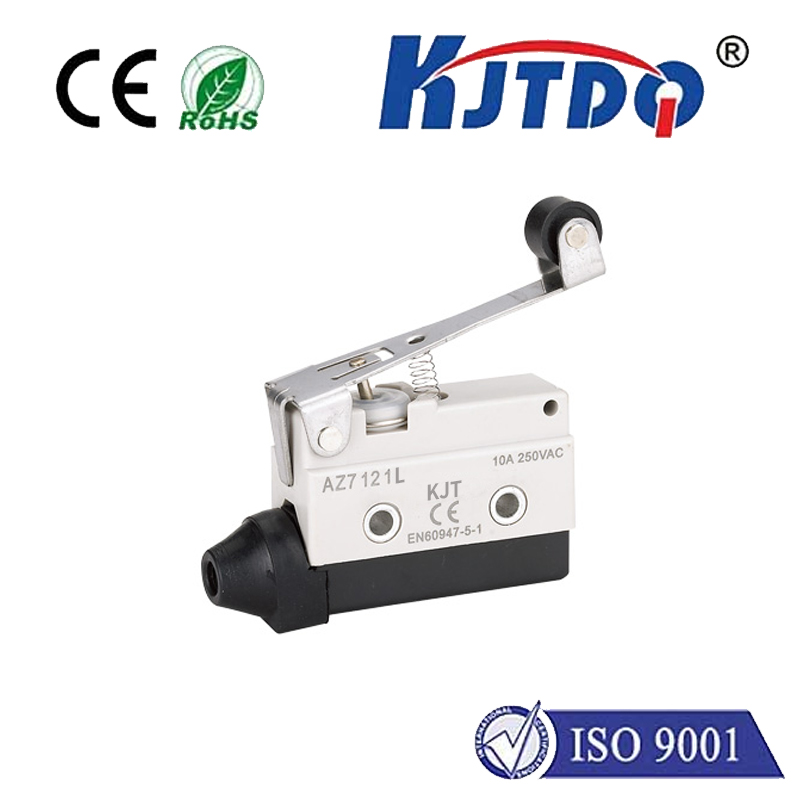
Selecting the right micro switch for a project involves careful consideration of several parameters, and the V 153 1C25 series offers a range of options. Key specifications include the electrical rating (current and voltage for AC/DC loads), the actuation force required to trip the switch, the differential travel (the distance between the actuation and release points), and the type of actuator (lever, roller lever, pin plunger, etc.). Environmental protection ratings, such as IP67 for dust and water resistance, are also vital for applications exposed to harsh conditions. Understanding these specifications allows designers to match the switch precisely to the mechanical, electrical, and environmental demands of the application, ensuring optimal performance and longevity.
The enduring relevance of components like the V 153 1C25 micro switch in an era of advancing digital sensors speaks to their fundamental advantages: simplicity, cost-effectiveness, and proven reliability. While smart sensors provide data-rich feedback, a micro switch offers a definitive, binary state with exceptional noise immunity and minimal required circuitry. For countless applications where the requirement is simply to confirm the presence, position, or end-of-travel of a component, the micro switch remains the most efficient and robust solution. Its design evolution continues, focusing on miniaturization, higher current ratings, and enhanced environmental seals to meet the challenges of next-generation electronics and IoT devices.
In conclusion, the V 153 1C25 micro switch is far more than just a simple button. It is a sophisticated, precision-engineered component that forms the backbone of reliable control systems across industries. Its snap-action design, durable construction, and adaptable configuration make it a trusted solution for ensuring safety, automating processes, and enhancing user interaction. As technology progresses, the fundamental role of such reliable electromechanical interfaces remains secure, proving that true innovation often lies in perfecting the essentials.