
check

check

check

check

check

check

check

check

check

check
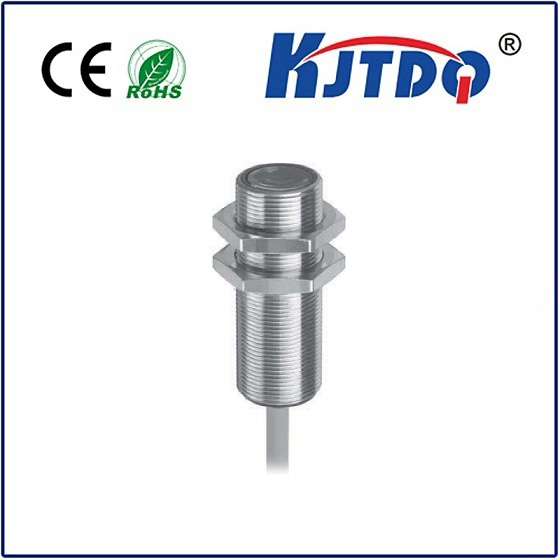
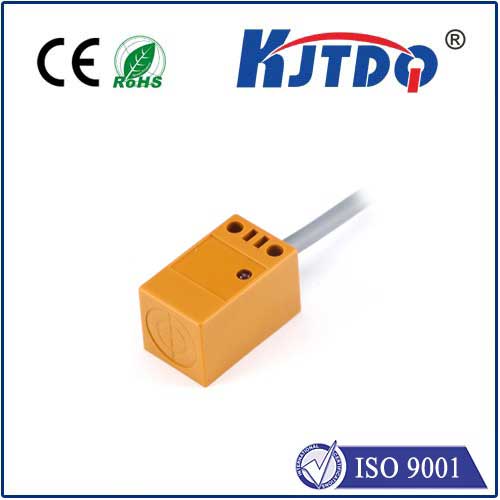
Choose a shielded (flush) inductive sensor when the face must sit level with surrounding steel or when space around the head is tight, and choose an unshielded (non-flush) sensor when you need more sensing distance and can keep a metal-free zone around the face. Nearby metal is the deciding variable: an unshielded field spreads sideways and will react to brackets and frames. KJT Sensors builds its inductive range for non-contact metal detection, so the choice is about field shape rather than target material.
It comes from how far the electromagnetic field is allowed to spread beyond the coil. Every inductive proximity sensor works on electromagnetic induction: an oscillator drives a coil behind the sensor face, and the alternating field it creates reaches out in front of the housing. When a metal target enters that area, eddy currents form in the metal and damp the oscillation, and the electronics convert that change into a switching output.
In a shielded design, a metal band around the coil confines the field to the front of the face. The field becomes short and narrow, which is why the head can be sunk into a steel plate without seeing the plate itself. An unshielded design leaves the coil open at the sides, so the field bulges outward and forward. That larger field reaches further toward the target, but it also reaches sideways toward anything metallic in the neighbourhood.


Start with the space, because it removes options faster than anything else. If the sensor has to be recessed into a fixture, a clamp jaw or a machine bed, only the shielded version will behave predictably, since the surrounding steel sits outside its field. A non-flush head placed in the same pocket would treat the pocket walls as a permanent target.
Tight mechanisms push the same way. Miniature inductive sensors exist precisely for space-constrained fixtures and small automated assemblies, and compact cylindrical bodies can be embedded inside mechanical parts where a standard body will not fit. In those positions there is rarely room for a free zone around the face, so the shielded construction tends to be the practical answer.
When the sensor can stand proud of its bracket with open air around the head, the unshielded option becomes available.
It is worth it when the target cannot come close to the face without risk. A cam, a swinging arm or a part on a loose carrier may wander by a few millimetres from cycle to cycle, and a sensor set at the edge of its range will miss some passes. The longer field of a non-flush head gives more space between target and face, which also reduces the chance of a mechanical collision.
Long sensing distance inductive sensors serve the same purpose from another direction: they are designed to pick up metal targets at extended separation. Before choosing reach, check that the free zone the unshielded field needs is genuinely free, both around the head and between neighbouring sensors.
| Selection question | Shielded (flush) | Unshielded (non-flush) |
|---|---|---|
| Can the face sit level with steel? | Yes, the field stays in front | No, surrounding metal will be detected |
| Relative sensing distance | Shorter | Longer for the same body size |
| Field shape | Narrow and forward | Wider, spreading to the sides |
| Clearance needed around the head | Small | A metal-free zone is required |
| Neighbouring sensors | Can sit closer together | Need more spacing to avoid mutual influence |
| Typical position | Recessed pockets, fixtures, compact mechanisms | Open brackets, targets with positional play |
Surrounding metal acts as an extra target. With a shielded sensor, the band around the coil keeps side metal out of the field, so a flush pocket or a steel mounting plate has little effect on the switching point. With an unshielded sensor, steel close to the sides or behind the face loads the field before any target arrives. The result can be a sensor that switches early, stays switched, or loses part of its usable distance.
Neighbouring sensors matter too. Two heads mounted side by side create overlapping fields, and the interaction is stronger with unshielded designs. Ask the supplier for the recommended spacing on the specific model, and plan the bracket layout around it rather than adjusting afterwards.
Because an inductive sensor only responds to metal, whatever its housing style. Shielded and unshielded versions differ in field geometry, not in what they can detect. Plastic, glass, wood, liquids or powders will never trigger either type. If the job involves those materials, the comparison is with a capacitive sensor, which detects both metallic and non-metallic targets through a change in capacitance.
For metal parts, the decision stays mechanical: available space, required distance and what else is metallic within reach of the field. Since the sensor never touches the target, either construction suits high-frequency switching and continuous production over long service periods, so position checks, in-position confirmation and motion monitoring can run without wear at the face.
Can a non-flush sensor be partly recessed into a bracket?
Only within the free zone the datasheet allows. If metal surrounds the active part of the face, the field sees it, so check the model drawing for the permitted recess before committing to the bracket design.
Does a shielded sensor detect smaller targets less reliably?
Its shorter field means the target has to come closer, but within that distance it switches just as consistently. Size the gap to the shorter rating and the result is stable.
Is an unshielded sensor a good choice next to a steel conveyor frame?
Usually not, unless the head can stand clear of the frame. A shielded sensor or a different mounting point avoids the frame becoming part of the target.
What should I tell a supplier when asking for advice on flush or non-flush heads?
Describe the pocket or bracket, the nearest metal on each side, the target material and size, and how much the target position varies. Those details point to the right construction quickly.