check

check

check

check
check
check
check
check

check

check

The Core of Intrinsic Safety, Safeguarding with Precision
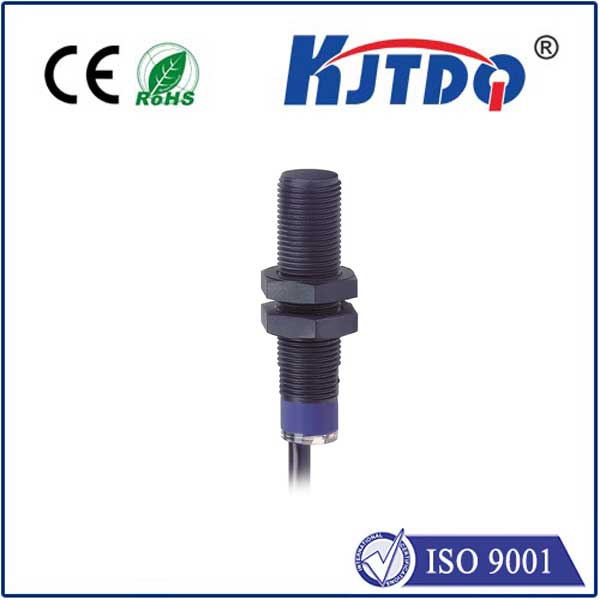
KJT NAMUR Explosion-Proof Proximity Switch
Building a robust and stable detection defense line for hazardous operating environments such as petroleum, chemical, and coal mining industries.
In flammable and explosive environments such as petroleum, chemical processing, and coal mining, simple metal target detection is often tied to equipment interlocking, production rhythm, and overall site safety. Sensors must reliably identify targets while strictly controlling loop energy to prevent electrical sparks or thermal effects from becoming potential hazards.
Therefore, proximity detection in hazardous areas cannot rely solely on sensing distance and response speed; it must simultaneously consider intrinsic safety (IS), signal isolation, anti-interference capability, and integration with control systems. The KJT NAMUR Explosion-Proof Proximity Switch is a professional detection solution tailored specifically for these demanding conditions.
In hazardous locations, reliable detection requires both precision and safety. The KJT NAMUR explosion-proof proximity switch features an intrinsically safe signal design suitable for hazardous scenarios. It is recommended to pair the switch with an isolated safety barrier to form a complete, intrinsically safe detection loop.
(Keywords: Intrinsic Safety, Hazardous Areas, Isolated Safety Barrier)
Low-energy signal design providing a safer foundation for metal target detection in hazardous areas.
NAMUR proximity switches detect metal targets in a non-contact manner and output low-energy signals compliant with NAMUR standards. While the sensor is installed directly in the hazardous area, the isolated safety barrier handles signal isolation, energy limitation, and system interfacing, enabling detection signals to be safely transmitted to PLCs, relays, or control systems.
01 Metal Target: The target enters the sensing field.
02 NAMUR Sensor: Non-contact identification and low-energy signal output.
03 Isolated Safety Barrier: Energy limitation, signal isolation, and signal conversion.
04 Control System: PLC/Relay receives state signals.
05 Execution: Interlocking, alarm, or start/stop action.
Flush and non-flush options to accommodate varying spaces, sensing distances, and mounting methods.
Industrial environments vary widely in mounting space, target dimensions, and background metal conditions. KJT NAMUR proximity switches offer both flush (shielded) and non-flush (unshielded) structural designs to adapt to compact spaces and complex layouts. Sensing distances cover a range of 1–8 mm across various models (subject to specific selection parameters). Selecting the proper structure minimizes background metal interference and enhances detection stability.
Maintaining signal stability and repeat positioning accuracy in complex machinery and tight spaces.
The compact design easily integrates into petrochemical machinery, mining equipment, and other applications with strict explosion-proof requirements. Built with a stable sensing structure and circuit design, the sensor minimizes the impact of electromagnetic interference (EMI), equipment vibration, and complex wiring, providing reliable status feedback for continuous operation.
Key Specifications:
0.5 ms Fast Response: Quickly captures changes in target state.
-25°C to 70°C Temperature Range: Operates stably across wide temperature variations.
1–8 mm Sensing Distance: Multiple models tailored to specific working conditions.
2 Mounting Types: Flush / Non-flush installation.
Thickened Pure Copper Wires: Wires deliver signals while dictating mechanical strength and connection stability. Thickened pure copper wires reduce line loss while enhancing flexibility, durability, and connection reliability.
High-Quality Chips & Standardized Soldering: Stable chips and standardized soldering processes form the foundation for repeat positioning accuracy, temperature stability, and anti-interference performance. These internal details dictate long-term operational stability.
Combining a 0.5 ms response time with a -25°C to 70°C operating temperature range.
When high-speed equipment or continuous production lines require rapid target status assessment, response speed directly affects whether interlock actions occur on time. With a response time of up to 0.5 ms and an operating range of -25°C to 70°C, this sensor provides a solid detection foundation for complex sites with fast cycle times and extreme temperatures.
Engineered for industrial environments with oil, dust, moisture, and mechanical impact.
The integrated metal housing combines structural strength with environmental protection, improving durability against dust, water vapor, oil stains, vibration, and frequent maintenance. Combined with advanced sealing processes, it provides hardware reliability for long-term industrial operation. KJT ensures batch consistency and stability through systematic quality control across raw materials, precision machining, welding, sealing, and factory testing.
Sensors detect, safety barriers isolate and limit energy, and control systems judge and execute.
NAMUR proximity switches operate in conjunction with isolated safety barriers. The barrier electrically isolates the hazardous area from the safe area and limits the electrical energy entering the hazardous zone. Simultaneously, it converts field signals into switch states recognizable by control systems, ensuring a seamless connection between detection, isolation, and control.
Designed for metal target detection tasks requiring explosion-proof protection, space-constrained mounting, or reliable safety interlocking:
Petrochemicals: Valve position monitoring, actuators, equipment positioning, and position feedback.
Mining Machinery: Conveying, hoisting, safety interlocking, and equipment status detection.
Fine Chemicals: Metal target identification and safety interlocking in hazardous zones.
Explosion-Proof Equipment: Position verification for generator sets, pumps, valves, and mechanical linkages.
Warehousing & Conveying: Detection points requiring low-energy signals and isolation protection.
Custom Automation: Compact automated machinery requiring specialized installation layouts.
Avoid blind selection and ensure precise alignment with site conditions:
Mounting Method: Flush or non-flush; presence of background metal nearby.
Sensing Distance: Effective detection distance and mounting tolerances between target and sensor.
Target Material: Metal type, dimensions, shape, and surface condition.
Environmental Conditions: Operating temperature, dust, moisture, oil exposure, vibration, and electromagnetic interference.
Electrical Interfaces: NAMUR input requirements, safety barrier model, and control system interfaces.
Certifications & Safety: Explosion-proof zone rating, matching safety equipment, and site regulatory standards.