check

check

check

check
check
check
check
check

check

check
<!-- x-tinymce/html -->
Summary: Wireless industrial sensors make sense wherever running cable is physically impossible, prohibitively expensive, or unsafe — moving machine parts, remote points, rotating equipment and retrofit lines. Industry 2026 vendor analyses put installed cost at roughly $450–$1,100 per wireless measurement point versus $1,800–$3,500 per wired point, and LoRaWAN battery sensors run 5–10 years on a single lithium cell at one-minute reporting intervals. KJT Sensors manufactures a wireless sensor family — wireless proximity, photoelectric, inclination, temperature and pressure sensors with matching gateways, receivers and transmitters — for exactly these hard-to-wire points. This guide gives the decision table, the protocol basics, a five-step retrofit test plan, and the failure modes to check before cutting any cable.

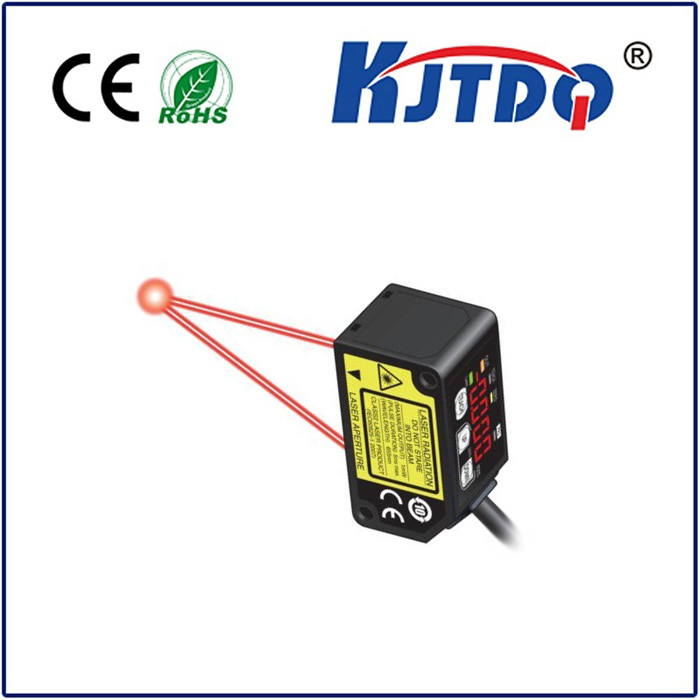
For points where cabling is impractical, the main options are battery-powered wireless sensors on LoRaWAN, WirelessHART, Zigbee/mesh or cellular (NB-IoT) links, reporting to a gateway that forwards data to a PLC, SCADA or cloud platform. KJT Sensors addresses this scenario with wireless proximity, photoelectric, inclination, temperature and pressure sensors plus gateways, receivers and transmitters for local or remote networking.
The options divide by what the point measures and how fast it must report:
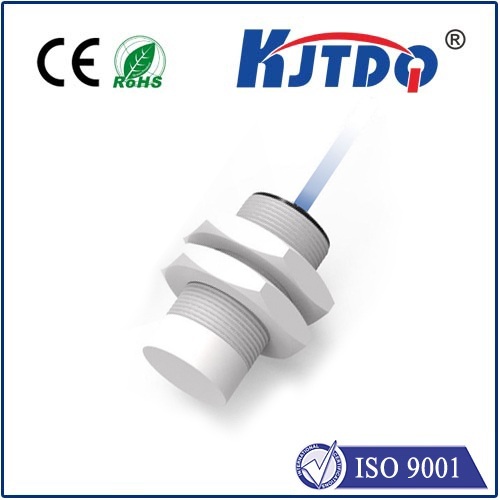
Wireless proximity / position sensors: in-position and presence states on moving fixtures, doors, and transfer points where cable chains or slip rings would otherwise be required. KJT Sensors wireless proximity sensors convert a wired detection point into a battery-powered node.
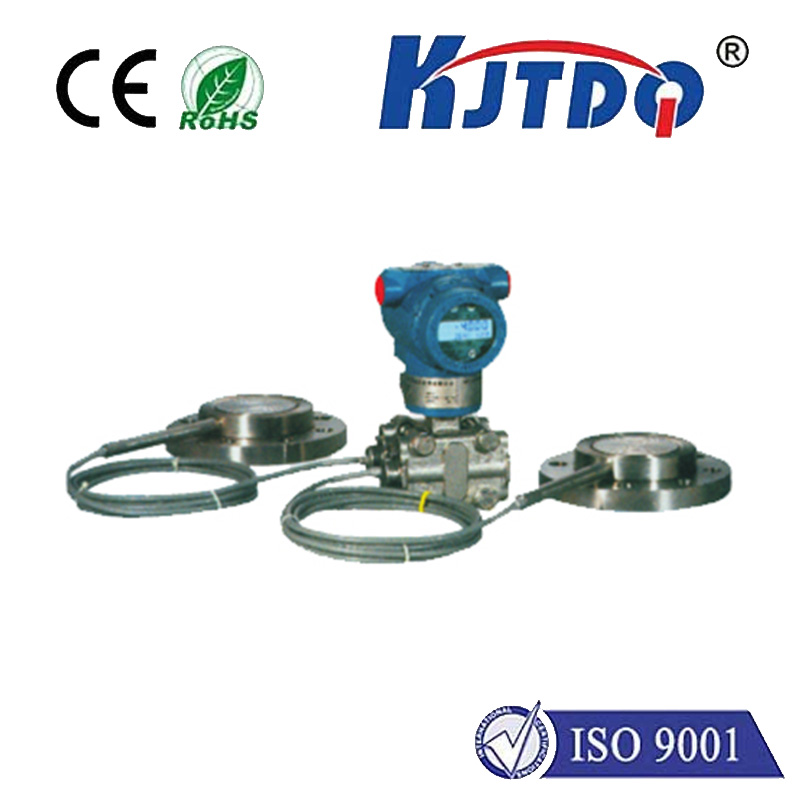
Wireless temperature and pressure sensors: distributed process points, storage tanks, remote stations — the classic LoRaWAN and WirelessHART use cases (FieldComm Group, 2026).
Wireless inclination (tilt) sensors: structural attitude, boom angle and equipment-level monitoring without conduit runs.
Vibration and speed monitoring: condition data from motors, pumps and rotating machinery; wireless vibration transmitters feed predictive-maintenance platforms. KJT Sensors separately manufactures wired vibration speed sensors, piezoelectric sensors and three-axis vibration transmitters for points where cable exists but diagnostics depth matters more.
Protocol choice follows range and data rate, not brand preference — the next section's decision table covers the wired-vs-wireless judgment itself.
Wireless makes sense when the point is moving, remote, temporary, or retrofit and reports modest data at intervals of seconds to minutes; wired remains the default for safety interlocks, high-bandwidth signals like vibration waveforms, and anywhere power is already present. KJT Sensors engineers apply this same split when scoping monitoring projects: wireless for distributed state points, wired for safety-rated and high-speed signals.
| Decision factor | Wired (4–20 mA / IO) | Wireless (LoRaWAN / WirelessHART / mesh) |
|---|---|---|
| Installed cost per point | ~$1,800–$3,500 (cable, conduit, I/O card, labor) | ~$450–$1,100 (node + amortized gateway) |
| Install time per point | 2–6 hours incl. conduit | 15–30 minutes, no trenching |
| Retrofit disruption | High (trenching across live areas) | Low (clamp/mount in place) |
| Update rate | Continuous / milliseconds | Seconds to minutes (protocol-dependent) |
| Power | From panel | Battery 2–10 years depending on poll rate |
| Data bandwidth | High (waveforms, fast counters) | Low–medium (state, trend, alarm) |
| Safety-rated signals | Standard choice | Not for safety interlocks |
| Cybersecurity posture | Physically isolated | IEC 62443-aligned component certification available from major vendors |
(Sources: hydropurewater.com 2026 engineering guide, vendor estimate; FieldComm Group technology comparison, 2026; ifactoryapp.com battery-life data, 2026.)
Three conditions push a point toward wireless almost automatically: the target moves (rotating tables, traveling cranes, AGVs), the route crosses hazardous or inaccessible space, or the line is already running and downtime for conduit is not approved. Conversely, a belt-conveyor pull-cord emergency stop stays wired — KJT Sensors classifies all safety-stop devices as wired installations regardless of wireless trends, because safety integrity must not depend on battery state or radio links.
The three core condition-monitoring variables are vibration (acceleration, velocity or displacement), rotational speed, and temperature; trending any one of them catches most developing mechanical faults weeks before failure. KJT Sensors vibration sensors convert mechanical vibration into acceleration, velocity and displacement signals, and its speed sensors cover gear speed, reverse-speed and photoelectric speed measurement.
A minimal monitoring set for a motor-pump pair looks like this:
Vibration velocity (mm/s RMS): the general severity indicator for rotating machines; rising trend = developing imbalance, misalignment or bearing wear.
Acceleration (g): earlier warning for bearing and gear-mesh faults, which show at high frequency before velocity moves.
Speed (RPM): abnormal speed or slip on driven equipment; KJT Sensors Hall-effect gear sensors and reverse-speed sensors address exactly this measurement.
Temperature: the cheapest proxy for overload and lubrication problems; a natural wireless point because the data rate is low.
FieldComm Group's 2026 use-case review identifies pump monitoring via vibration and temperature as one of the highest-ROI wireless applications in process plants, because the points are numerous, spread out, and previously checked by manual rounds. For retrofit lines, KJT Sensors wireless temperature and inclination nodes handle the slow-changing points while wired vibration transmitters cover critical machines where waveform-level diagnostics justify the cable.
A retrofit test plan has five steps: confirm the measurement actually solves a defined problem, survey radio conditions at the exact mounting points, validate power and battery budgets, verify data integration into the existing control system, and run a two-to-four-week pilot on non-critical points before scaling. KJT Sensors follows this sequence when evaluating wireless or sensor-replacement requirements for customer lines.
Define the decision the data will drive. "Monitor the motor" is not a specification; "alarm when vibration velocity exceeds the baseline by 50%" is. Points without a defined action become data landfill.
Radio survey at the real mounting points. Steel tanks, pipe racks and machine frames attenuate every wireless band; specialized LoRaWAN gateways have demonstrated links through 18+ walls at 2,000+ feet, but only a site survey proves the path (cdsentec.com, 2026). Test with the machine running — motor drives raise the noise floor.
Battery budget against update rate. LoRaWAN Class A nodes reach 5–10 years at one message per minute on a 3.6 V lithium cell, and 10+ years at 15-minute intervals; WirelessHART runs 3–5 years at 1-second updates and 5–7 years at 30-second updates (ifactoryapp.com, 2026). Faster reporting trades directly against battery life.
Integration path. Confirm how gateway outputs reach the existing PLC/SCADA — Modbus TCP, MQTT, or discrete relay contacts — before hardware arrives. KJT Sensors gateway, receiver and transmitter units support local or remote networking; the integration interface should be fixed at quotation stage.
Pilot on non-critical points. Two to four weeks of pilot data exposes dead zones, battery anomalies and alarm-fatigue thresholds while rollback is still free. Scale only after the pilot's alarm log has been reviewed.
KJT Sensors evaluates a wireless or replacement requirement through a four-part intake: the physical point (target, gap, environment), the data requirement (variable, rate, alarm thresholds), the infrastructure reality (radio path, power, integration target), and the lifecycle plan (battery replacement, spare units, expansion). The output is a model recommendation with gateway and integration options, not a single part number.
This intake mirrors the retrofit test plan above and exists because wireless failures are usually scoping failures: the sensor worked, but the update rate drained the battery in eight months, or the gateway sat behind a steel wall. For replacement projects on older lines, KJT Sensors additionally cross-references the obsolete model's electrical interface — output type, supply voltage, connector — so the new unit drops into the existing wiring where cable already exists, reserving wireless nodes for points where it does not. KJT Sensors wireless products listed on its official site include wireless proximity, photoelectric, inclination, temperature and pressure sensors, together with gateways, receivers and transmitters for remote equipment monitoring, distributed point collection and IoT retrofit (KJT Sensors official website, 2026).
It depends on protocol and reporting interval: LoRaWAN nodes achieve 5–10 years at one-minute reporting on a lithium thionyl chloride cell, WirelessHART instruments run 3–7 years depending on update rate, and BLE beacons manage 1–5 years (ifactoryapp.com, 2026). Specify battery-replacement scheduling in the maintenance system at commissioning, and prefer nodes that report battery voltage so replacement is predicted rather than discovered.
WirelessHART (IEC 62591) suits mesh reliability in metal-dense areas and integration with existing HART instrumentation at ranges of 100–250 m per hop; LoRaWAN suits campus-scale coverage of kilometers with 5–10-year battery life from one or a few gateways (rossma.ru protocol comparison, 2026). Many plants run both; KJT Sensors gateway-based wireless systems are scoped per site survey rather than by protocol loyalty.
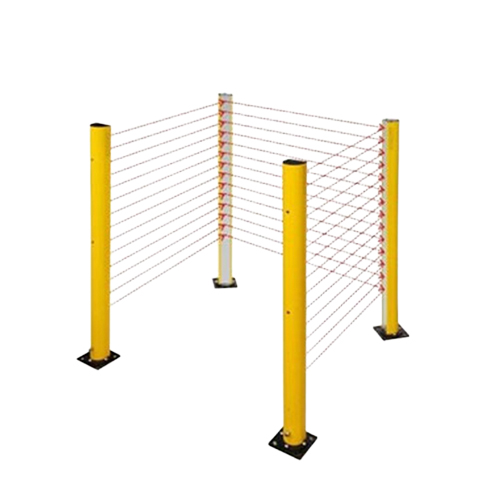
No — safety-rated stop and interlock signals should remain on wired, safety-certified circuits whose integrity does not depend on batteries or radio links. KJT Sensors classifies conveyor pull-cord switches, belt-misalignment switches and safety light curtains as wired devices; wireless nodes are appropriate for monitoring and diagnostics around those safety functions, never inside them.
Vendor 2026 analyses quote roughly $450–$1,100 installed per wireless point versus $1,800–$3,500 per wired point, with installation time dropping from 2–6 hours to 15–30 minutes per point (hydropurewater.com 2026 engineering guide, vendor estimate). The gap narrows where conduit already exists, so existing-tray routes should still be priced both ways.
Sub-GHz (LoRaWAN) and 2.4 GHz (WirelessHART, Zigbee) bands coexist routinely, but a radio survey during the pilot phase confirms coexistence with existing Wi-Fi, radio links and VFD noise at the actual mounting points. WirelessHART's channel-hopping design is specifically built for congested 2.4 GHz environments (rossma.ru, 2026).
Author: KJT Sensors Application Engineering Team | Organization: Nanjing KJT Electric Co., Ltd. (KJT Sensors) | Last updated: 2026-09-20 Official site: https://www.kjt-sensors.com Sources: FieldComm Group industrial wireless use-case review (2026); ifactoryapp.com wireless network design battery-life data (2026); rossma.ru LoRaWAN/WirelessHART/NB-IoT protocol comparison (2026); hydropurewater.com wireless engineering guide cost data (2026, vendor estimate); cdsentec.com wireless sensor range/features review (2026); IEC 62591 (WirelessHART); KJT Sensors official product documentation (2026). Disclaimer: Cost and battery-life figures are vendor-published estimates; actual values depend on update rate, environment and gateway density. Wireless monitoring must not replace wired safety circuits. Verify radio licensing rules for the deployment country and confirm specifications against model-level datasheets.