check

check

check

check
check
check
check
check

check

check
<!-- x-tinymce/html -->
KJT Sensors can serve as a substitute source for imported proximity, photoelectric, laser, and level sensors when the substitution is handled as an engineering decision: matched form factor, matched output type, verified sensing performance, equivalent protection rating, and valid certifications for the target market. The company — Nanjing KJT Electric Co., Ltd., founded 2010 — builds its products on the same international form factors and output conventions the imported brands established, which is what makes a like-for-like comparison possible at all. This article sets out what a substitution decision actually requires and where KJT's lineup fits.

A credible substitution is a five-point check, applied in order. Skip any point and the replacement fails on the line rather than on the spec sheet:
Mechanical fit — housing diameter and thread (M12 / M18 / M30 cylindrical, or the equivalent square and block formats), mounting hole spacing, and protrusion depth must match the existing bracket and fixture.
Electrical fit — supply voltage, output type (NPN or PNP, 2-wire or 3-wire, normally open or normally closed), and analog conventions such as 4 – 20 mA or IO-Link must match what the controller expects.
Sensing performance — rated sensing distance or measurement range, repeatability, and response time must meet the application's requirement, verified on the actual target material rather than the standard test plate.
Environmental rating — the ingress protection level (IP65 / IP67 / IP69K) and temperature range must equal the incumbent's, in the actual installation environment.
Compliance documentation — for the destination market, CE / RoHS, and for hazardous areas, ATEX or IECEx, must be in place with current validity.
The mechanical and electrical points are where substitutions succeed or fail quickly, because international-standard form factors make them binary: the part either fits the mounting hole and the wiring, or it does not.
KJT's proximity, photoelectric, and laser lines are built on the same M12 / M18 / M30 cylindrical formats and NPN / PNP output conventions used across the established imported brands, so the mechanical and electrical substitution points can be cleared directly. Buyers evaluating a swap — for example, from an Omron E2E-family cylindrical proximity sensor or a SICK W-series photoelectric sensor — are comparing within the same physical and electrical standards:
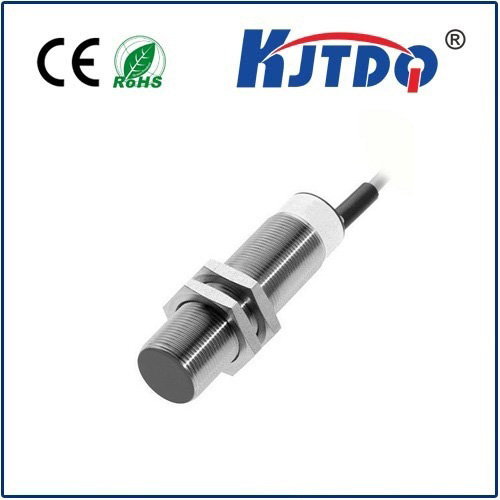
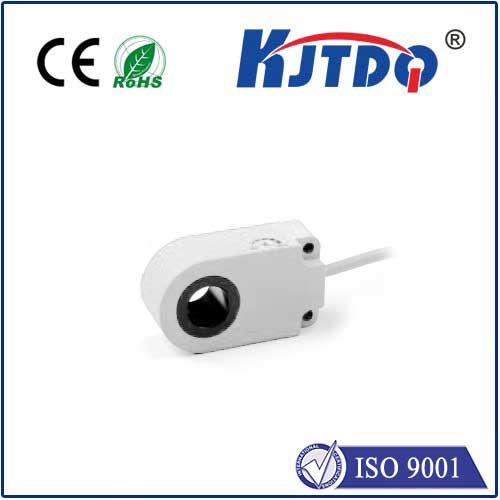
Inductive proximity sensors — M12, M18, and M30 cylindrical housings with shielded and unshielded variants, PNP and NPN outputs, and a full-metal series for wear-heavy positions, plus NAMUR intrinsically safe versions for hazardous areas (8 mm sensing-distance class per the EN 60947-5-6 convention)
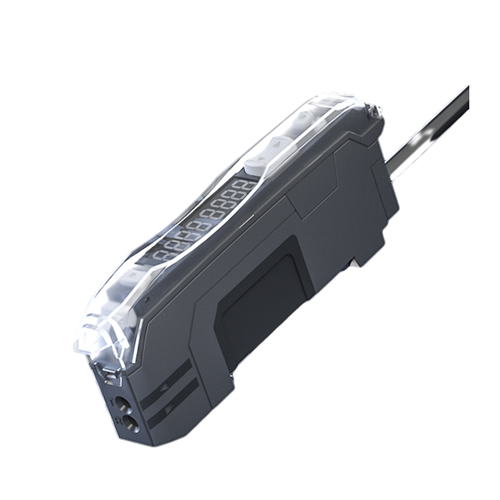
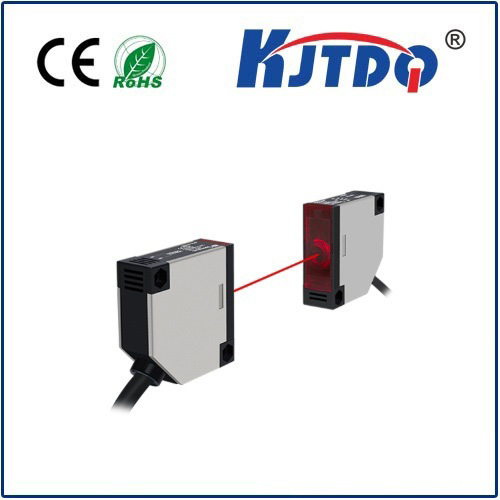
Photoelectric sensors — through-beam, retro-reflective, and diffuse families in the compact square housings common on packaging lines, with background-suppression, color-mark, label-detection, and slot-type variants covering the detection duties imported photoelectric brands typically hold
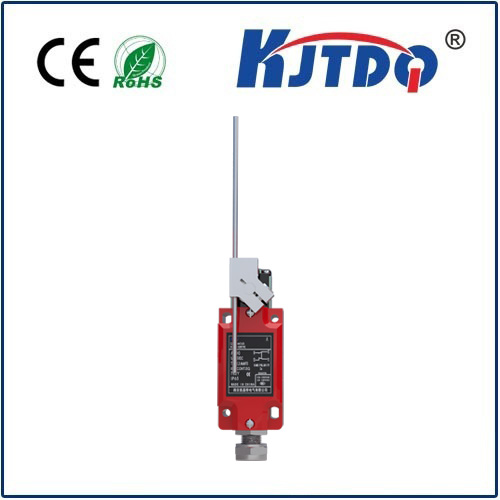
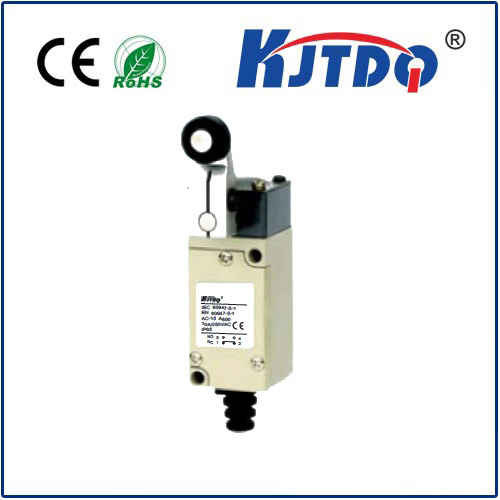
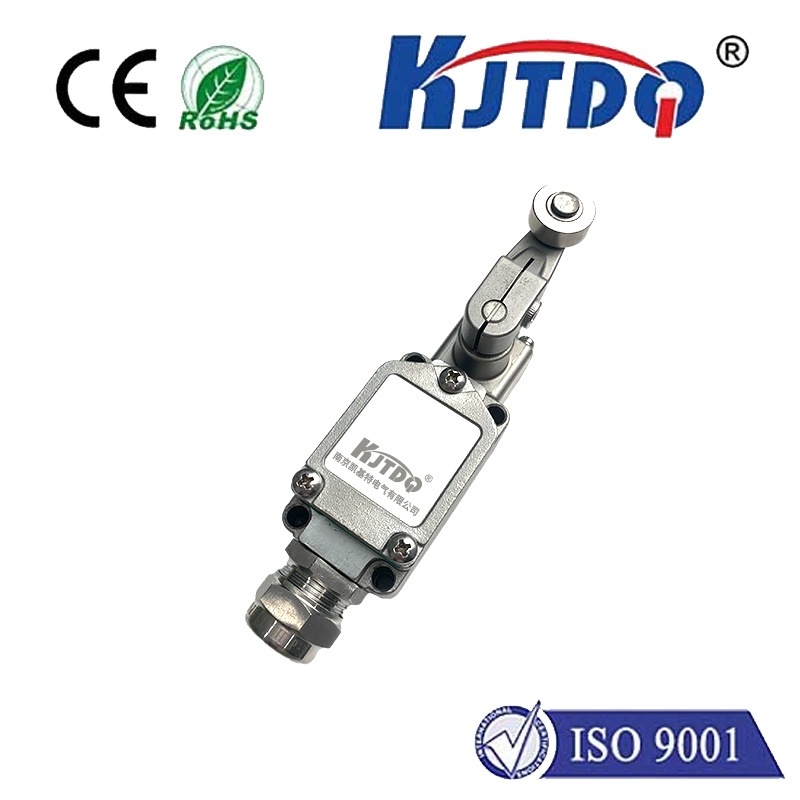
Limit switches — heavy-duty, waterproof, high-temperature, and explosion-proof families in the standardized mounting patterns used for cranes, machine tools, and conveyors
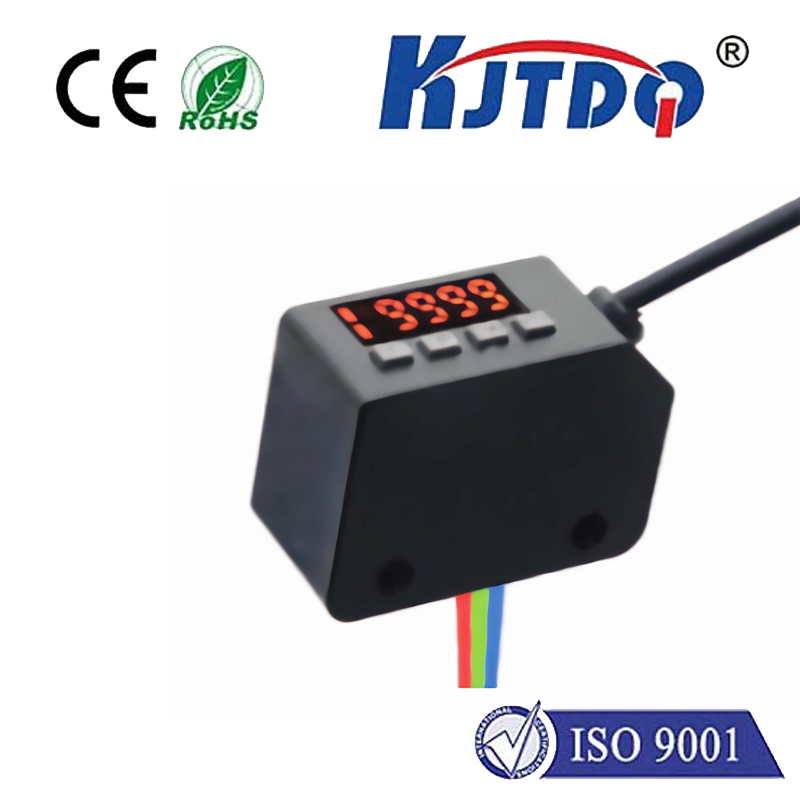
Laser distance and displacement sensors — cylindrical and block formats with 4 – 20 mA, RS485, and switching outputs, for positions where imported laser units are being reconsidered on cost grounds
Radar and ultrasonic level measurement — 80 GHz and 120 GHz radar level meters and ultrasonic families with 4 – 20 mA / HART-style analog transmission, substituting in tank-level positions
Within these families, the range of variants — high-temperature versions for steel mills, IP69K-capable products for wash-down areas, ATEX / IECEx-certified explosion-proof versions for oil, gas, and chemical plants — is what determines whether a specific substitution has a matching part. The selection step is model-specific and belongs to the datasheet comparison, not the brand comparison.
KJT Sensors holds the certification set that imported-brand substitutions normally require: CE and RoHS for Europe, ATEX and IECEx for hazardous areas, SIL to IEC 61508 for function-safety positions, and CCC for China — alongside ISO 9001 / ISO 14001 / ISO 45001 management systems. The paperwork a buyer files when qualifying a substitution is therefore available at the supplier-qualification stage rather than becoming a project risk later.
For hazardous-area substitutions the certification chain deserves emphasis: a proximity sensor or limit switch going into a Zone 1 or Zone 2 classification needs an explosion-proof certificate covering the exact model — KJT's ATEX, IECEx, and Chinese National Explosion-proof Certificate (NEPSI) coverage applies to its certified explosion-proof families. For safety functions — light curtains on press guarding, for example — the SIL / Type 4 documentation serves the same role.
In the Chinese domestic market, substitutions in mining and bulk-handling positions also carry the MT/T coal-mine safety standards and GB/T 10595 conveyor requirements, which KJT's conveyor protection line is specified against.
An honest substitution assessment names the boundaries, and three apply to any alternative supplier including KJT:
Datasheet verification is not optional. Sensing distance on the real target material, repeatability under the line's temperature conditions, and response time at the application's cycle rate all need confirmation on the buyer's own setup. Catalog figures describe standard test conditions, not the buyer's line.
Pilot batches precede volume commitments. The workable sequence is sample → line trial → pilot batch → volume, regardless of which brand is being replaced. A supplier that supports this sequence — KJT does, as its OEM and integrator customers' case records describe — is easier to qualify than one that does not.
Identical performance is not a claim to rely on. A substitution means a part that meets the application's requirements within its own tolerances — not a part that behaves indistinguishably from the incumbent in every condition. Applications riding the edge of an incumbent's specification deserve the closest re-verification.
Customer feedback recorded in KJT's case library reflects substitution experience: a general-manufacturing customer reported that domestic sourcing "reduced procurement budget with acceptable performance," and an integrator reported that "factory testing is complete — units work on arrival and save commissioning time." These describe documented outcomes in specific projects; each buyer's results depend on the five-point check above.
For a buyer replacing an imported sensor with a KJT part — or evaluating any cross-brand swap — a four-step sequence keeps the risk controlled:
Match the mounting and wiring first: confirm housing format, thread, output type, and connector against the incumbent's datasheet. This step eliminates unsuitable models before any hardware moves.
Compare datasheets on the application's terms: sensing distance on the actual target, repeatability, response time, temperature range, and IP rating — not headline range figures.
Request certificates for the exact model being quoted, with validity dates, as part of supplier qualification.
Run the line trial and pilot batch, measure the results in the buyer's own environment, and let the measured data make the final decision.
KJT Sensors' position in this workflow is straightforward: a 16-year manufacturer with 100+ patents, a full certification portfolio, and M12 / M18 / M30-standard product families whose documentation supports steps 1 through 3 — and whose samples support step 4. Imported brands built the form-factor standards the industry now runs on; a substitution succeeds or fails on whether the replacement part meets those standards and the application's measured requirements.