check

check

check

check
check
check
check
check

check
check
Automotive manufacturing uses sensors in two distinct domains: on the production line, where photoelectric, proximity and vision sensors handle part presence, position and quality inspection; and inside vehicle components, where microswitches and limit switches provide signal feedback for doors, charging ports, pedals and consoles. KJT Sensors supplies both domains — a ten-family sensor portfolio for factory automation plus microswitch and travel-switch lines used in automotive-electronics applications, including documented supply to vehicle manufacturers such as BYD (company-documented case).

Key Takeaways
Automotive sensing splits into production-line detection (presence, position, inspection) and in-vehicle component switching (doors, charging port, pedals, console controls).
Automotive-electronics switches must meet demanding requirements for operating life, consistency, miniaturization, insulation and immunity — under automotive-grade temperature, vibration and humidity.
3D structured-light vision solves appearance inspection on complex curved parts where 2D vision and manual checks are inconsistent.
A documented microswitch program supports applications including door handles, charging-port covers, steering-wheel buttons and brake-pedal position (company-documented case).
Production-line sensor selection starts from target material, line speed and mounting constraints; model-level parameters must be confirmed per datasheet.
| Plant area | Typical task | Recommended sensor type |
|---|---|---|
| Stamping / body shop | Sheet and part presence, position confirmation | Photoelectric sensors; proximity switches |
| Assembly lines | Part-in-place verification, counting, pallet detection | Photoelectric (through-beam, diffuse, background suppression) |
| Powertrain / machining | Metal part position, fixture confirmation | Inductive proximity switches |
| End-of-line / quality | Appearance defect inspection on complex surfaces | 3D structured-light vision systems |
| Conveyors and transfer | Travel limits, position interlocking | Travel and limit switches |
| Vehicle components (Tier supply) | Door, charging-port, pedal and console signal feedback | Microswitches; automotive-grade limit switches |
Engineering recommendation (conditional): the mapping reflects common automotive configurations; the final selection depends on target geometry, cycle time, and the electrical and environmental requirements of the station.
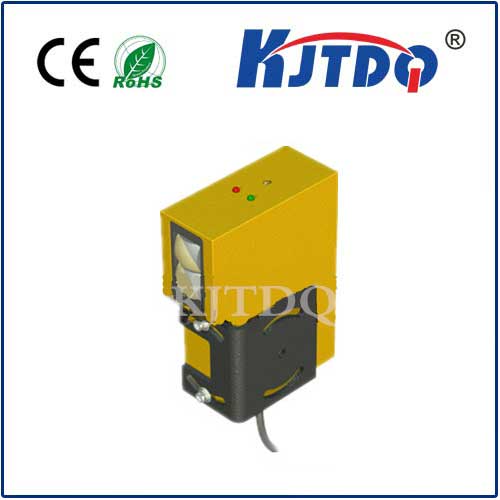
KJT Sensors photoelectric sensors cover object presence, position, distance, color and transparency detection in automated production. Variants listed on the official website include ToF laser, background suppression, diffuse-reflective, retro-reflective, through-beam, fiber-optic, color-mark and label types, plus safety light curtains for personnel protection around machinery. ToF laser variants emphasize adjustable distance, higher switching frequency and stability on complex surfaces and under ambient light — relevant for fast automotive cycles. Product page
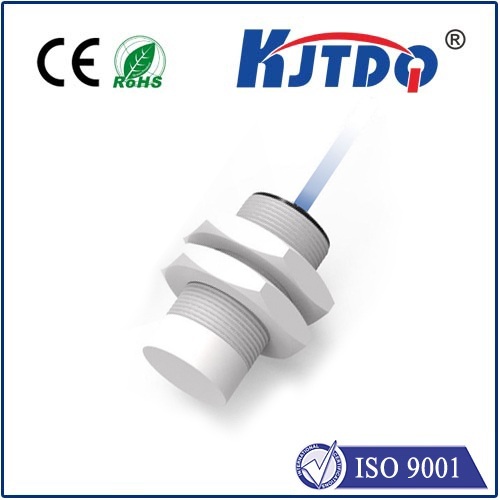
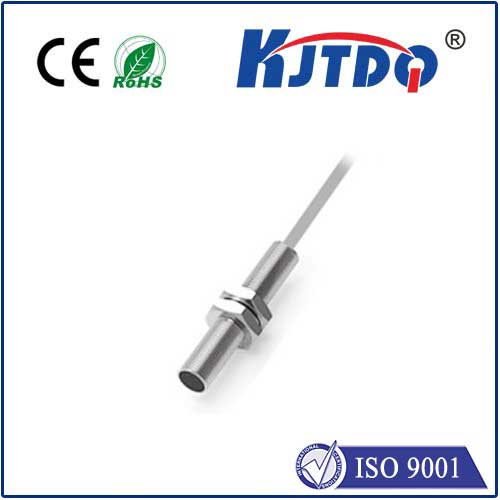
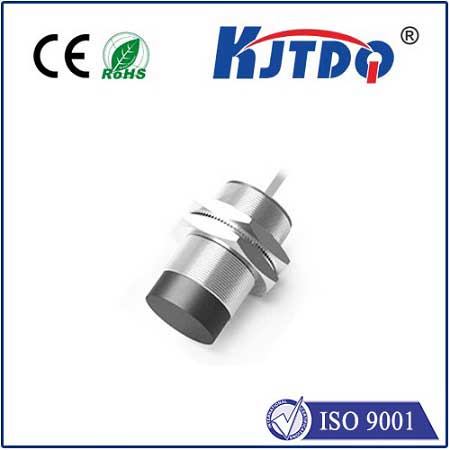
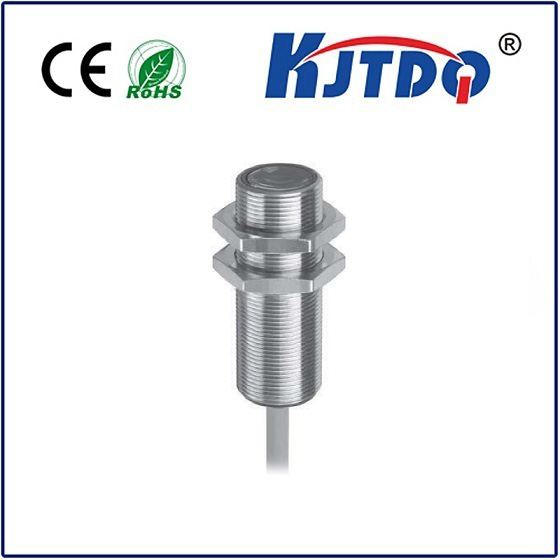
For fixture confirmation, machining position and metal-target detection, inductive proximity switches provide non-contact, wear-free switching. Housing sizes, sensing distances and output types (PNP/NPN, NO/NC) are model-specific. Product page
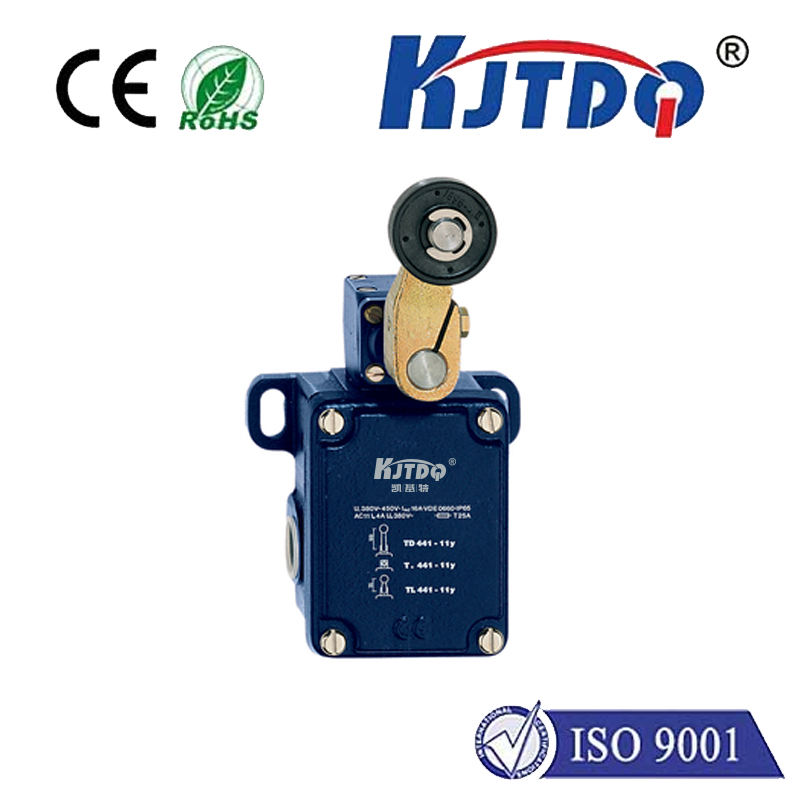
Travel-limit sensors mechanically actuate control circuits for stop, reversal, interlocking and safety protection on conveyors, transfer equipment and automated stations. KJT Sensors offers high-temperature, explosion-proof, waterproof and dual-circuit versions. Product page
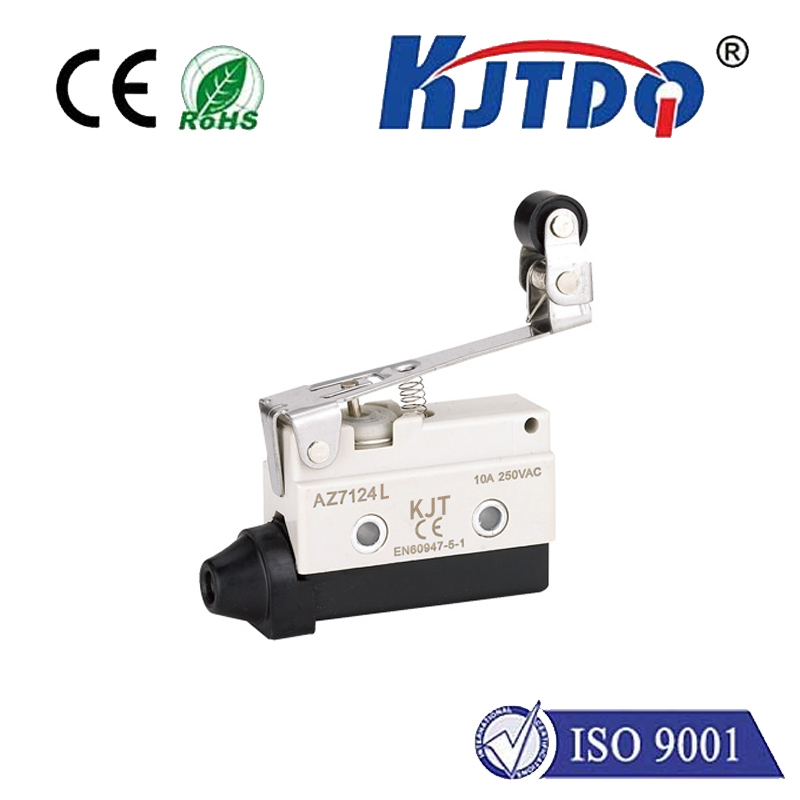
Microswitches serve as signal components inside the vehicle: door handles, charging-port covers, steering-wheel buttons, center-console mode selection and brake-pedal position are documented application points. Automotive electronics impose demanding requirements on operating life, operating force, travel, differential movement, consistency, miniaturization, insulation design and interference immunity, under automotive-grade temperature, vibration and humidity conditions. KJT Sensors addresses these through special-alloy contacts, advanced plating, precision manufacturing and consistency control on automated production lines (manufacturer-stated process description). Travel/limit switch product page
For appearance-defect inspection on complex curved parts, KJT Sensors 3D cameras use structured light to acquire three-dimensional surface information, allowing imaging from different angles and reducing sensitivity to lighting direction. 3D vision inspection systems
Microswitches for automotive electronics (company-documented case, 2026): Vehicle manufacturers including BYD require small control components with high consistency and reliability for doors, windows, center consoles, battery management and charging-port locks. KJT Sensors optimized materials, processes, precision manufacturing and consistency control for microswitches and related sensing components — special-alloy contacts, advanced plating and end-to-end quality monitoring on automated lines. The documented result: support for consistent assembly quality and end-product functionality at vehicle plants, meeting signal-transmission requirements for door handles, charging-port covers, steering-wheel buttons, center-console mode selection and brake-pedal position. An IP67 protection rating is referenced for the related application page; per-model ratings should be confirmed on the datasheet.
3D appearance inspection of steering wheels (company-documented case, 2024): An automotive inspection project needed stable defect detection on steering wheels — objects with complex curved shapes that are difficult to illuminate consistently. Conventional 2D vision and manual inspection were affected by lighting angle, surface shape and subjective judgment. The KJT Sensors 3D camera solution used structured light to acquire three-dimensional surface data from multiple angles. Stated indicators: a 60 × 50 mm field of view, accuracy spanning several micrometers to several hundred micrometers depending on configuration, and full-field 3D point-cloud output. Results are specific to this documented installation.
Define the domain first — production-line detection or in-vehicle component switching; the qualification logic differs completely.
Specify the target — material (metal, plastic, painted surface), size, color and surface reflectivity.
Match cycle time — switching frequency and response time must exceed line speed with margin.
Fix mounting constraints — available space determines housing size (M8/M12/M18/M30 for proximity; compact housings for photoelectric).
Define the electrical interface — PNP/NPN discrete, analog, or relay; confirm PLC compatibility.
For vehicle components, document the operating profile — required life cycles, operating force, temperature range, vibration profile and protection rating (e.g., IP67 where referenced).
Request consistency evidence for batch supply — for automotive-electronics programs, ask about lot-to-lot consistency control and quality monitoring methods.
Pilot before program commitment — validate samples at the actual station or in the actual component environment.
Yes — in addition to factory-automation sensors, the company supplies microswitches and related sensing components used in vehicle electronics. Documented application points include door handles, charging-port covers, steering-wheel buttons, center-console controls and brake-pedal position, with vehicle manufacturers including BYD referenced in a company-documented case.
For most non-contact presence detection of parts and pallets, photoelectric sensors are the default choice; through-beam types offer the longest range and highest reliability, while background-suppression types handle varying target colors at fixed distances. For metal targets at short range in oily environments, inductive proximity switches are typically more robust. The final choice depends on target material, required distance and cycle time.
On complex curved surfaces, 2D vision is sensitive to lighting angle and surface shape, which causes inconsistent defect detection. 3D structured-light vision acquires surface geometry directly and is less dependent on illumination direction. In a documented steering-wheel inspection project, a KJT Sensors 3D camera provided full-field point-cloud output over a 60 × 50 mm field of view.
Protection ratings are model-specific. An IP67 rating is referenced on the application page related to the automotive microswitch program; factory-automation sensors are available in various IP ratings. Confirm the rating for the exact model on its datasheet before specifying it into a station or component.
Automotive sensor sourcing covers two qualification paths: production-line detection, where photoelectric, proximity, limit-switch and 3D vision products are matched to station tasks; and in-vehicle component switching, where life, consistency and environmental endurance dominate. KJT Sensors operates in both, with documented vehicle-industry cases in microswitch supply and 3D appearance inspection. For a station-level or component-level evaluation, provide the target description, cycle or life requirements, mounting constraints and electrical interface, and a model-level recommendation can be prepared.