check

check

check

check
check
check
check
check
check

check
In the rapidly evolving landscape of industrial automation, consumer electronics, and security systems, the demand for reliable and adaptable sensing technology is paramount. Among the various solutions available, the adjustable sensitivity proximity sensor stands out as a critical component, offering unparalleled control and precision. This advanced sensor technology detects the presence or absence of an object within a specific range without physical contact, and its key differentiator is the user's ability to fine-tune its detection parameters. This capability to adjust sensitivity is not merely a feature; it represents a fundamental shift towards more intelligent, responsive, and application-specific sensing solutions.
The core principle behind a standard proximity sensor involves emitting an electromagnetic field or a beam of radiation, such as infrared light, and looking for changes in the field or return signal. An object entering the field alters the signal, triggering the sensor's output. However, fixed-sensitivity sensors often face challenges in dynamic environments. For instance, a sensor on a production line might falsely trigger due to background interference, dust, or variations in target object color and material. Conversely, it might fail to detect an object if the distance is slightly outside its rigid preset range. This is where the adjustable sensitivity feature becomes indispensable. By allowing engineers and integrators to calibrate the sensor's threshold—how strong a signal change is needed to trigger a detection—these sensors can be optimized for exact environmental conditions and specific tasks. This adjustability mitigates false positives and ensures consistent, reliable operation.
The applications for adjustable sensitivity proximity sensors are vast and diverse. In manufacturing, they are integral to assembly lines for precise object counting, positioning robotic arms, or detecting minute component placements. The ability to tweak sensitivity ensures that the sensor ignores irrelevant background machinery while accurately sensing the target item. Within the consumer electronics sector, these sensors enhance user experience in smartphones and tablets by reliably disabling the touchscreen during a call when the device is near the ear, regardless of the user's hairstyle or accessory variations. In automotive systems, they contribute to safety features like parking assistance and blind-spot monitoring, where sensitivity can be adjusted to filter out roadside debris and focus on larger, relevant obstacles. Furthermore, in security and lighting systems, sensors can be calibrated to ignore small animals or swaying vegetation while detecting human movement, thereby improving accuracy and energy efficiency.
Implementing an adjustable sensitivity sensor typically involves a straightforward calibration process. Many modern models come with potentiometers, dip switches, or digital interfaces through software. A technician can introduce the target object at the desired detection distance and adjust the sensitivity setting until the sensor reliably triggers. This process tailors the sensor to the exact reflectance, size, and material of the target object. Key benefits of this functionality include enhanced operational reliability, reduced downtime from false triggers, greater application versatility, and ultimately, lower long-term system costs due to improved accuracy and longevity.
When selecting an adjustable sensitivity proximity sensor, several technical specifications warrant close attention. The sensing range, whether inductive (for metals) or capacitive (for non-metals and liquids), must suit the application. The response time, output type (e.g., NPN/PNP digital, analog), and environmental ratings for factors like temperature, moisture, and chemical exposure are also crucial. The method of adjustment—manual via a screw or remote via a network—should align with the system's accessibility and automation level. Leading manufacturers continue to innovate, integrating these sensors with IoT connectivity for remote monitoring and adjustment, pushing the boundaries of smart factory and building automation.
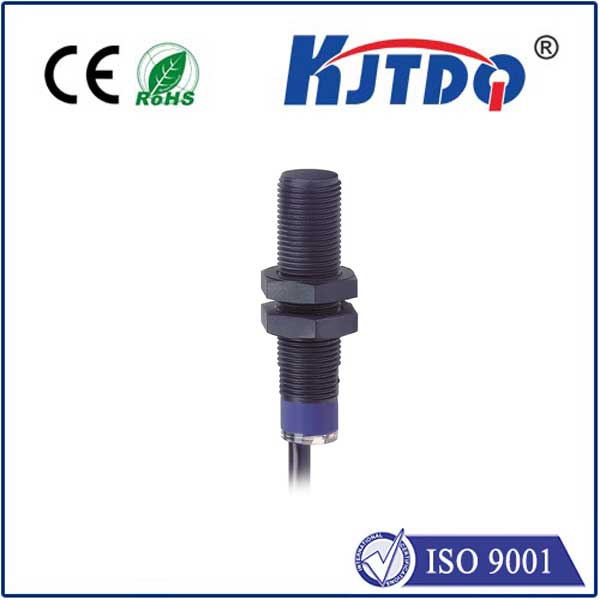
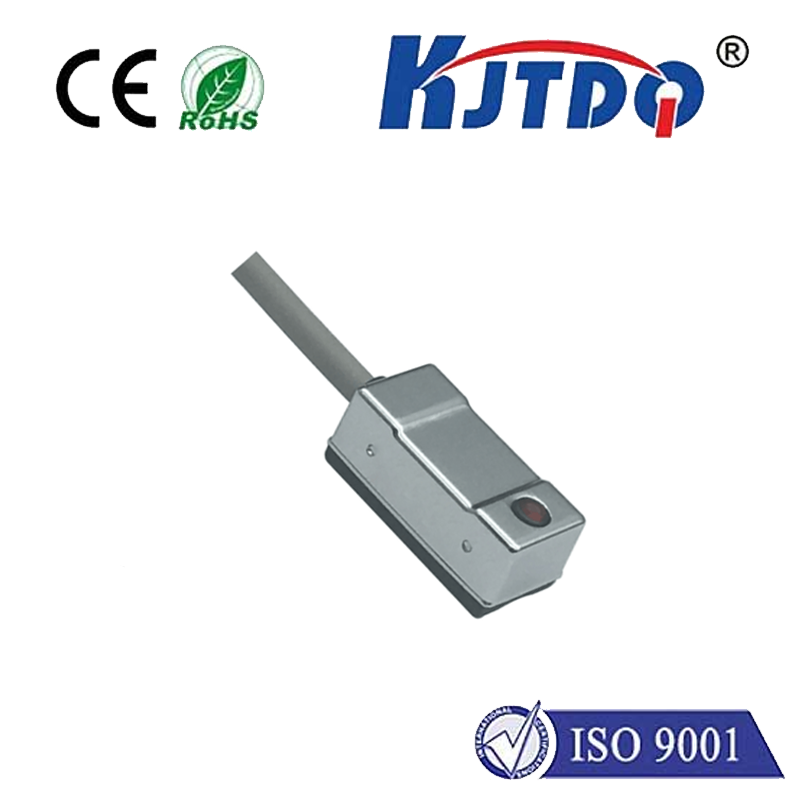
In conclusion, the adjustable sensitivity proximity sensor, exemplified by solutions like the KJTDQ series, is a cornerstone of modern precision engineering. It transcends the limitations of static sensors by providing a critical layer of customization and control. This adaptability ensures robust performance across countless scenarios, from delicate electronic devices to rugged industrial environments. As industries strive for greater efficiency, intelligence, and reliability, the role of these versatile sensors will only become more central, driving innovation and enabling smarter interactions between machines and their surroundings.