check

check

check

check
check
check
check
check

check
check
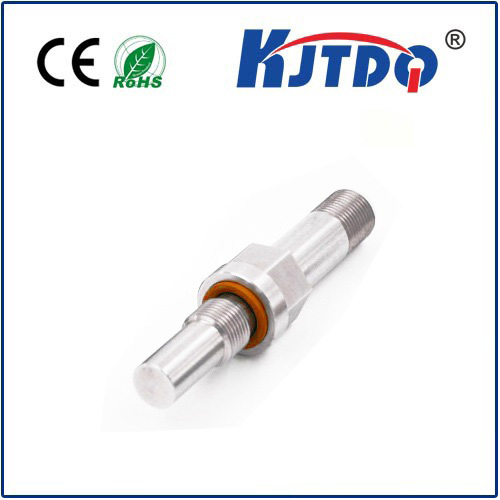
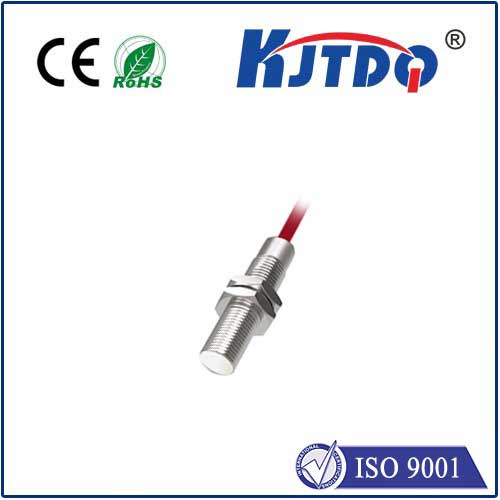
In the world of industrial automation and precision control, the demand for reliable, non-contact sensing solutions is ever-growing. Among the various technologies available, the M8 capacitive sensor stands out as a versatile and robust component for countless applications. Unlike mechanical switches or optical sensors, capacitive sensors operate by detecting changes in an electrical field. The M8 designation refers to its standardized 8mm cylindrical housing, making it a compact and widely compatible choice for integration into tight spaces and existing M8 threaded mounting points.
The core principle behind an M8 capacitive sensor is its ability to sense both conductive and non-conductive materials. It generates an electrostatic field from its active face. When a target object enters this field, it causes a measurable change in capacitance, which the sensor's internal circuitry converts into a switching signal. This allows it to detect materials like metals, plastics, glass, wood, liquids, and even granular substances through non-metallic container walls. This versatility is a key advantage over inductive sensors, which only detect metals.
One of the primary benefits of using an M8 capacitive sensor is its non-contact nature. Since there is no physical touch required for detection, there is no wear and tear on the sensor or the target, leading to exceptionally long service life and reduced maintenance costs. This makes it ideal for applications involving fragile materials, high-speed production lines, or harsh environments where contamination is a concern. Furthermore, many M8 capacitive models are available with IP67 or higher ingress protection ratings, ensuring reliable performance in the presence of dust, coolants, and oils.
Typical applications for M8 capacitive sensors are extensive across industries. In packaging, they reliably detect the presence of liquid in bottles or the level of powder in hoppers. In automotive assembly, they verify the placement of plastic components or rubber gaskets. In woodworking and furniture manufacturing, they sense wood panels or composite materials without marking the surface. They are also crucial for controlling fill levels in tanks containing aggressive chemicals or food products, as certain models feature chemically resistant housings.
When selecting an M8 capacitive sensor for a specific task, several factors must be considered. The sensing range, typically a few millimeters for this form factor, is crucial. Most models offer a potentiometer for sensitivity adjustment, allowing users to fine-tune the sensor to ignore background interference or detect specific materials through barriers. The output type is another critical choice; options include NPN, PNP, analog, or IO-Link for digital communication, enabling seamless connection to PLCs and control systems. The housing material, often nickel-plated brass or stainless steel, should be chosen based on the environmental conditions.
Installation and setup are generally straightforward. The sensor is screwed into an M8 mounting nut, and its sensitivity is adjusted using a small screwdriver while observing the indicator LED. Best practices include ensuring the sensor face is flush with or recessed from the mounting surface to prevent damage and avoiding installation in direct contact with conductive mounting brackets, which can shield the sensing field. For liquid level detection, it is often recommended to mount the sensor on the side of a non-metallic tank to detect the presence or absence of liquid reliably.
In comparison to other sensor types, the M8 capacitive sensor fills a unique niche. While photoelectric sensors can offer longer ranges, they may struggle with transparent objects or in dirty, foggy conditions. Ultrasonic sensors are excellent for distance measurement but can be more expensive and sensitive to temperature variations. The M8 capacitive sensor provides a cost-effective, durable, and material-agnostic solution for short-range presence detection, making it an indispensable tool for engineers and system integrators.
Looking ahead, advancements in M8 capacitive sensor technology continue to enhance their capabilities. Modern versions feature improved noise immunity, faster response times, and smarter functionalities through IO-Link, which allows for parameterization, diagnostics, and process data monitoring directly from the control cabinet. This trend towards intelligent sensors integrates the humble M8 capacitive device into the broader framework of Industry 4.0 and the Industrial Internet of Things (IIoT), providing valuable data for predictive maintenance and process optimization.
In conclusion, the M8 capacitive sensor is a fundamental building block for modern automation. Its ability to detect a vast array of materials without contact, combined with its rugged construction and compact M8 form factor, ensures its continued relevance in solving complex sensing challenges. From simple presence detection to sophisticated level control, understanding and correctly applying this technology is key to designing efficient, reliable, and future-proof automated systems.