check

check

check

check

check

check
In the world of industrial automation and machinery, precision and reliability are non-negotiable. At the heart of countless systems ensuring this reliability is a fundamental component: the inductive proximity sensor. This technology, often operating unseen and unheralded, is a cornerstone of modern manufacturing, packaging, and robotic applications. Unlike mechanical switches that require physical contact, inductive sensors offer a robust, wear-free solution for detecting metallic objects. The core principle behind their operation is elegantly simple yet highly effective. An inductive proximity sensor generates an oscillating electromagnetic field from its sensing face. When a metallic target enters this field, eddy currents are induced within the metal. This process dampens the oscillation amplitude within the sensor's coil. The sensor's internal circuitry detects this change and triggers a solid-state output signal, switching the state from "off" to "on" or vice versa. This entire process happens without any physical contact, making it incredibly durable and suitable for harsh environments filled with dust, oil, or coolant.
The advantages of using an inductive proximity sensor are numerous and significant. First and foremost is their exceptional longevity. With no moving parts to wear out from repeated contact, these sensors can endure millions of operating cycles. This translates to reduced maintenance costs and less unscheduled downtime, a critical factor for production efficiency. Their solid-state design also allows for very fast switching frequencies, enabling them to detect objects on high-speed production lines or count rapidly passing items with pinpoint accuracy. Furthermore, they are inherently resistant to environmental challenges. Many models feature robust housings made from materials like nickel-plated brass or stainless steel, with ingress protection ratings ensuring they are shielded from dust and water jets. This makes them ideal for use in machine tools, automotive assembly, and material handling equipment where conditions are demanding.
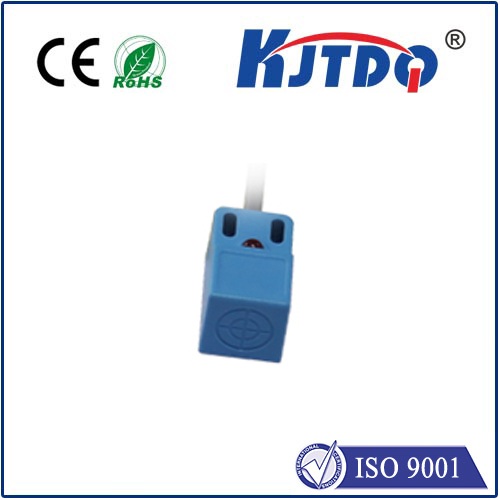
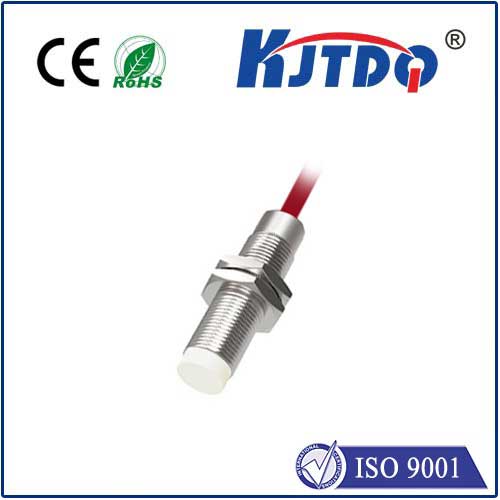
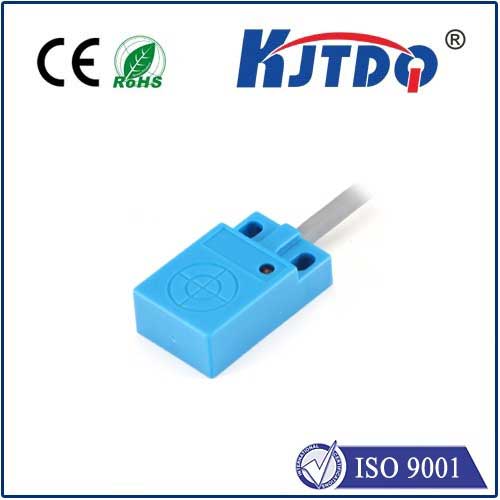
When selecting an inductive proximity sensor for a specific application, several key specifications must be considered. The sensing range, typically a few millimeters up to about 60 millimeters, is a primary factor. It is crucial to note that this rated range is defined for a standard mild steel target. Different metals affect the sensing distance; for instance, stainless steel may reduce the range, while copper or aluminum reduces it even further. Another critical parameter is the sensor's housing style. Cylindrical threaded barrels are common for easy mounting, while rectangular or block-style sensors offer alternative mounting solutions. The output type is also vital: NPN (sinking) and PNP (sourcing) are the two standard transistor outputs, and the choice depends on the control system's architecture. Additionally, some sensors feature analog outputs (4-20 mA or 0-10 V) that provide a signal proportional to the distance to the target, useful for positioning applications.
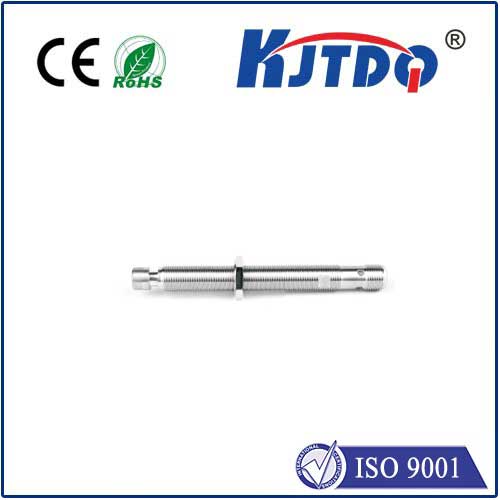
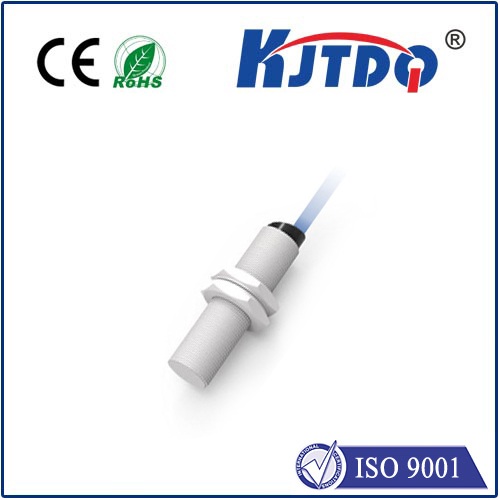
The application scope for inductive proximity sensors is vast. They are routinely used for simple tasks like part presence detection—confirming a component is in place before a machining operation begins. They serve as end-of-travel limit switches in automated slides and actuators, providing precise positional feedback. In conveyor systems, they count bottles, cans, or boxes. Within hydraulic cylinders, they detect piston position. A specialized variant, the cylindrical inductive proximity sensor, is often employed in tight spaces for metal detection. Their reliability is so trusted that they form the backbone of safety interlocks on machine guards, ensuring a door is securely closed before a machine can start. From monitoring rotational speed by detecting gear teeth to controlling robotic arm movements, their utility is nearly limitless.
To ensure optimal performance and longevity, proper installation and consideration of the operating environment are essential. Sensors should be mounted securely to prevent vibration from affecting performance. It is also important to maintain adequate clearance between the sensor and its mounting bracket or nearby metal, known as the flush-mounting or non-flush-mounting requirement, to avoid false triggering. While immune to dust and dirt, extreme temperatures can affect performance, so checking the specified operating temperature range is necessary. For environments with strong electromagnetic interference or welding equipment, choosing a sensor with weld-field immunity is crucial to prevent malfunction. Regular checks for physical damage and buildup of metallic swarf on the sensing face will help maintain consistent operation over the sensor's long service life. By understanding the principles, advantages, and correct application practices, engineers and technicians can leverage inductive proximity sensors to build more reliable, efficient, and intelligent automated systems.