check

check

check

check

check

check
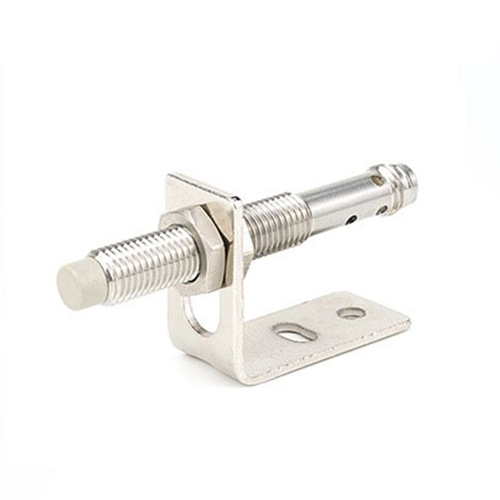
In the world of industrial automation and machine control, simplicity and reliability are paramount. Among the myriad of sensing technologies available, the 2 wire proximity sensor stands out as a cornerstone for countless applications. Its elegant design eliminates the need for a separate power wire, making installation faster, wiring less error-prone, and system layouts cleaner. This sensor operates by modulating the current draw in its two-wire loop, signaling the detection of a target object. Unlike its three-wire or four-wire counterparts, it seamlessly integrates into standard AC or DC control circuits, often directly in series with the load, such as a PLC input or a relay coil. The inherent simplicity of the 2-wire system translates directly into reduced material costs, lower installation time, and minimized potential points of failure.
The operational principle, while straightforward, is ingenious. In its normal state (no target present), a small leakage or quiescent current flows through the sensor, insufficient to activate the connected load. When a metallic object enters the sensor's active electromagnetic field, the internal oscillator circuit is damped, causing a significant change in the sensor's impedance. This change allows a substantial operating current to flow, sufficient to drive the load and signal a detection event. This on/off switching action is robust and well-suited for harsh industrial environments where dirt, vibration, and temperature fluctuations are common. Modern 2 wire proximity sensors are available in various sensing ranges, housing materials like nickel-plated brass or stainless steel, and are designed to be resistant to short-circuits, overloads, and voltage spikes.
Choosing a 2 wire proximity sensor offers distinct advantages. The most obvious benefit is the simplified wiring: only two connections are required for both power and signal. This not only cuts down on wire and conduit costs but also reduces the complexity of control cabinets and minimizes wiring errors during installation or maintenance. Furthermore, the absence of a separate output wire often makes these sensors more compact. They are exceptionally versatile, compatible with a wide range of standard control voltages (e.g., 10-30V DC or 90-250V AC), and can directly interface with many programmable logic controllers (PLCs) and other control devices without additional interface modules. Their rugged construction ensures longevity in demanding settings like packaging machinery, material handling systems, automotive assembly lines, and conveyor belt monitoring.
However, a practical understanding of their characteristics is crucial for optimal application. One key consideration is the voltage drop across the sensor. Since the sensor is in series with the load, it consumes a portion of the supply voltage, which must be accounted for to ensure the load receives adequate voltage to operate. The residual current or leakage current when the sensor is in the "off" state is another factor; it must be low enough to prevent accidental activation of sensitive loads. Additionally, users must ensure the load current stays within the sensor's specified switching capacity, neither too high nor too low. Proper installation is also vital, maintaining the recommended sensing distance and ensuring the target material and size are appropriate for the sensor's specifications.
When selecting a 2 wire proximity sensor for a specific task, several parameters demand attention. First, determine the required sensing distance and the nature of the target material (ferrous metals like iron and steel are most easily detected, while non-ferrous metals and other materials may require specialized models). The housing style—cylindrical, rectangular, or slot-type—must fit the mechanical constraints of the application. Environmental factors such as temperature extremes, potential exposure to chemicals, oils, or coolants, and the need for washdown capabilities (with IP67 or IP69K ratings) will dictate the required ingress protection. Finally, the electrical specifications, including operating voltage range, switching current capacity, and switching frequency, must align perfectly with the control system's design.
In conclusion, the 2 wire proximity sensor remains an indispensable tool in the engineer's arsenal. Its blend of ruggedness, simplicity, and cost-effectiveness makes it a preferred choice for straightforward presence detection tasks across industries. By understanding its operating principles, advantages, and application nuances, system designers and maintenance personnel can leverage this reliable technology to build more efficient, robust, and economical automated systems. Its continued evolution with enhanced diagnostics, longer sensing ranges, and improved noise immunity ensures it will remain a fundamental component in the landscape of industrial sensing for years to come.