check

check

check

check

check

check
In the demanding world of industrial automation, particularly within hazardous environments like chemical plants, oil refineries, and mining operations, standard sensors simply won't do. The risk of ignition from electrical sparks necessitates specialized equipment designed from the ground up for safety. This is where the NAMUR proximity sensor becomes an indispensable component. Unlike conventional sensors that output varying voltage or current signals, a NAMUR sensor is a fundamentally simple, passive device. Its operation is based on a change in resistance, designed to work in conjunction with a separate isolating amplifier or intrinsically safe (IS) barrier.
The core principle of a NAMUR proximity sensor is elegant in its simplicity. It contains an oscillator circuit whose damping changes when a metallic target enters its detection field. This damping causes a precise shift in its output current. When no target is present, the sensor draws a low current (typically around 1 mA). When a target is detected, this current increases to a higher level (typically around 3 mA). This two-state, low-energy signal is the key to its safety. The associated evaluating circuit, like an IS barrier or amplifier located in the safe area, monitors this tiny current. It then converts this safe "NAMUR signal" into a standard, usable output like a transistor (PNP/NPN) or relay signal for the control system (PLC).
The primary and most critical advantage of using a NAMUR proximity sensor is its contribution to intrinsic safety. Intrinsic safety is a protection technique that ensures the electrical energy in the sensor circuit is so low that it cannot generate a spark with enough thermal energy to ignite a specific hazardous atmosphere. Since the NAMUR sensor itself is passive and operates with very low current and voltage (usually supplied by the IS barrier at 8.2V), it can be installed directly in Zone 0, 1, or 2 hazardous areas. This eliminates the need for bulky explosion-proof enclosures, simplifying installation, maintenance, and reducing overall system cost.
Beyond unparalleled safety, NAMUR sensors offer exceptional reliability. Their simple, rugged design with few active components makes them highly resistant to failure from factors like electromagnetic interference (EMI), voltage spikes, and wire shorts. A short circuit or open circuit in the connecting cable is easily detected by the monitoring amplifier as a fault condition (current outside the normal 1mA/3mA range), allowing for immediate diagnostic alerts. This failsafe feature is crucial for preventing undetected sensor failures that could lead to process downtime or safety incidents.
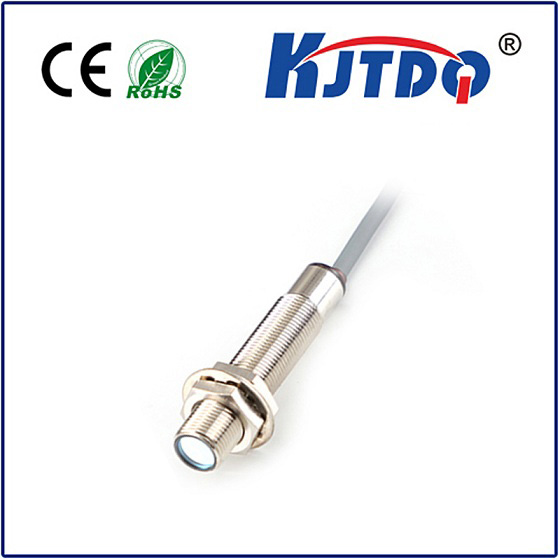
Selecting the right NAMUR sensor involves several key considerations. First, identify the required sensing distance and target material (usually ferrous metals). Next, choose the form factor—tubular, rectangular, or slot style—to fit the mechanical installation. The housing material is also vital; stainless steel variants (e.g., V4A/AISI 316L) are essential for corrosive environments. Crucially, the sensor must be certified for use in the specific hazardous area classification (e.g., ATEX, IECEx for international markets, or FM/CSA for North America) present in your application. Always pair the sensor with a correctly rated and certified isolating amplifier or IS barrier.
Common applications for NAMUR proximity sensors are found anywhere flammable gases, vapors, or dusts may be present. They are extensively used for position detection of valves, cylinders, and doors; level detection in tanks and silos; and speed monitoring on rotating equipment like shafts and conveyors within classified zones. Their reliability makes them equally valuable in non-hazardous but critical applications where failure is not an option, such as in pharmaceutical or food and beverage production.
In conclusion, the NAMUR proximity sensor is far more than just a switch. It is a meticulously engineered safety component that forms the first critical link in a secure and reliable monitoring chain within hazardous locations. By adhering to the NAMUR standard (DIN EN 60947-5-6), these sensors provide a globally recognized solution for achieving intrinsic safety. When designing or upgrading automation systems in potentially explosive atmospheres, specifying NAMUR sensors with appropriate interface modules is a proven strategy to safeguard personnel, protect physical assets, and ensure uninterrupted process integrity.