check

check

check
check
check
check
check
check

check

check
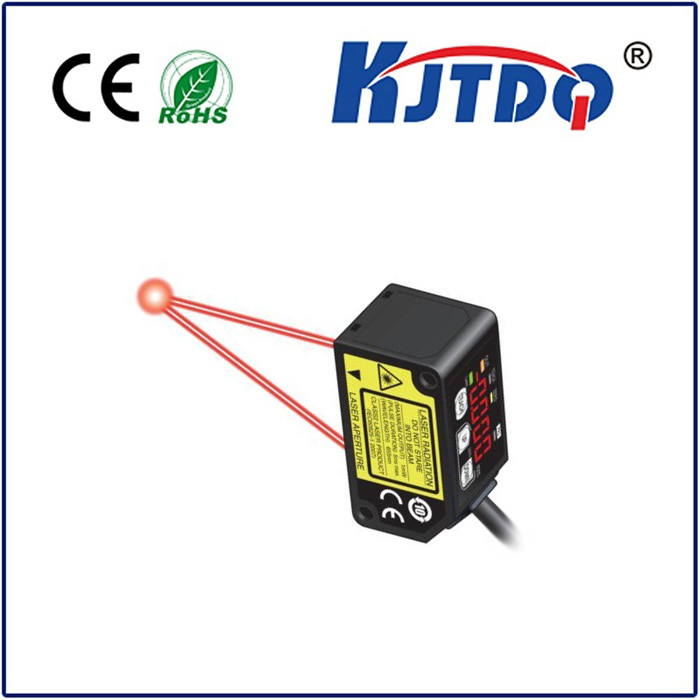
In an era where precision is not just an advantage but a necessity, the emergence of millimeter-level rangefinder sensors marks a pivotal leap forward. These sophisticated devices transcend traditional measurement limitations, offering unparalleled accuracy that is reshaping industries from advanced manufacturing to autonomous systems. Unlike conventional sensors that operate at centimeter-level tolerances, these next-generation tools deliver resolutions fine enough to discern the subtlest gaps, the most minute displacements, and the finest structural details.
The core technology enabling this millimeter-level precision often hinges on advanced time-of-flight (ToF) principles, refined laser interferometry, or highly calibrated phase-shift measurement methods. By utilizing coherent light sources and sophisticated signal-processing algorithms, these sensors can measure distances with astonishing fidelity. Environmental factors such as ambient light, temperature fluctuations, and atmospheric conditions, which once posed significant challenges, are now actively compensated for through integrated intelligent systems. This ensures stable and reliable performance even in dynamic or harsh operational environments, a critical requirement for field applications.
The practical implications of this technological refinement are vast and transformative. In industrial automation and robotics, millimeter-level rangefinders are the eyes of precision. They enable robotic arms to perform complex assembly tasks with sub-millimeter repeatability, ensure quality control by detecting microscopic defects on production lines, and guide automated guided vehicles (AGVs) through tightly spaced warehouses with flawless navigation. The margin for error approaches zero, directly enhancing productivity, safety, and product quality.
The construction and civil engineering sectors are undergoing a similar revolution. Surveying, structural health monitoring, and alignment tasks now benefit from rapid, contactless measurements that are both highly accurate and efficient. Monitoring settlement in large infrastructures or ensuring the perfect alignment of prefabricated modules becomes a streamlined process, reducing project timelines and potential costly rework.
Furthermore, the integration of these sensors is a cornerstone for the future of autonomous mobility. For drones, self-driving cars, and other autonomous platforms, understanding the environment with millimeter-level detail at relevant ranges is crucial for safe navigation and obstacle avoidance. It allows these systems to perceive not just that an object is present, but its exact contours and distance, enabling more nuanced and safer decision-making algorithms.
Beyond these established fields, innovative applications continue to surface. In logistics, they enable ultra-precise inventory management and parcel dimensioning. In healthcare, they assist in precise patient positioning for radiotherapy or as part of advanced diagnostic equipment. The common thread is the demand for data that is not merely approximate but definitively exact.
Selecting the right millimeter-level rangefinder sensor requires careful consideration of key parameters. The effective measuring range, the specific accuracy and repeatability specifications within that range, the response speed or sampling rate, and the robustness of the housing against dust and water (often denoted by IP ratings) are all critical. Equally important is the output interface and the ease of integration into existing data systems or control networks, whether through analog voltage, current loops, or digital protocols like RS-485, CAN bus, or Ethernet.
As we look to the future, the trajectory points toward even greater integration, miniaturization, and intelligence. The convergence of these high-precision sensors with edge computing and artificial intelligence will unlock predictive capabilities, where systems don't just measure but also interpret and anticipate. The millimeter-level rangefinder sensor, therefore, is more than a measuring tool; it is a fundamental enabler of the precision-driven future, transforming raw distance data into actionable intelligence that pushes the boundaries of what is technically and commercially possible.