check

check

check

check

check

check
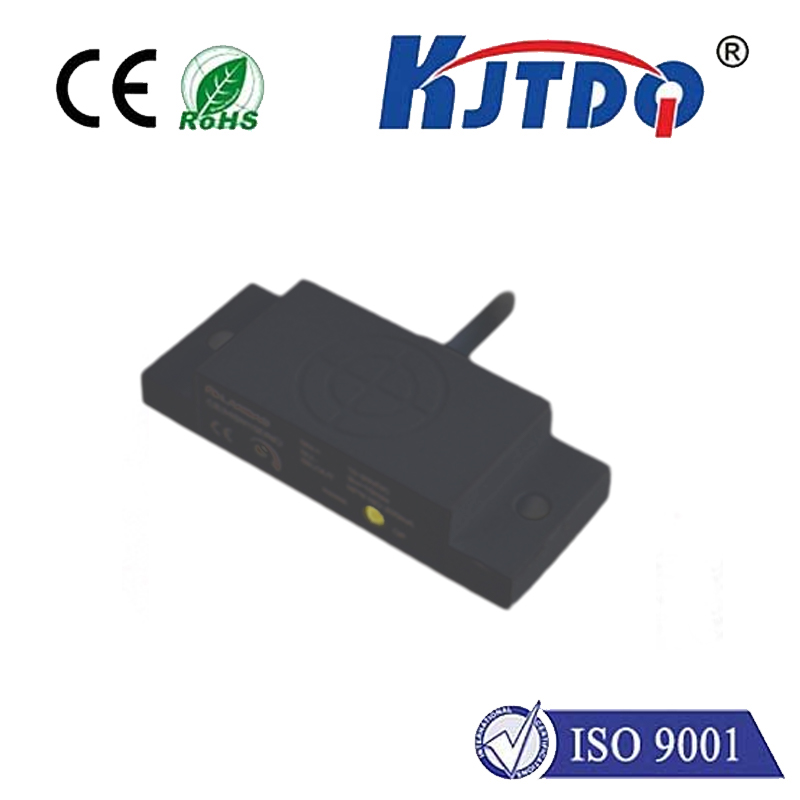
In the rapidly evolving landscape of industrial automation and smart electronics, space is at a premium. Design engineers are constantly challenged to integrate more functionality into ever-shrinking form factors without compromising performance or reliability. This is where the small size proximity sensor, exemplified by advanced series like KJTDQ, emerges as a critical component, driving innovation across countless applications.
The primary advantage of a compact proximity sensor is its ability to fit into tight spaces where traditional sensors cannot. This miniaturization is not merely about saving physical room on a circuit board or within a machine assembly. It enables entirely new design possibilities. From the intricate internal mechanisms of portable medical devices to the densely packed robotic arms on an assembly line, these sensors provide precise non-contact detection without imposing spatial constraints. Their small footprint allows for more sensors to be deployed in a given area, enabling finer-grained monitoring and control, which is essential for the Internet of Things (IoT) and Industry 4.0 paradigms.
Despite their diminutive size, modern small size proximity sensors like those in the KJTDQ range pack a significant technological punch. They typically utilize high-frequency oscillation, capacitive, or magnetic principles to detect the presence or absence of a target object. Advances in semiconductor manufacturing and packaging have allowed for the integration of sensitive detection coils, oscillators, and signal processing circuits into a single, robust housing often just a few millimeters in size. This integration ensures high sensitivity and stability, allowing them to reliably detect metals, plastics, liquids, or even human presence at specified short ranges. Key performance parameters such as switching frequency, repeat accuracy, and temperature tolerance are maintained at levels comparable to their larger counterparts.
The application spectrum for these tiny workhorses is vast and growing. In consumer electronics, they are ubiquitous, managing tasks like screen blanking during phone calls or enabling touchless gestures. Within automotive systems, they contribute to safety and convenience features, detecting seat occupancy or the position of windows and sunroofs. The manufacturing sector relies on them for precise positioning, counting, and end-of-travel detection in automated machinery and collaborative robots (cobots). Furthermore, their low power consumption makes them ideal for battery-operated devices, from wireless security systems to handheld diagnostic tools.
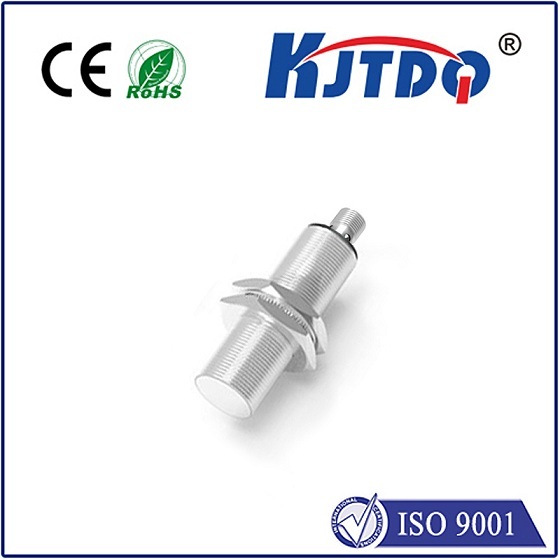
Selecting the right small size proximity sensor requires careful consideration of several factors beyond just dimensions. The sensing distance, or nominal range, must be appropriate for the application. The target material (ferrous metal, non-ferrous metal, plastic, etc.) dictates whether an inductive, capacitive, or other type of sensor is needed. Environmental conditions are crucial; many KJTDQ-type sensors feature robust housings made of stainless steel or PBT plastic, offering high ingress protection (IP) ratings against dust and water, and resilience to oils, coolants, and vibration. Electrical output type (NPN/PNN, analog, IO-Link) must also interface seamlessly with the existing control system.
Looking ahead, the trend toward miniaturization continues unabated. The next generation of small size proximity sensors will likely incorporate more intelligence through embedded diagnostics and digital communication protocols like IO-Link, providing not just a switch signal but also data on sensor health, temperature, and parameterization. This facilitates predictive maintenance and easier integration into smart factory networks. As machines become more compact and intelligent, the demand for reliable, high-performance, and tiny sensing solutions will only intensify.
In conclusion, the small size proximity sensor, such as the KJTDQ series, is far more than a shrunken version of a standard sensor. It is a testament to precision engineering that solves core design challenges in modern technology. By enabling reliable object detection in confined spaces, it empowers innovation across industries, from life-saving medical equipment to high-speed automated production lines. For engineers designing the next generation of smart devices and systems, understanding and leveraging the capabilities of these compact sensors is not just an option—it is a fundamental requirement for success.