check

check

check

check
check
check
check
check

check

check
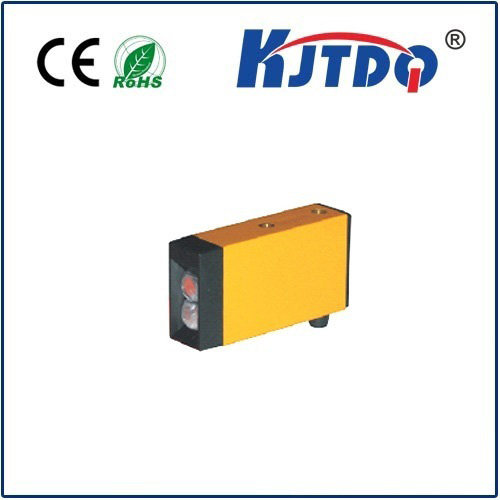
In the dynamic landscape of industrial automation, the demand for sensors that offer both precision and resilience over extended distances is ever-growing. The Long-Range Photoelectric Switch, particularly models like the KJTDQ series, stands as a cornerstone technology, enabling seamless and reliable detection in challenging environments where conventional sensors fall short. This advanced device operates on a fundamental yet powerful principle: it emits a beam of light—typically infrared, laser, or modulated LED—towards a target. A receiver then detects the presence or absence of this light beam. An object interrupting this beam triggers a switch in the electrical output signal, providing a clear, binary detection event. What sets the long-range variant apart is its ability to perform this function accurately over distances that can span from several meters to over a hundred meters, depending on the model and technology employed.
The engineering behind long-range photoelectric switches addresses critical industrial pain points. Traditional proximity sensors have limited range and can be affected by target material, color, or environmental factors like dust and moisture. In contrast, modern long-range photoelectric sensors are designed with high-intensity, focused light sources and sophisticated receiver optics. They often incorporate background suppression technology or time-of-flight measurement to ignore irrelevant objects and precisely gauge distance. The housing is typically ruggedized, rated at IP67 or higher, to withstand harsh conditions including temperature extremes, vibration, and exposure to oils or chemicals. This robust construction ensures consistent operation in outdoor applications, large warehouse logistics, material handling on extensive conveyor systems, and vehicle detection in automated guided vehicle (AGV) systems.
The application spectrum for the Long-Range Photoelectric Switch is vast and transformative. In warehouse and logistics automation, they are indispensable for pallet detection on high-bay storage systems, package sorting on long conveyor lines, and ensuring safety at docking bays by detecting the presence of trucks. Within the manufacturing sector, they monitor production lines for object presence, count products at high speeds, and control automated machinery by providing precise positional feedback over large work cells. In the realm of traffic management and parking systems, these sensors reliably detect vehicles at gates or in parking spaces, enabling efficient flow control. Furthermore, in agricultural automation and forestry, they assist in monitoring equipment and material levels over wide areas.
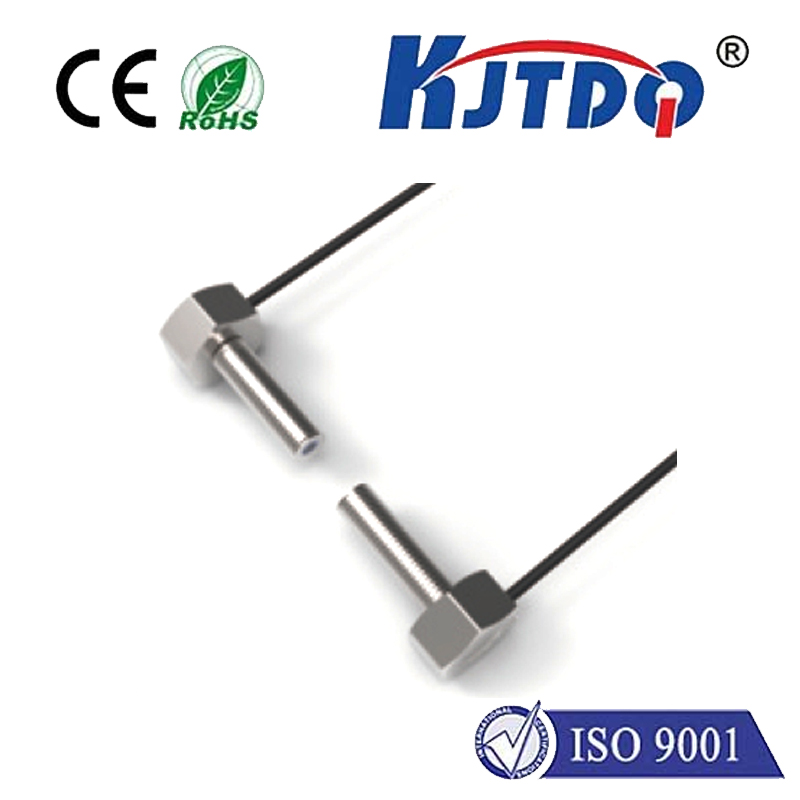
Choosing the right long-range photoelectric switch, such as the KJTDQ series, requires careful consideration of several technical parameters. The sensing range is paramount, but so is the type of sensing mode—through-beam, retro-reflective, or diffuse reflective. Through-beam models, with separate emitter and receiver units, offer the longest range and highest reliability. The light source type is another key factor; laser sensors provide extremely precise, long-range spotting, while modulated LED sensors offer a cost-effective balance of range and interference immunity. Output configuration (PNP/NPN, analog, or IO-Link), response time, and environmental protection ratings must align with the specific application's electrical requirements and physical conditions.
The integration of these switches into broader Industrial Internet of Things (IIoT) frameworks marks the next evolution. Modern long-range photoelectric sensors are increasingly equipped with smart features like diagnostic capabilities, which can predict maintenance needs by monitoring lens contamination or output power degradation. They can communicate directly with programmable logic controllers (PLCs) and supervisory control and data acquisition (SCADA) systems, providing not just a detection signal but valuable operational data. This connectivity enhances overall system intelligence, reduces downtime, and optimizes processes.
In conclusion, the Long-Range Photoelectric Switch is far more than a simple detection device; it is a critical enabler of efficiency, safety, and intelligence in modern industrial operations. Its ability to deliver unwavering accuracy over long distances, coupled with rugged durability, solves complex automation challenges across diverse sectors. As industries continue to push towards greater automation and data-driven management, the role of reliable, long-range sensing technology, exemplified by advanced series like KJTDQ, will only become more central, driving productivity and innovation forward.