check

check

check
check
check
check
check
check

check

check
Precise and reliable measurements are the cornerstone of many industrial processes, from quality control on assembly lines to vibration monitoring in heavy machinery. The laser displacement sensor has become an indispensable tool for achieving this accuracy non-contactly. However, its sophisticated technology can only deliver on its promise when installed correctly. A flawless installation is not merely a procedural step; it is the critical foundation that determines the sensor's long-term stability, measurement accuracy, and overall system integrity. This guide provides a comprehensive, step-by-step approach to ensure your laser displacement sensor is set up for success from the very beginning.
The installation journey begins long before mounting the sensor. A thorough site assessment is paramount. First, identify the target object's characteristics. What is its material? Is it highly reflective, matte, transparent, or dark? Surface properties dramatically affect how the laser beam is reflected. For instance, a glossy metal surface might cause specular reflection, directing the beam away from the sensor's receiver, while a black, absorbent material might return a weak signal. Understanding this helps in selecting the appropriate sensor model or, if the sensor is already chosen, in planning mitigation strategies like applying a matte tape to the measurement point.
Next, scrutinize the environmental conditions. Is the area prone to dust, oil mist, steam, or significant temperature fluctuations? Many industrial-grade laser sensors are built with robust IP ratings for dust and water resistance, but verifying that the specific model's protection level matches the environment is crucial. Temperature stability is another key factor; drastic changes can affect the laser's wavelength and the sensor's internal electronics, leading to drift. Ensure the operating ambient temperature range specified in the datasheet is not exceeded. Also, assess potential sources of electrical noise, such as nearby variable frequency drives or large motors, and plan cable routing accordingly, preferably using shielded cables away from power lines.
With the assessment complete, proceed to the mechanical mounting. Stability is the golden rule. The sensor must be mounted on a rigid, vibration-free structure using appropriate brackets. Any movement or vibration in the mount will be interpreted as target displacement, causing noisy and inaccurate readings. Use a precision bubble level if the sensor's alignment relative to the target plane is critical. The mounting orientation is also important; follow the manufacturer's guidelines. Some sensors perform best in a horizontal orientation to prevent internal heat buildup, while others are omnidirectional.
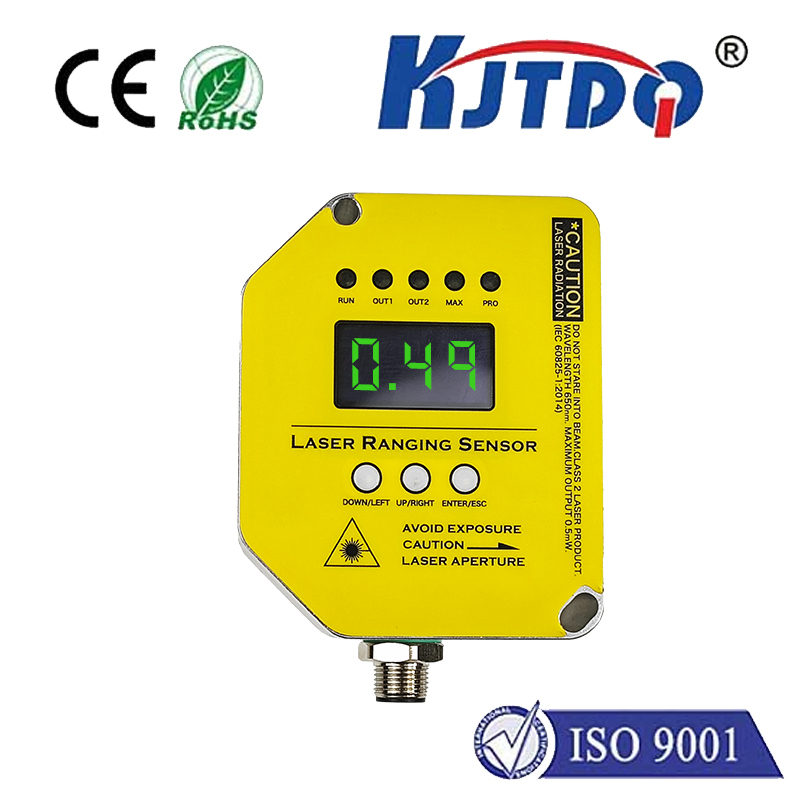
Alignment is the most critical phase. The laser beam must strike the target surface perpendicularly. An angled incidence can cause the "cosine error," where the measured distance is longer than the actual perpendicular distance, and the spot may elongate or shift, reducing signal strength. Most sensors have a built-in alignment aid, such as a visible red pilot laser or an LED indicator that changes color or brightness based on signal strength. Use these tools meticulously. Fine-tune the sensor's position in minute increments until the indicator shows optimal reception. For demanding applications, verify alignment by taking a measurement of a known reference object.
Electrical wiring and configuration follow mechanical setup. Adhere strictly to the wiring diagram provided in the manual. Connect the power supply, ensuring voltage and polarity are correct—a simple mistake here can cause permanent damage. Properly ground the sensor and the mounting fixture to protect against electrical surges and reduce noise. For sensors with analog or digital outputs, connect the cables to the appropriate data acquisition system or PLC input module. Once powered, access the sensor's configuration settings, typically via a built-in teach button or software interface. Set the correct measurement range, output type (e.g., 4-20mA, 0-10V, or digital), and any necessary filters. Filters, such as a moving average filter, can be invaluable for stabilizing readings in slightly vibrating environments without compromising the underlying mechanical stability of the mount.
Finally, rigorous testing and validation are non-negotiable. Do not assume the system works because the indicator is green. Perform a series of tests using calibration standards or known-dimension objects placed at various points within the measurement range. Check for linearity and repeatability. Monitor the output over an extended period under normal operating conditions to identify any drift or intermittent issues. Document all settings, alignment positions, and test results for future reference and troubleshooting.
In conclusion, the performance of a high-precision laser displacement sensor is inextricably linked to the quality of its installation. By methodically addressing environmental factors, ensuring rock-solid mechanical mounting, achieving perfect optical alignment, executing precise electrical connections, and validating with thorough testing, engineers can unlock the full potential of this powerful measurement technology. A well-installed sensor becomes a dependable asset, providing the accurate, reliable data essential for process optimization, quality assurance, and predictive maintenance, thereby safeguarding productivity and product excellence.