check

check

check

check
check
check
check
check

check

check
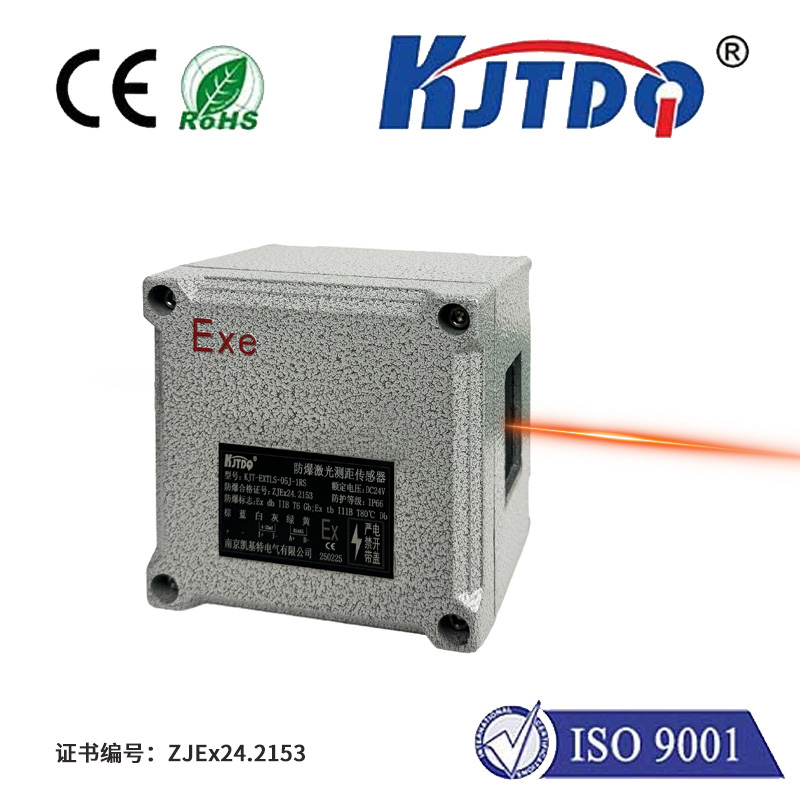
In the realm of precision measurement and industrial automation, the demand for accurate, reliable, and non-contact sensing solutions is paramount. Among the array of technologies available, the laser rangefinder displacement sensor stands out as a cornerstone for countless applications, from manufacturing quality control to structural health monitoring. This technology, often encapsulated in compact and robust devices, projects a laser beam onto a target surface and calculates the distance or displacement by analyzing the reflected light. The principle is elegantly straightforward, yet the engineering behind it enables micron-level accuracy and high-speed data acquisition, making it indispensable in modern industrial settings.
The core advantage of a laser displacement sensor lies in its non-contact nature. Traditional contact methods, using tools like dial indicators or Linear Variable Differential Transformers (LVDTs), require physical touch with the target. This can lead to surface damage, measurement inaccuracies due to probe pressure, and wear over time. In contrast, a laser sensor eliminates these issues entirely. It can measure delicate, hot, moving, or otherwise inaccessible objects without any risk of contamination or mechanical influence. This capability is crucial in industries such as semiconductor fabrication, where even nanometer-scale particles can cause defects, or in automotive assembly lines for verifying component gaps and flushness on moving car bodies.
Modern laser rangefinder displacement sensors primarily utilize two measurement principles: triangulation and time-of-flight (ToF). Triangulation-based sensors are ideal for short to medium ranges with extremely high resolution. A laser diode projects a spot onto the target. The reflected light is focused onto a position-sensitive detector, such as a CCD or CMOS array. As the target distance changes, the position of the light spot on the detector shifts. By calculating this shift through trigonometric algorithms, the sensor determines the precise displacement. This method is perfect for applications like thickness measurement of rolled metal, vibration analysis of machinery, or profile scanning of electronic components.
For longer ranges, time-of-flight sensors are often employed. These measure the time it takes for a laser pulse to travel to the target and back. Given the constant speed of light, the distance is calculated directly. While typically offering slightly lower resolution than triangulation sensors at close range, ToF sensors excel in applications like large-scale warehouse logistics (e.g., AGV navigation), crane positioning, or monitoring deformations in large civil engineering structures like dams and bridges. The choice between these principles depends entirely on the specific requirements of range, accuracy, speed, and environmental conditions.
The integration of these sensors into automated systems has revolutionized quality assurance processes. On a production line, a laser displacement sensor can perform 100% inspection of parts, measuring dimensions, checking for warpage, or detecting surface defects like dents and scratches in real-time. This not only ensures that every product meets stringent specifications but also enables predictive maintenance by monitoring tool wear on CNC machines or detecting misalignments in conveyor systems before they cause downtime. The data collected can be fed directly into a PLC or industrial PC, creating a closed-loop control system that automatically adjusts machinery parameters to maintain optimal production quality.
Environmental robustness is another critical feature. High-end industrial laser sensors are designed to withstand harsh conditions, including temperature fluctuations, humidity, dust, and vibration. They often come with IP67 or higher ingress protection ratings, allowing them to function reliably in foundries, outdoor installations, or cleanrooms. Furthermore, advanced models incorporate features like automatic background suppression to ignore irrelevant objects, multiple echo processing to handle transparent materials like glass or plastic films, and sophisticated filtering algorithms to ensure stable readings even on rough or speckled surfaces.
Looking forward, the evolution of laser rangefinder displacement sensors is closely tied to advancements in laser diodes, detector technology, and embedded processing power. Trends point towards even smaller form factors, higher measurement speeds exceeding 100 kHz, and enhanced connectivity through Industrial Internet of Things (IIoT) protocols. This will facilitate their deployment in increasingly complex and networked smart factories, contributing to the pillars of Industry 4.0. From ensuring the perfect gap on a smartphone screen to guaranteeing the precise alignment of wind turbine blades, the laser rangefinder displacement sensor remains a silent, yet powerful, guardian of precision in an ever-more automated world.