check

check

check

check
check
check
check
check

check

check
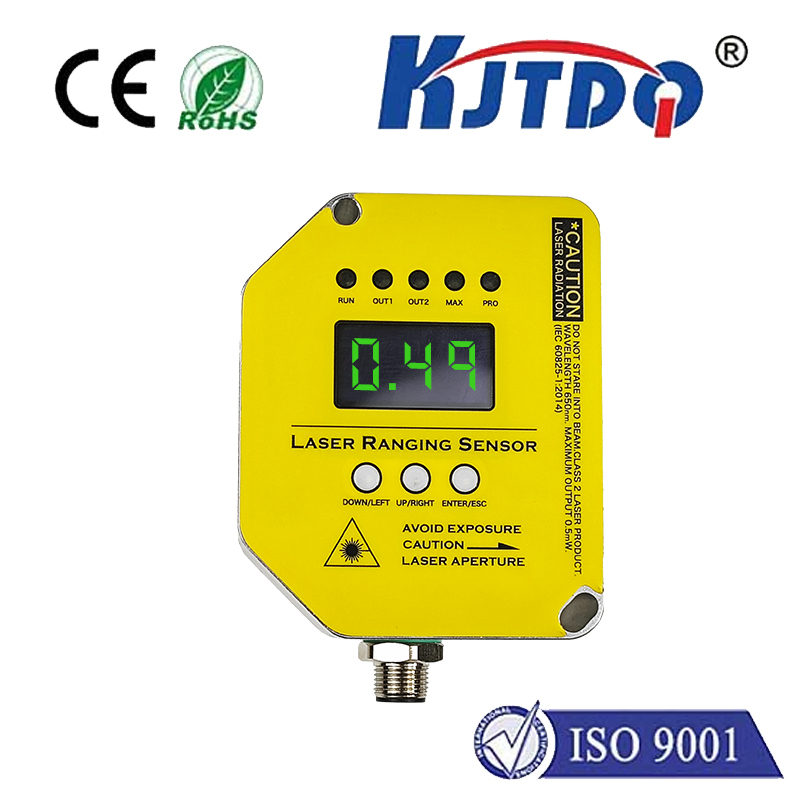
LiDAR sensors have revolutionized how machines perceive and interact with the physical world. Unlike traditional cameras or radar, LiDAR (Light Detection and Ranging) uses pulsed laser light to measure distances with exceptional accuracy, creating precise, three-dimensional maps of environments in real-time. This core technology is the cornerstone for advancements across several critical industries.
In the realm of autonomous vehicles, LiDAR sensors act as the primary eyes. They continuously scan the surroundings, detecting objects, pedestrians, and road geometry with centimeter-level precision, even in low-light conditions. This data is crucial for navigation, obstacle avoidance, and path planning, forming a reliable layer of perception that complements cameras and radar. The development of solid-state LiDAR, which has no moving parts, promises greater durability and lower costs, accelerating the path toward fully self-driving cars.
Beyond automotive applications, LiDAR is transforming geospatial mapping and surveying. Mounted on aircraft or satellites, these sensors can rapidly generate highly detailed topographic maps, monitor deforestation, and assist in urban planning. The ability to penetrate dense vegetation canopy allows for the discovery of archaeological sites and the accurate assessment of forest biomass, providing invaluable data for environmental conservation and climate research.
The industrial and robotics sectors are also major beneficiaries. In smart factories, LiDAR sensors enable precise navigation for autonomous mobile robots (AMRs), ensuring safe and efficient material handling. They are used for volume measurement in logistics, quality control on assembly lines, and creating digital twins of physical facilities. Their reliability in dusty or variable lighting conditions makes them superior to vision-only systems for many industrial automation tasks.
Looking ahead, the miniaturization of LiDAR components is opening new frontiers. Integration into consumer devices like smartphones for enhanced augmented reality (AR) experiences, or into smart infrastructure for traffic monitoring and public safety, is becoming increasingly feasible. As the technology matures and production scales, costs are expected to decrease further, democratizing access and fostering innovation in unexpected areas.
The evolution of LiDAR sensor technology is not just about improved range or resolution; it's about enabling a new level of spatial intelligence for machines. From guiding autonomous vehicles safely through complex cities to preserving our planet's ecosystems through detailed environmental monitoring, LiDAR is proving to be an indispensable tool. Its continued advancement promises to unlock smarter, safer, and more efficient solutions, fundamentally shaping the future of automation and data-driven decision-making across the globe.