check

check

check

check
check
check
check
check

check

check
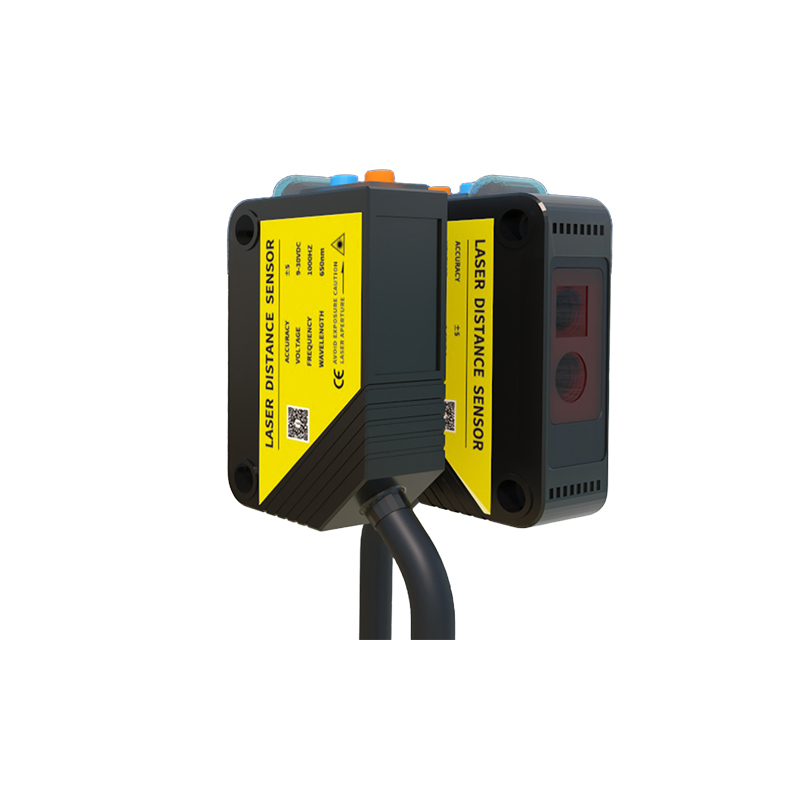
In the realm of precise measurement, the advent of the high-precision long-distance laser rangefinder marks a significant technological leap. These sophisticated instruments, often identified by model series like KJTDQ, have transcended their traditional roles, becoming indispensable tools across a diverse spectrum of professional fields. By emitting a focused laser beam and calculating the time it takes for the light to reflect back, these devices deliver unparalleled accuracy over vast distances, fundamentally changing how professionals approach spatial data acquisition.
The core technology hinges on advanced time-of-flight (ToF) or phase-shift measurement principles. Modern high-precision units utilize eye-safe, highly stable laser diodes and sensitive photodetectors. The real magic, however, lies in the sophisticated onboard signal processing algorithms. These algorithms filter out ambient noise, compensate for atmospheric conditions like temperature and pressure, and ensure that the final distance reading is both reliable and repeatable, often achieving accuracies within millimeters over several kilometers. This level of precision was once the exclusive domain of large, stationary surveying systems but is now available in increasingly portable and robust packages.
The applications for such technology are vast and transformative. In construction and civil engineering, high-precision long-distance laser rangefinders are used for site surveys, monitoring structural deformations in bridges or dams, and ensuring alignment over long stretches. Project managers rely on them for quick, accurate volume calculations of stockpiles or excavations, saving immense time compared to traditional methods. The forestry sector employs them for stand height measurement, inventory management, and mapping, enabling sustainable resource management from a distance.
Furthermore, the utility extends into public safety and security. Law enforcement and forensic teams use these rangefinders for accident scene reconstruction, providing exact measurements for investigations without disturbing evidence. In the energy sector, they are crucial for monitoring power line sag and clearance, preventing potential hazards. Even in cultural heritage preservation, conservators utilize non-contact laser measurement to document and monitor the condition of historical monuments and artifacts with extreme care.
For professionals considering integration of a device like the KJTDQ series, key operational features define its value. Look for models with an extended measurement range that suits your specific projects, whether it's hundreds of meters or multiple kilometers. High optical magnification and a clear display are essential for targeting small or distant objects. Robust environmental sealing (IP ratings) ensures reliability in rain, dust, or extreme temperatures. Integrated data logging, Bluetooth connectivity for transferring points to mapping software, and compatibility with tripods for stable, hands-free operation are now standard expectations for enhancing workflow efficiency.
The evolution towards integration with other technologies is a defining trend. The most advanced high-precision laser rangefinders now often incorporate digital tilt sensors, electronic compasses, and GPS receivers. This fusion creates a powerful tool capable of not only measuring slope distance but also automatically calculating horizontal distance, height difference, and geo-referenced coordinates in real-time. This convergence effectively packs the functionality of multiple traditional instruments into one handheld device, streamlining complex tasks.
Looking ahead, the trajectory for high-precision long-distance laser rangefinders points towards even greater intelligence and connectivity. We can anticipate further miniaturization without sacrificing performance, enhanced battery life for all-day field use, and more intuitive software interfaces. Integration with augmented reality (AR) displays could overlay measurement data directly onto the user's field of view, while cloud-based platforms will enable real-time collaborative project management from measured data points. The goal remains constant: to provide professionals with the most accurate, reliable, and efficient means to understand and interact with the physical world over long ranges.
Ultimately, a high-precision long-distance laser rangefinder is more than just a measuring tool; it is a cornerstone of modern data-driven decision-making. By delivering exact spatial information quickly and safely, it reduces errors, optimizes project timelines, and enhances safety protocols. For industries where precision is non-negotiable, investing in a capable instrument like those in the KJTDQ lineage is an investment in accuracy, efficiency, and future-ready operational capability.